Skip to content
Drug Policy Watch
Latest Tracking drug policy in all 50 states and Congress, updated every morning. See all ›
Independent · Reader funded · Every claim linked to its source

Welcome. Drug policy touches everyone and is written for almost no one. Here it is in plain English, federal and all fifty states.

Who this is for

You do not need a law degree, a license, or a lobbyist to follow this. Drug policy reaches everyone, so it belongs to everyone. If you are a patient or a caregiver, if you treat patients, if you are raising a kid who will grow up under these laws, or if you simply want to know who is making the decisions, you are who this is for.

The country is running two drug policies at once. Federal policy stays organized around control, supply reduction, and fentanyl. Underneath it, the states, the courts, and the patent office are rewriting the rules on cannabis, hemp, and psychedelics. We follow where those two meet: where they contradict each other, and who pays for the gap.

Drug Policy Watch makes drug policy legible and accountable. We track it in one place, federal action and all fifty states, every claim linked to its primary source, so the public, advocates, and small operators can see what is being decided and by whom before it is locked in. Our lens is enclosure: who is fencing off plants that belong in the public's hands.

Start with the Beginner's Guide Read the News

Or follow along: Instagram Bluesky X LinkedIn YouTube Facebook

Two federal deadlines

--
--

Both dates are federal. What they change, and what you can do before they land, is in How to Be Heard.

Cannabis, by the numbers

24
Adult-use states + D.C.
18
Medical-only states
4
CBD / Low-THC only
5
No legal market

Type of legal access is what the law in each state allows: adult use, medical only, CBD and low-THC only, or no legal market at all. Switch to enclosure pressure for the harder question underneath it, how far the fence has closed around actually getting any of it, scored 1 to 5 on the same scale as the 50-State Matrix.

How to use it Hover any state for a quick read. Click to pin its scorecard below the map, then follow any figure straight into that state’s sourced brief. There is a searchable list under the map if you would rather not hunt.

Loading the map...
Sort

    ENCLOSURE PRESSURE 2 Most open in practice 3 Partly open 4 Heavily enclosed 5 Fully enclosed
    How far the legal fence has closed around ordinary access, scored 1 to 5 on the same scale as the 50 State Matrix. Click any state for its scorecard.

    Featured analysis

    Featured What's Actually in Hemp Delta-9 Gummies and Vapes. Most of it was made in a chemical tank, not grown. We read the lab work on what else ends up in the jar, and found the one number that decides whether banning it protects a single child. Read it here →

    This week's big stories

    Every one of these is decoded and linked to its primary source on the News page.

    Explore the site

    Take Action

    How to Be Heard

    Six steps, with the tools built in: pick one ask, find who represents you, say something real, show up, bring people.

    Get the weekly brief
    One email a week: the hemp deadline, the hearings, the money, and who is trying to fence off what belongs to all of us. Free, no ads, unsubscribe anytime.
    Support this work

    Drug Policy Watch is independent, freely readable, and answerable to readers, not advertisers or owners. Recurring support is the most valuable, because it buys steady time to follow the money, the laws, and the patent grabs before they are locked in.

    • $5 a month keeps the tracker and the 50-state briefs current.
    • $25 funds a full refresh of one state brief.
    • $50 funds a month of sourced coverage.

    Become a member Give once

    This is journalism and analysis, not legal, regulatory, or financial advice, and not an official government position. If a decision turns on a specific law, case, or filing, confirm it on the linked source and consult counsel for your situation. Statuses current as of August 2026.

    Start here · Explainer

    A Beginner's Guide to Drug Policy

    Drug policy impacts everyone. It decides who gets medicine, who gets arrested, and who gets left out.

    In one line: drug policy is written in schedules, spending bills, and agency hearings that most people never see, and this guide explains the whole machine in plain language, because smart drug policy saves families and lives.

    Part one. What is drug policy?

    Drug policy is every rule a government makes about substances: which ones are legal, who can make them, sell them, prescribe them, study them, or carry them, and what happens to people who break the rules. It lives in criminal law, medicine, tax codes, farm bills, and school policy all at once, which is why no single agency owns it and no single headline captures it.

    It is also not one thing. Federal law sets the floor, all fifty states write their own layers on top, and agencies fill in the details through rulemaking. The same plant can be a felony in one state, a prescription in another, and a farm commodity under federal law. Understanding drug policy means understanding who holds which pen, and that is what the rest of this guide walks through.

    Why it matters

    These rules are not abstract. Kids lose parents to overdose. Parents lose kids. Medicine gets priced out of reach. People go to prison for things that are legal one state over.

    Every one of those outcomes traces back to a policy choice: what got scheduled, what got funded, what got buried in a bill. Smart drug policy saves lives. Bad drug policy is measured in funerals, prison sentences, and pharmacy bills. That is why it is worth ten minutes to learn how the machine works.

    Part two. How drug scheduling works

    Nearly all federal drug law flows from one statute: the Controlled Substances Act of 1970, the CSA. It sorts drugs into five lists called schedules, ranked by two questions. Does the drug have an accepted medical use? And how likely is it to be abused? Schedule I is the strictest. Schedule V is the loosest.

    The schedule is not a science score. It is a legal category that controls research access, prescribing, taxes, and prison time. A Schedule I drug cannot be prescribed at all, and studying it requires special federal registration. That is why moving a drug between schedules, called rescheduling, matters so much.

    Schedule I
    No accepted medical use, high abuse potential. Heroin, LSD, psilocybin. Cannabis still sits here outside the April 2026 medical carve-out, which is what the current fight is about.
    Schedule II
    Accepted medical use, high abuse potential. Fentanyl, oxycodone, cocaine, methamphetamine. Prescribable under tight controls.
    Schedule III
    Moderate to low physical dependence. Ketamine, anabolic steroids, buprenorphine. This is where cannabis would land if rescheduling completes: easier research, normal business taxes, still federally controlled.
    Schedule IV
    Low abuse potential. Xanax, Valium, Ambien.
    Schedule V
    Lowest control. Cough syrups with small amounts of codeine. Alcohol and tobacco are not scheduled at all; Congress simply exempted them.

    Sources: 21 U.S.C. 812; DOJ and DEA scheduling actions, April 2026. Examples reflect current placement.

    Share

    Who decides, and how a drug moves

    Three players share the pen. Congress can move a drug by passing a law. The DEA, inside the Justice Department, runs the formal rulemaking and makes the final call. HHS and the FDA supply the medical and scientific evaluation, which binds the DEA on the science. A petition or proposal triggers a review, HHS sends its recommendation, the DEA publishes a proposed rule, the public comments, a judge may hold a hearing, and eventually a final rule issues. Courts can then review it.

    Cannabis is the live example. HHS recommended Schedule III in August 2023. The proposed rule came in May 2024 and drew over 42,000 comments. After a year of procedural delays, a December 2025 executive order pushed the process forward, an April 2026 order moved state-licensed medical cannabis to Schedule III immediately, and the hearing on the broader move wrapped on July 15, 2026. More than two years in, and it is still not finished. That pace is normal.

    Rescheduling is not legalization. Schedule III cannabis would still be federally controlled. What changes is research access, taxes, and who can afford to participate.

    The most misunderstood point in drug policy

    Part three. How a bill becomes law, and how provisions get buried

    The civics-class version: a bill is introduced, a committee studies it, each chamber votes, and the executive signs it. All fifty states run some variation of this, and most drug policy is actually made there, not in Washington. State legislatures set penalties, license markets, and decide what can be sold and to whom.

    The real version has trapdoors. A bill's title does not have to match its contents, so watching drug policy means reading what bills do, not what they are called. Three moves to know:

    1
    The rider

    A provision attached to a must-pass bill, usually a budget. The new federal hemp definition was Section 781 of the spending package that ended the 2025 government shutdown. It never got its own vote or its own headline.

    2
    The gut and amend

    A bill passes one chamber saying one thing, then a committee strips the text and substitutes something else. The bill number and title survive; the contents do not. Only reading every version of a bill catches it.

    3
    The buried penalty

    A licensing, school, or ID bill that quietly creates a new crime, often one that falls on young people. The title says safety; a clause four pages in says misdemeanor. This is why we track bill text, not bill titles.

    Share

    Part four. Harm reduction, the short version

    Harm reduction starts from a plain fact: people use drugs, and policy can make that more or less deadly. Instead of asking only how to stop use, it asks how to keep people alive and healthy in the meantime. The evidence behind the core tools is strong and decades deep.

    Naloxone

    A medication that rapidly reverses an opioid overdose, now available over the counter. The evidence is strong that saturating a community with naloxone reduces opioid deaths. Carrying it is the most concrete thing a bystander can do.

    Syringe services programs

    Community programs providing sterile supplies, safe disposal, naloxone, and referrals. CDC-cited research associates them with a 58 percent reduction in HIV incidence among people who inject drugs, and participants are more likely to enter treatment.

    Medications for opioid use disorder

    Methadone and buprenorphine are the best-studied treatments for opioid addiction and among the most effective tools for cutting overdose risk. Buprenorphine itself is Schedule III, a reminder that scheduling shapes who can get treatment.

    Test strips and drug checking

    Cheap strips that detect fentanyl in a drug supply, plus newer point-of-service drug checking. Federal funds can now be used to buy them, though legality still varies by state.

    Why it matters right now. Overdose deaths are falling, from a peak near 110,000 in 2022 to an estimated 69,973 in 2025 per CDC provisional data. Researchers credit wider naloxone access among other factors, and warn that funding cuts to these programs could reverse the gains. The decline is a policy outcome, not an accident.

    Share

    Reference. Eight terms that unlock the news

    CSA : the Controlled Substances Act of 1970, the federal law behind the five schedules.
    Rescheduling : moving a drug between schedules. Loosens or tightens control; does not legalize.
    Descheduling : removing a drug from the schedules entirely, the way hemp was removed in 2018.
    NPRM : notice of proposed rulemaking, an agency's draft rule opened for public comment.
    ALJ : administrative law judge, who runs agency hearings and writes a recommendation.
    Rider : a provision tucked into an unrelated must-pass bill.
    280E : the tax code section that bars normal deductions for Schedule I and II drug businesses.
    Total THC : the new federal hemp yardstick counting all THC forms, not just delta-9. Effective in two stages, November 12 and December 11, 2026 (Section 2019 of H.R. 6500).
    Share

    Before you go. Where things stand

    Where things stand
    As of August 4, 2026. Live status moves; check the trackers.
    Cannabis rescheduling

    Medical cannabis under state license moved to Schedule III on April 23, 2026. The hearing on moving all cannabis ran June 29 to July 15. Post-hearing briefs are due August 17; no decision date is set. Our hearing coverage

    The hemp deadline

    A new federal hemp definition, passed inside a 2025 spending bill, takes effect in two stages, November 12 and December 11, 2026 (Section 2019 of H.R. 6500). Most intoxicating hemp products would become federally illegal. What the deadline means

    Overdose deaths falling

    CDC provisional data estimates 69,973 overdose deaths in 2025, down about 14 percent from 2024 and far below the 2022 peak near 110,000. The decline is real, and it is slowing.

    Ready to do something with this?
    Calls to action, finding your officials, and advocacy groups worth your time.
    How to advocate →

    Keep reading on the site

    About the author. Jessica Mantonya is the founder of Drug Policy Watch and Hold in Common, an independent, non-captured tracker of cannabis, hemp, and psychedelic policy across the federal government and all fifty states. She also advises operators, advocates, and funders on regulatory strategy and anti-enclosure positioning. Work with her →

    Sources for the dated claims

    Corrections. We correct errors in public, on the same page as the error, with the date and a note saying what changed. Our full corrections policy and our permanent correction log are here. If we have something wrong, tell us: contact@drugpolicywatch.info. Tell us which line, and tell us what is wrong with it.

    License. This guide is free to share and adapt for non-commercial purposes, with credit, under CC BY-NC-SA 4.0. Copyright in the original text is held by Jessica Mantonya, doing business as Drug Policy Watch. "Drug Policy Watch"™ and its logo are common-law marks. Not everything is under this license. The full fifty-state briefs, the live legislative trackers, and our other research and data products are separately licensed and are not covered by CC BY-NC-SA. See Terms & License.

    Educational content, not legal advice. This guide explains how the system works in general terms. Statuses and dates are current as of August 4, 2026 and will move; confirm anything that matters on the linked primary source, and consult counsel for your own situation.

    Share card: A Beginner's Guide to Drug Policy

    Caption: Drug policy decides who gets medicine, who gets arrested, and who gets left out. A plain-language guide to the schedules, the buried provisions, and harm reduction.

    Enclosure 101 · The idea behind the whole tracker

    What is enclosure?

    Enclosure is taking something shared and turning it into something a few people own.

    Most people file these under bad luck, or the cost of living. They are not separate problems. They are one move, repeated, and once you can see it you cannot unsee it.

    The short version of our free book. Readable in under ten minutes. New to drug policy? Start with the Beginner’s Guide.

    The power bill

    It climbs every year, and nobody can say why.

    The saved seed

    Your grandparent saved it every fall. The fine print now calls replanting it illegal.

    The insulin vial

    Costs a few dollars to make. Rationed by price.

    The bottled water

    Fell from the sky. Comes back to your kitchen at a thousand times the cost.

    First, the thing being taken

    A commons is anything we share

    The air. The water in an aquifer. The sunlight on your roof. The seeds farmers have traded for ten thousand years. The roads, and the whole pile of human knowledge anyone can build on.

    A healthy commons is not a free-for-all. The good ones run on rules, worked out over generations by the people who use them.

    The simplest definition: a commons is the part of the world you do not have to be rich or powerful to use.

    It is the floor under everyone’s feet.
    The move itself

    Enclosure is the fence plus the flip

    Taking something shared and turning it into something a few people own. It always arrives in two pieces, together. Miss the second piece and you miss the whole thing.

    1 · THE FENCE

    The shared thing becomes property

    Usually through paperwork: a deed, a patent, a license, a contract. Boring forms, enormous consequences.

    +
    2 · THE FLIP

    The old custom becomes the crime

    Saving seed becomes infringement. Fixing your own tractor becomes unauthorized. Sharing rooftop power becomes a violation.

    It never looks like robbery. Nobody rides up on a horse. Somebody files a form, and that is exactly why it works.

    The big lie that makes it possible

    “The tragedy of the commons” says shared things always get ruined, so fencing them is a rescue. It is a tidy story, and it is mostly wrong.

    Elinor Ostrom spent her career on real shared resources: alpine pastures, village forests, irrigation systems, fishing grounds, governed well for centuries by the people who used them. The real choice was never private ownership or ruin. It is community governance or private ownership, and the doom story hides that third option on purpose.

    2009
    Nobel Prize in Economics, awarded to Ostrom for proving the commons can govern itself.
    The enclosure algorithm

    The seven-step recipe

    Enclosure is not random. It runs the same seven steps almost every time. Click through them.

    01

    Then it loops. The money from one fence pays to build the next one. That is why it speeds up.
    The recipe in the wild

    Five fences, one recipe

    Different commons, identical move. The monotony is the proof.

    4

    Cattle

    Four companies came to control most beef processing. Ranchers get less, shoppers pay more, the gap goes to the middle.

    $0

    Sunlight

    The fuel is free and falls on everyone. Try to share your rooftop power and meet hookup rules, standby charges, and caps.

    1,000x

    Water

    Fell from the sky into a shared aquifer. Pumped, bottled, and sold back at a markup that can top a thousand times the cost.

    12,000

    Seed

    Years farmers saved and replanted seed. Replanting a patented one is now infringement, and farmers have been sued for it.

    $1

    Insulin

    The price its discoverers sold the patent for, because it belonged to the world. People have died rationing it since.

    The pattern does not care about the product. It only cares that you cannot do without it. Click a step tag to jump back to that move in the recipe.

    Happening right now

    The plant that just got a brand new name

    Cannabis is the clearest enclosure unfolding today, which is exactly why it is the door into all the others, and why this tracker exists. Watch the recipe run in real time.

    JUNE 2026

    The proof

    A full-spectrum cannabis medicine wins approval in Europe under a trademark. It beat opioids in a trial. Fifty years of stigma, finally answered.

    THE CLAIM

    The fence goes up

    The company states, for the record, that its evidence cannot be applied to any other cannabis extract, or to the plant itself. The proof now belongs to one branded product.

    STEPS 4 TO 7, LIVE

    Same plant, two prices

    In the ground, the plant is the cheap and informal one. Under a trademark, it can cost tens of thousands a year. Nothing about the plant changed. Ownership changed.

    The fence often wears a friendly face. Some of the forces driving this sit inside the pro-legalization tent: large operators and pharmaceutical firms, not just old-fashioned prohibitionists.

    Keep pulling the thread: inside the DEA hearing · follow the money · the hemp deadlines, Nov 12 and Dec 11

    The good news

    The recipe runs in reverse

    Enclosure can be undone, and it has been, on purpose, many times. Insulin’s price was capped after public pressure. Farmers built cooperatives that still run. Neighbors wired rural America themselves. Eight hundred years ago, the Charter of the Forest wrote commoners’ rights into law.

    The one weapon that costs nothing and never runs out is memory spoken in public.

    Ready to do something? Contact your officials
    1
    Re-narrate. Tell the true story: shared things can be governed well, and have been.
    2
    Re-legalize the custom. Make the old ordinary act legal again: repair, seed saving, shared rooftop power.
    3
    Title it to the commons on purpose. The same paperwork that fences things can lock them open. Open-source software took over the internet this way; open-source seed protects genetics today.
    4
    Remove the toll. Public options, cooperatives, generic competition, price caps where markets failed.
    5
    Remember out loud. The last step of enclosure is forgetting, so the first step of undoing it is refusing to forget. Insulin was given to the world for a dollar. Water was never something you bought.
    Try it yourself

    Spot a fence in 60 seconds

    Pick anything in your life that quietly got more expensive or more restricted. Tap every question that is true of it.

    0of 7

    Tap each question that is true of it.

    By Jessica Mantonya, Drug Policy Watch. This is analysis and education, not legal advice. The cow is worth cutting from the fence.

    Beyond the Headlines

    Beyond the Headlines

    Essays on where U.S. drug policy is heading in 2026. Every claim is sourced.

    Original writing and the work that inspired it. Twelve pieces of our own analysis, from the federal convergence to the big-picture map and the deep dives, followed by the outside writing and primary documents we drew on. Each essay runs about five minutes, with every claim linked to its source.

    Original op-eds

    State watch · North Carolina

    HB 328: How a School-Vaping Ban Became NC's Hemp Licensing Law

    It passed the House 112 to 0 as a school-grounds ban. The Senate rewrote it. Our sweep found the same move six times. ~8 min

    Markets

    Strategy and capture

    Watching and reading

    What to watch and read next: the AFDO regulator webinar series, key op-eds and reporting we recommend, and our free book, Enclosure 101. Open watching and reading →

    Writing we drew on

    Primary documents & data

    New · Analysis · Beyond the Headlines

    What’s Actually in Hemp Delta-9 Gummies and Vapes

    Most of it was made in a chemical tank, not grown. We read the lab work on what else ends up in the jar, and found the one number that decides whether banning it protects a single child.

    Tap a molecule
    acid + heat

    In one line

    The published chemistry shows these products carry impurities nobody has fully identified, behind lab certificates that cannot see them. And the best national data says child poisonings run three times higher in the states that ban cannabis. The same study found the opposite where this product itself was banned. Both numbers are in here.

    Part one

    The reaction, in plain English

    CBD and THC are made of exactly the same atoms. CBD has an open ring; THC has a closed one. Closing that ring is the whole trick, and it is not hard chemistry: dissolve hemp extract in a solvent, add a little acid, and heat it for an hour or so. That is it. That is the industry.

    The part that matters: a reaction is not a clean swap. It makes your target compound, and it makes other things at the same time, and which other things depends on the acid, the solvent, the temperature, and how long somebody left it running.

    WHAT GOES IN
    CBD from hemp
    An acid catalyst
    A solvent
    WHAT COMES OUT
    The THC you meant to make
    CBD that never reacted
    Reaction byproducts
    Leftover acid and solvent
    Compounds not in any plant

    The certificate on the jar usually reports only the highlighted line. We showed why federal law cannot see the rest in Two Molecules, One Plant.

    Part two

    What the chemists actually found

    In 2022 a team at the University of Missouri bought ten converted cannabinoid products off shelves and online, five distillates and five vape cartridges, and ran them through three separate instruments: nuclear magnetic resonance, liquid chromatography, and mass spectrometry. It remains the most detailed public look at what is in these products.

    Every single sample carried extra compounds. Four of them showed up in a region of the spectrum where only THC-like molecules appear, so they are structurally close cousins of THC, and they are demonstrably not THC.

    Some they could tentatively name: a rare cannabinoid called cannabidihexol and its isomers, a hydroxylated cousin of CBD or THC that is a known side product of exactly this reaction, a version of a cannabinoid with something extra bolted onto it, and cannabidivarin carried over from cheap starting material.

    Two they could not explain at all. One contained a sugar unit. And one, at 253 daltons, fragmented in a way that suggested a piperidine, which is a nitrogen-containing ring.

    No published route to delta-8 uses a nitrogen-containing reagent. The authors wrote, in effect, that they had no idea where it came from. That is the honest state of this science: the extra material in these products is only partly identified, and what the identified part does in a human body has essentially not been studied.

    Related reading

    We showed why federal law cannot see any of this in Two Molecules, One Plant, and tracked the deadline itself from the day it was signed in The Hemp Cliff.

    The certificate is part of the problem

    In 2022, a University of Missouri team bought ten converted cannabinoid products off shelves and ran them through three separate instruments. Every single sample carried extra compounds. Two, the authors could not explain at all.

    Then they compared what they measured against the purity printed on each product’s certificate of analysis. Nine of ten samples were nowhere near their stated purity.

    WHAT THE LABEL PROMISED VS. WHAT WAS MEASURED

    Ray, Bylo, Pescaglia, Gawenis and Greenlief, Molecules, October 2022, Table 1. Bars show impurity signal relative to the THC marker peak, scaled to the largest value.

    The team went further and asked why the labs missed it. They re-ran one sample and found the certifying laboratory’s method was simply wrong for the job: its conditions could not separate those compounds at all. The impurities were not too small to see. The instrument was pointed the wrong way. A certificate of analysis is only as good as the method behind it, and the certificate does not tell you whether anyone checked the method.

    Part three

    How much of this is even hemp?

    ? ? ?

    Two independent labs bought products off the shelf and tested where the THC actually came from. In 53 products sold as “hemp-derived delta-9”:

    WHERE THE THC IN THE JAR ACTUALLY CAME FROM
    49%
    25%+
    18.4%
    Made in a tank from CBD
    Actually from marijuana
    Hemp’s own THC
    Unclear

    Journal of Cannabis Research, 2023. Categories are the study’s own attributions, scaled here to total 100.

    Read that bar again. Fewer than one slice in five, in a category whose entire legal existence rests on the word hemp, actually contained hemp’s own THC. Both surveys are small, neither was random, and both are three or four years old. That is its own finding: nobody has counted since.

    The turn

    Everything above is a good argument for testing rules, real methods, and honest labels. It is not, by itself, an argument for a ban. To know whether a ban helps, you have to look at what happens in states that already have one.

    “Nearly seven in ten of these exposures came from the US South.”

    SOUTH
    Part four

    The number that changes the argument

    Researchers at Nationwide Children's Hospital and the Central Ohio Poison Center pulled every call to a US poison center where a converted cannabinoid was the main substance, for 2021 and 2022. There were 4,925 of them. The rate rose 79 percent in a single year.

    Children were more than half of all exposures. Almost a third were under six years old, and those youngest children accounted for 58 percent of intensive-care admissions. Those are real children, and the mechanism is not mysterious: a gummy that looks like candy, left where a toddler can reach it.

    Researchers pulled every US poison center call where a converted cannabinoid was the main substance, 2021 and 2022. There were 4,925. Children were more than half of all exposures. Then they sorted the states two different ways.

    Set the two “legal” states side by side and a permissive rule on one product looks very different from a permissive rule on the other.

    Where the rule is permissive, which product is riskier?
    Poison center calls per 100,000 people, 2022
    🌿0.52
    🧪1.36
    States where cannabis is legal, regulated, and tested
    States where converted delta-8/9 is legal and unregulated

    Where both are simply allowed, the tested, regulated product runs the lower rate. The unregulated one runs over two and a half times higher.

    “Legal” is not one thing. A state-licensed cannabis shop tests and labels its product. Most states with converted delta-8/9 on the shelf never require either. This is why what the tank leaves behind matters more than whether the product is legal at all.

    The same study also shows that banning cannabis outright, rather than regulating it, drives its own poisoning rate higher still: 1.64 per 100,000 where cannabis is illegal, three times the legal-state rate above. A ban does not remove the demand. It removes the testing. On how a true number can still choose for you: How to Spot Propaganda.

    Part five

    Journal of Medical Toxicology, 2024. Rates for 2022; the difference is statistically significant (p = 0.001). Nearly seven in ten of all exposures came from the US South.

    What actually protects a child

    Put the two halves of the evidence together and they point at the same short list. Not one item on it is a ban.

    01
    Child-resistant packaging that does not look like candy. The under-sixes are not customers. They are finding it on a counter.
    02
    Testing with a method that works. Requiring a certificate is not enough if the method cannot see the impurities. Specify the method.
    03
    A per-serving dose limit you can actually read. A container limit of 0.4 milligrams is not a dose rule. It is a ban wearing a number.
    04
    An age line at the register, enforced on the seller. Every comparable federal law puts the violation on the business. Hemp bills keep putting it on the kid. We took that provision apart.
    05
    A legal adult market to route demand into. This is the one the data supports most directly, and the one no hemp bill contains.
    --
    days until Nov 12, the first stage

    None of the five things above happens on that date. What happens is that the products become federally unlawful and, as the Congressional Research Service itself notes, it is unclear whether anyone has the resources to enforce it. The cliff, explained.

    Why this is an enclosure story

    The evidence justifies rules about process: how it was made, cleaned up, tested, packaged. Rules a small operator can meet with a good lab and honest labeling. What is being built instead is a threshold so low that no consumable product clears it, followed by bills that reopen the door only for whoever can afford a federal permit, an accredited lab, a three-tier distributor, and counsel.

    The tank survives. The field does not.

    That is the enclosure move in its ordinary clothes: the shared thing is unsafe, so a responsible owner must take it over. The impurity data in this article is exactly the kind of true thing that gets used to make that argument. We published it anyway, and then we published the number that undoes it.

    What you can do

    If you use these products, check whether the certificate names the method and the lab. If it does not, you are holding a promise, not a measurement. And if you are talking to a legislator, the useful question is not “should this be legal.” It is: does your bill require a test that can see what the reaction left behind, yes or no? Find your officials →

    What to watch

    • The FDA lists. The November 2025 law ordered FDA to publish lists of which cannabinoids count, within 90 days. Nine months later they are not published. Every business and every regulator is planning against a line nobody has drawn.
    • Whether any bill specifies a test method. Requiring "third-party testing" is easy. Requiring a method that can actually resolve reaction byproducts is the part that would work. We read the federal hemp bills in our own bill table on August 3, 2026, and none of them specifies one. We did not search state statutes.
    • Whether anyone updates the exposure data. The poison-center study covers 2021 and 2022. The beverage era is not in it. Somebody should be counting.
    What you can do

    If you use these products, look at the certificate and check whether it names the method and the lab. If it does not, you are holding a promise, not a measurement. And if you are talking to a legislator, the useful question is not "should this be legal." It is: does your bill require a test that can see what the reaction left behind, yes or no?

    Where we are honest with you

    The samples are small and old. Ten products in the impurity study, 53 in each provenance study, none randomly selected, all predating the beverage era. They show the problems exist; they do not tell you what share of today’s shelf is affected.
    We are not claiming a health harm from any specific product. The impurities are measured. Their toxicology is, with few exceptions, unstudied. That cuts both ways: it is not proof of safety either.
    The poison-center comparison is a correlation. It compares states, not the same state before and after, and calls also measure reporting habits. It is the strongest evidence anyone has, and it does not settle the question.
    We did not run any of these tests. Everything here is read from published, peer-reviewed work and linked in the sources so you can check it yourself.
    Key sources · peer-reviewed first, as a matter of house policy

    Full source list, retrieval dates, and preservation notes on the published page. We correct errors in the open: corrections policy and log. This is journalism and analysis, not medical or legal advice.

    About the author. Jessica Mantonya is the founder of Drug Policy Watch and Hold in Common, an independent, non-captured tracker of cannabis, hemp, and psychedelic policy across the federal government and all fifty states. A longtime patient-access advocate, she follows the money and the paperwork to show how the plant is being fenced off, and how to keep it in the commons. She also advises operators, advocates, and funders on regulatory strategy, sourced intelligence, and anti-enclosure positioning. Work with her →

    Sources

    Peer-reviewed work first, as a matter of house policy. Every link retrieved August 3, 2026.

    Related Drug Policy Watch reading: Two Molecules, One Plant · The Hemp Cliff · The Hemp Bill That Would Make the Kid the Offender · Hemp Just Hitched a Ride on an $87.6 Billion War Bill · Spot the Fence: The Patent · Build the Commons Before the Patents Close In · What Is Enclosure?

    Corrections. We correct errors in the open. Our policy and permanent correction log are at the corrections page. If we have something wrong, tell us: contact@drugpolicywatch.info. Tell us which line, and what is wrong with it. We will look at it the day it arrives.

    License. This piece is published under CC BY-NC-SA 4.0. You may share and adapt it for non-commercial use with attribution to Jessica Mantonya, Drug Policy Watch, and a link back to this page, and you must license anything you build from it the same way. The figures on this page are by Drug Policy Watch and carry the same license. Quoted statutory text is a United States Government work and is in the public domain. Data reproduced from the peer-reviewed papers above remains subject to those journals' terms; the Molecules and Journal of Medical Toxicology papers are open access. "Drug Policy Watch"™ is a trademark of Jessica Mantonya. See Terms & License.

    This is journalism and analysis, not medical or legal advice. We describe what published research measured. We do not assert a health harm from any specific product, and nothing here should be read as telling you a product is safe. If you make or sell these products, talk to a lawyer about your situation.

    Share card caption

    The molecule is identical. Everything else in the jar is not. Nine of ten tested products missed their own certified purity. Child poisonings run three times higher in the states that ban this than in the states that legalized.

    Share card: What's Actually in Hemp Delta-9 Gummies and Vapes

    Caption: Most hemp delta-9 is made in a tank, not grown. Nine of ten tested products missed their own certified purity, and the strongest number in the story cuts against the ban.

    New · Analysis

    Two Molecules, One Plant

    How one phrase in a spending bill outlaws what grows in the ground and protects what comes out of a chemical tank.

    In one line: every lasting hemp bill in Congress protects the product made in a tank, and the one law that reaches it is the law the industry is fighting to repeal.

    Starting November 12, 2026, and finishing December 11, a law already on the books changes what the word "hemp" means in the United States. Most of the hemp products sold in gas stations, smoke shops and grocery stores stop being legal that day.

    Congress is now scrambling to soften it. A Senate spending bill released on August 2 carries a two sentence fix near the end of one of its divisions. A separate bipartisan House bill would repeal the whole thing and build a new system in its place.

    Both of them make the same choice. Both protect the product that comes out of a chemical tank, and neither protects the plant.

    This is how they do it, and it is done with about eleven words.

    First, the plant

    Hemp and marijuana are the same plant. Botanically there is no difference at all. The difference is a line Congress drew in 2018 based on how much of one chemical the plant contains.

    That chemical is delta-9 THC, the compound that gets people high. The 2018 Farm Bill said: 0.3 percent delta-9 or less, and it is hemp, and it is legal. More than that, it is marijuana, and it is a federal crime.

    The plant makes many related compounds, not just delta-9. It makes CBD, which does not get you high. It makes THCA, which is what raw cannabis mostly contains and what turns into delta-9 when you heat it. And it makes traces of delta-8, a milder cousin.

    Because the 2018 law measured only delta-9, an industry grew in the gap.

    Related readingWe tracked this deadline from the day it was signed in The Hemp Cliff, and the vehicle it rode in on in Hemp Just Hitched a Ride on an $87.6 Billion War Bill.

    Then, the tank

    Here is the part almost nobody outside the industry understands, and it is the key to everything that follows.

    The plant does make delta-8. But only in traces, far too little to sell. So manufacturers do not get delta-8 from plants. They make it.

    They take CBD, which hemp produces cheaply and in bulk, put it in a vessel with an acid, and rearrange the molecule. Chemists call this isomerization. The same atoms, reconnected in a different order. What comes out is delta-8 THC. Change the recipe slightly and what comes out is delta-9 THC.

    Grown in a field Made in a tank CBD + acid O OH delta-9 THC The molecule is identical. The product is not. Keep reading. This gap is where the whole trick lives. Grown in a field O OH delta-9 THC Made in a tank CBD + acid The molecule is identical. The product is not. Keep reading. This gap is where the whole trick lives.
    Isomerization rearranges CBD into THC. The resulting molecule is chemically the same compound the plant produces. Industry and legal accounts indicate that essentially all commercially available delta-8 is made this way rather than extracted from the plant.

    The molecule that leaves that tank is chemically identical to the one the plant makes. Not similar. Identical. No instrument can look at a single delta-9 molecule and tell you where it came from.

    But the molecule is not the product.

    A reaction is not a clean swap. You start with CBD and acid, often with solvents, and you finish with your target compound plus whatever else the reaction produced along the way: unreacted starting material, reaction byproducts, residual acid, residual solvent, and side compounds that were never in a cannabis plant at any point in its history.

    You do not have to take our word for it. Congress knows. A Senate bill that would legalize this process permits it only if the products are "free from any harmful constituents like chemical byproducts or residues," and its testing section requires laboratories to test for residual solvents "including synthetic inputs used to produce semi-synthetic cannabinoid products."

    That phrase is Congress writing down, in its own bill, the thing that comes out of the tank alongside the THC.

    What goes in, and what comes out IN CBD from hemp Acid catalyst Solvent OUT The THC you were selling Unreacted starting material Reaction byproducts Residual acid and solvent Compounds never in any plant The law's test looks only at the top box. IN CBD from hemp Acid catalyst Solvent OUT The THC you were selling Unreacted starting material Reaction byproducts Residual acid and solvent Compounds never in any plant The law's test looks only at the top box.
    Categories drawn from the testing requirements written into the Cannabinoid Safety and Regulation Act, which permits conversion only where products are "free from any harmful constituents like chemical byproducts or residues" and requires testing for residual solvents "including synthetic inputs used to produce semi-synthetic cannabinoid products." We are not asserting a specific health harm from any specific product. We are showing what the reaction produces and what the law does and does not look at.

    So there are two molecules in this story, and they really are the same molecule. There is one plant. And there are two entirely different products.

    The trick

    Now watch what the law measures.

    In November 2025, buried in the bill that reopened the federal government after a shutdown, Congress rewrote the definition of hemp. The section is called Section 781. It takes effect in two stages, November 12 and December 11, 2026 (Section 2019 of H.R. 6500).

    Section 781 built three separate tests. Fail any one and your product stops being hemp.

    Section 781: three ways to lose legal hemp status TEST 1 What is it?
    Is this a chemical the plant cannot make at all?
    Catches: HHC, THC-O
    Cannot see the tank
    TEST 2 How was it made?
    Was this batch "synthesized or manufactured outside the plant"?
    THE ONLY TEST THAT SEES THE TANK
    TEST 3 How much?
    Over 0.3% total THC counting THCA, or over 0.4 mg per container.
    Catches: THCA flower, nearly every edible
    Test 1 looks at the molecule. The molecule is identical. So Test 1 is blind by design.
    Section 781: three ways to lose legal hemp status TEST 1 What is it?
    Is this a chemical the plant cannot make at all?
    Catches: HHC, THC-O
    Cannot see the tank
    TEST 2 How was it made?
    Was this batch "synthesized or manufactured outside the plant"?
    THE ONLY TEST THAT SEES THE TANK
    TEST 3 How much?
    Over 0.3% total THC counting THCA, or over 0.4 mg per container.
    Catches: THCA flower, nearly every edible
    Test 1 looks at the molecule. The molecule is identical. So Test 1 is blind by design.
    Source: Section 781 of P.L. 119-37, as printed at 7 U.S.C. 1639o. Test 2 is the only sentence in federal law that can distinguish the field from the factory, because it asks about the process rather than the molecule.

    Test 2 is the only sentence in federal law that can tell the difference between the field and the factory. It is the only one that can, because Test 1 physically cannot. Test 1 looks at the molecule, and the molecule is identical. A test that examines only the molecule is blind to everything the tank added.

    All three tests are printed in full at 7 U.S.C. 1639o, as maintained by the Office of the Law Revision Counsel.

    Test 3, the 0.4 milligram container limit, to scale Legal limit 0.4 mg One 5 mg gummy 12.5x over One 10 mg drink 25x over Jar of 20 gummies 250x over. The limit is per container, not per serving. Test 3, the 0.4 milligram container limit, to scale Legal limit 0.4 mg One 5 mg gummy 12.5x over One 10 mg drink 25x over Jar of 20 gummies 250x over. The limit is per container, not per serving.
    Comparison drawn from the per-container figures published by Hemp Law Group, July 23, 2026.

    What the spending bill actually does

    On Sunday, August 2, 2026, Senate Appropriations leaders released a bill to keep the government funded. Near the end of one of its divisions, after the routine budget housekeeping and immediately before the next division begins, sits a section one sentence long.

    Section 2019, Section 781 Extension. It says that until December 11, 2026, Section 781 applies only to products described in two specific subclauses.

    It does not tell you what those subclauses say. You have to go look them up. When you do, here is what you find.

    What Section 2019 turns on and off, November 12 to December 11 TEST 1, what is it: STAYS ON The test that cannot see the tank is the one they kept. TEST 2, how was it made: SWITCHED OFF The only test that sees the tank is the one they put to sleep. TEST 3, how much: SWITCHED OFF The quantity caps sleep too, so flower survives the month as well. This bill has not passed. It is a proposal. What Section 2019 turns on and off, Nov 12 to Dec 11 TEST 1, what is it: STAYS ON The test that cannot see the tank is the one they kept. TEST 2, how made: SWITCHED OFF The only test that sees the tank is the one they put to sleep. TEST 3, how much: SWITCHED OFF The quantity caps sleep too, so flower survives the month as well. This bill has not passed. It is a proposal.
    Section 2019 provides that the Section 781 amendments "shall only apply with respect to products described in paragraphs (1)(C)(ii)(I) and (1)(C)(iv)(I)" until December 11, 2026. Those subclauses are the "not capable of being naturally produced" test, and only that test.
    We will be precise with you, because the precision is what makes this hold up. In that one month window the plant is not banned either. Test 3 sleeping means THCA flower survives those twenty nine days alongside the tank product. This is a short pause with an edge on it, not a ban on nature. But look at the choice. Congress had three tools already passed into law. It picked up the one that cannot see the difference between a field and a chemical plant, and it put down the only one that can.

    And then they make it permanent

    H.R. 9830, the Lawful Hemp Protection Act, was introduced July 22, 2026 by Representatives Andy Barr of Kentucky and Angie Craig of Minnesota, later joined by Tim Moore of North Carolina and Marc Veasey of Texas. It repeals Section 781 and writes a whole new system. We read it page by page, six times, and published the first brief from that read.

    In its new definition of hemp, the phrase "synthesized or manufactured outside the plant" is gone. Deleted. Test 2 does not exist in the bill.

    What replaces it is a rule that bans a converted chemical only if the process leaves it carrying, in the bill's own words, "one or more functional groups or substituents that are not present in any naturally occurring cannabinoid."

    In plain English: it is banned only if the lab bolted something new onto the molecule itself. Isomerization does not bolt anything on. It rearranges what was already there. So on the face of the text, the tank product walks through.

    Now here is the other half of the same bill. It sets the plant limit at 1 percent total THC, counting THCA. Raw THCA flower runs many times over that line. It is not a close call. And in sixty pages, raw smokable flower is never once named as a legal product.

    The tank product survives because it is chemically identical to something nature makes. The thing nature actually makes does not survive at all.

    The eleven words that do the work

    The phrase carrying all of this is "capable of being naturally produced by a Cannabis sativa L. plant."

    Read it cold and it sounds protective. It sounds like a law written to defend the natural article against synthetic imitations. Nearly every news story about these bills describes them as containing "a ban on synthetics."

    It is the opposite of what it does.

    The phrase is not about where a substance came from. It is about whether nature is capable of making that kind of molecule anywhere, in any amount, ever. Delta-8 exists in the plant in traces, so delta-8 is "capable of being naturally produced," so a delta-8 gummy built entirely in a vessel out of CBD and acid passes the test. It passes on the strength of a trace amount no manufacturer has ever bothered to extract.

    1. It sounds like it protects what is natural.
    2. It actually protects the manufactured product, because the manufactured molecule is identical to the natural one.
    3. It is blind to the residues, because it never asks about the process, and the process is the entire reason any of this matters.

    And the same laws that let that through set a plant limit the plant cannot meet.

    That is the trick. It is not hidden in a footnote. It is sitting in the definition, and it works because reading it correctly requires you to know a piece of organic chemistry.

    Who this is for

    Ask the simplest possible question. What do you need in order to legally sell each of these?

    To grow the flower A field Seeds. Sun. Water. Under H.R. 9830: not legal to sell To run the tank A federal Treasury permit An ISO 17025 accredited lab A US only supply chain Testing on every batch A three tier distributor system Lawyers for all of the above Under H.R. 9830: legal to sell To grow the flower A field Seeds. Sun. Water. Under H.R. 9830: not legal to sell To run the tank A federal Treasury permit An ISO 17025 accredited lab A US only supply chain Testing on every batch A three tier distributor system Lawyers for all of the above Under H.R. 9830: legal to sell
    Requirements drawn from H.R. 9830 as introduced. The bill's own Section 10 names the American alcoholic beverage regulatory system as its benchmark, so this is the model it says it is using.

    A field is something a person can have. The second list is a capital requirement.

    Related readingWe have watched the same shape close around the genetics in Spot the Fence: The Patent, and argued the other way in Build the Commons Before the Patents Close In.

    This is what enclosure looks like when it is written down. The plant is the commons: anyone can grow it, nobody owns the genetics, and the barrier to entry is a season and some land. The tank is not the commons. It takes money, permits, and counsel. Move the legal line from one to the other and you have not made anyone safer. You have transferred a market.

    In fairness, and this belongs here. The 1 percent line genuinely helps fiber and CBD farmers whose ordinary crop tests between 0.3 and 1 percent and currently fails inspection. Required lab testing is good for consumers. Certificates of analysis by QR code are good for consumers. All of that is true at the same time as everything above, and a piece that left it out would not be honest.

    The criminal side

    H.R. 9830 is described as repealing a ban. It also builds five separate roads back into criminal or contraband status.

    1. THCA flower falls outside the definition, which makes it federally marijuana again.
    2. Possession or use by anyone under 21 becomes a federal offense, reaching every product in the category, including CBD that cannot intoxicate anyone. No act of Congress has ever made a minor's possession of alcohol a federal offense nationwide. The closest federal rule is a National Park Service regulation that applies on federal land and defers to state law. We took that provision apart in its own brief.
    3. Edibles over the milligram cap become legally adulterated, meaning unlawful to sell and subject to seizure. Legal Monday, contraband Tuesday, with no new act by the maker or the buyer.
    4. Manufacturing or wholesaling without the Treasury permit is a federal felony, up to five years.
    5. A new impaired driving regime enforced by roadside judgment with no scientific threshold, funded by hemp taxes, pushed onto states through highway money.

    Every federal hemp bill, on one question

    Does the tank product live, and does the plant live?

    The billThe tank productThe plant (THCA flower)Status
    Section 781
    the law on the books
    Banned
    the only federal text that reaches the tank
    BannedEnacted. Effective Nov 12 and Dec 11, 2026.
    Senate spending bill
    Sec. 2019
    Survives
    to Dec 11
    Survives
    to Dec 11
    Enacted Sept 2, 2026 as Section 2019 of H.R. 6500.
    H.R. 9830
    Barr and Craig
    Survives
    on the face of the text
    Banned
    at 1% total THC
    Introduced. No hearing.
    H.R. 6209
    Mace and Massie
    Survives
    full repeal, back to 2018
    SurvivesIntroduced Nov 2025. Static.
    S. 3474
    Wyden and Merkley
    Allowed by name
    called "semi-synthetic"
    UnclearIntroduced Dec 2025. Static.
    H.R. 7212
    Griffith and Veasey
    Survives
    never sorts on origin
    Not reachedIntroduced Jan 2026. Static.

    One limit on that table, stated plainly. The S. 3474 row rests on the sponsor's own section by section summary, which describes S. 5243 of the 118th Congress, the predecessor bill. We have not read the 119th Congress text of S. 3474 itself. Everything else in the table is read from the bill text.

    Read the middle column. Of every bill that would write a lasting rule, essentially all of them let the tank product live. The single law that bans it is the one the whole industry is fighting to repeal.

    How this keeps happening

    Hemp was recriminalized in November 2025 inside a bill written to end a government shutdown. It may now be rescued in August 2026 inside a bill written to keep the government open.

    Neither one got a standalone vote. Neither got a hearing where a farmer testified. In June, the House Rules Committee refused to allow a single hemp amendment onto the floor, so members were not permitted to debate it in the open even once.

    When a rule lives inside a must pass bill, the people who write it are the people who can read two hundred pages at eleven at night and know which paragraph moves money. Everyone else finds out afterward, usually when their inventory is already illegal.

    If a rule can be revoked and restored by whoever controls the text of a spending bill at midnight, that is not a policy. That is a hostage.

    What to watch

    • Does the hemp language survive? The Senate must pass it, and the House, which passed its own funding bill in July with no hemp language at all, must accept it.
    • December 11. If it passes, that is the new deadline, and it lands inside a lame duck spending fight, which is the same kind of room that produced the ban.
    • Whether anyone asks about Test 2. There is one question to put to any member of Congress, and it fits in a sentence: does your bill stop CBD from being converted into THC in a tank, yes or no?
    What you can do. Call your representative and ask whether they will vote on hemp in the open, on the record, as its own bill, rather than inside a spending package. The answer tells you most of what you need to know.

    Where we are honest with you

    The Senate bill has not passed. It is released text. It must clear the Senate, then the House, then be signed. Any step can strip the hemp language out.

    The reading of H.R. 9830 is ours. Searching the open web on August 3, 2026 across law firm client alerts, trade association material and cannabis and hemp trade press, using several phrasings of the clause and of the isomerization question, we did not find a single published analysis that examines what the bill's functional group test actually excludes. We did not search subscription legal databases, and we cannot say nothing exists anywhere. Every account we can find describes it as "a ban on synthetics." We think that description is imprecise in exactly the place that matters most. We are telling you plainly that this is our reading of the text and not a settled expert consensus. Read the clause and tell us if we have it wrong.

    On the residues, we say only what is sourced. We are not claiming a specific health harm from any specific product. We are pointing at what the reaction produces, and at the fact that Congress's own bill text requires testing for "synthetic inputs used to produce semi-synthetic cannabinoid products." What that testing would find, product by product, is not something we have measured.

    What is not in dispute: the words of Section 2019, the words of Section 781, and the words of H.R. 9830. Those are quoted from the official prints.

    About the author. Jessica Mantonya is the founder of Drug Policy Watch and Hold in Common, an independent, non-captured tracker of cannabis, hemp, and psychedelic policy across the federal government and all fifty states. A longtime patient-access advocate, she follows the money and the paperwork to show how the plant is being fenced off, and how to keep it in the commons. She also advises operators, advocates, and funders on regulatory strategy, sourced intelligence, and anti-enclosure positioning. Work with her →

    Sources

    Primary documents first, as a matter of house policy. Every link below was retrieved on August 3, 2026.

    Related Drug Policy Watch reading

    Corrections. We correct errors in the open. Our policy and permanent correction log are at the corrections page.

    License. This piece is published under CC BY-NC-SA 4.0. You may share and adapt it for non-commercial use with attribution to Jessica Mantonya, Drug Policy Watch, and a link back to this page, and you must license anything you build from it the same way. The figures on this page are by Drug Policy Watch and carry the same license. Quoted statutory and bill text is a United States Government work and is in the public domain. "Drug Policy Watch"™ is a trademark of Jessica Mantonya. See Terms & License. For commercial or syndication licensing, get in touch.

    This is journalism and analysis, not legal advice. The reading of the functional group clause in H.R. 9830 is ours, labelled as ours, and not a settled expert consensus. If you make or sell these products, talk to a lawyer about your situation.

    Share card: Two Molecules, One Plant

    Caption: One phrase in a spending bill outlaws what grows in the ground and protects what comes out of a chemical tank. The molecule is identical. The product is not.

    New · Brief

    The Hemp Bill That Would Make the Kid the Offender

    If you are 19 and there is a bottle of CBD oil in your backpack, a bill in Congress right now would make you a federal offender.

    In one line: the bill adds the offense. It does not add a single defense dollar.

    If you are 19 and there is a bottle of CBD oil in your backpack, a bill in Congress right now would make you a federal offender. Not the store that sold it to you. You. And the oil does not have to be the kind that gets anyone high.

    That rule sits quietly inside H.R. 9830, the Lawful Hemp Protection Act, filed July 22, 2026 by Representative Andy Barr (R-Ky.), with Representative Angie Craig (D-Minn.) as cosponsor. Coverage has framed it as the bill that saves hemp (Marijuana Moment, Cannabis Business Times), and there is truth in that. It would repeal the two-stage hemp cliff (November 12 and December 11, 2026), the already-enacted law (P.L. 119-37) that makes most consumable hemp THC products Schedule I this fall. One sentence repeals it, and a whole regulatory system takes its place.

    We read the entire bill page by page, six times, then checked our read word for word against the official filed text. We flagged 56 issues. This brief is not that full review. It is one provision, up close. The rest of the list will get its own briefs.

    So you can see the whole animal before we zoom in, here is what the bill does, in short:

    1. Repeals the two-stage hemp cliff (November 12 and December 11, 2026). (bill text)
    2. Redefines hemp at 1 percent total THC including THCA. That saves farmers whose CBD and fiber crops fail today's tests, and it ends the intoxicating "THCA flower" market. Coverage of the change caught only the first half. (bill text)
    3. Handles converted cannabinoids like delta-8 less clearly than the coverage says. That one needs its own brief. (bill text)
    4. Declares hemp products are not drugs and are legally "food," vapes and skin patches included, then forbids the new supplement lane from making any wellness claim. (bill text)
    5. Walls out imports: every step, farm to label, must happen in the United States. (bill text)
    6. Caps edibles at 5 mg THC per serving by default but lets a vape serving carry 50 mg. Much of today's edible market would become unlawful overnight. (bill text)
    7. Requires a federal Treasury permit to make or wholesale hemp products, with criminal penalties behind it, plus three separate taxes, including 5 percent of everything a manufacturer takes in. (bill text)
    8. Pushes hemp drinks into an alcohol-style three-tier system and tells states to regulate hemp the way they regulate alcohol. (bill text)
    9. Guarantees product testing only on the finished product, not at the farm and not in between. (bill text)
    10. Pressures states into a hemp DUI system built on an officer's field sobriety judgment, by withholding 10 percent of their federal highway money. (bill text)
    11. Opens a wider door into Medicare than its caption admits. (bill text)
    12. And it creates new under-21 offenses. That is today's brief. (bill text)

    The sentence

    Section 4(b) of the bill adds new entries to the federal food and drug law's list of "prohibited acts" (21 U.S.C. 331). A prohibited act is exactly what it sounds like: a list of things it is a federal offense to do. Here is the one this brief is about, paragraph (kkk), word for word:

    "(kkk)(1) The sale of a hemp-derived cannabinoid product to any person younger than 21 years of age. (2) The possession or consumption of a hemp-derived cannabinoid product by any person younger than 21 years of age."

    Part (1) bars selling to anyone under 21. That is familiar ground. Federal tobacco law works the same way (21 U.S.C. 387f(d)(5)): the store commits the violation, not the customer. We have no quarrel with an age line at the register. Our own hemp principles call for one.

    Part (2) is different. It makes the young person's own possession, or consumption, the federal violation. Not the seller. The 19-year-old. The 16-year-old.

    Stay with that for three short paragraphs, because each one is checked against the text.

    It reaches products that cannot intoxicate anyone. The offense covers any "hemp-derived cannabinoid product," and that defined term includes plain CBD. A 19-year-old veteran with a CBD tincture commits a federal prohibited act under this bill. So does a 16-year-old with epilepsy whose parents give her CBD oil. We searched the whole bill for a medical exception, a therapeutic exception, or a parental-supervision exception. There is none.

    Some states do protect young patients through their own medical registries. Georgia's low-THC program is one; it gives caregiver cards to parents of children with seizure disorders. But those are state shields against state charges, and nothing in this bill honors them: its state-authority section preserves only state rules that are stricter than, or as protective as, the federal floor.

    No act of Congress has done this before. There is no nationwide federal statute making it an offense for a minor to possess alcohol. The federal drinking-age law (23 U.S.C. 158) pressures states to set their own 21 rule by holding back highway money, and that is all it does. The closest thing on the books is a National Park Service regulation (36 CFR 2.35) barring underage possession on park land, and even that one defers to state law. Federal tobacco law stops at the retailer (21 U.S.C. 387f(d)(5)) and never reaches the buyer. So a bill built on the alcohol model would write into nationwide statute a crime that federal alcohol law has never had.

    And the penalty is heavier than the books make it look. The bill never states a punishment for the under-21 offense. It does not have to, because the food and drug law has a default penalty section, 21 U.S.C. 333, and this bill never touches it. We searched: the bill does not mention that section once. So the default applies: up to one year in prison for any violation. The $1,000 fine printed in that old section is a dead letter, because a newer law, 18 U.S.C. 3571, raises the ceiling for this class of misdemeanor to $100,000 unless the older law specifically opts out. It does not. A second violation after a conviction rises to a maximum of three years, and three years makes it a felony under 18 U.S.C. 3559, with a fine ceiling of $250,000. To be plain about our method: that chain is our reading of the bill against the law as it stands today, and we label it that way because the bill itself is silent.

    Now two honest things, and we will say them every time we write about this provision. Courts have historically not required proof of bad intent for this kind of federal misdemeanor (United States v. Dotterweich, United States v. Park), but both of those cases were about businesspeople moving products, not a person holding one, and no court has tested whether that rule reaches a kid with a gummy. And in practice, this law gets enforced mainly with product seizures and court orders against companies; that is our assessment from the FDA's own enforcement playbook (the Regulatory Procedures Manual). Federal prosecutions of individual consumers would be rare. We are not predicting teenagers in federal courtrooms. We are telling you what the law would allow, permanently, in a bill whose opening findings talk about protecting children.

    And one more piece of honesty, because the full picture matters. This bill is not creating criminal exposure out of a clean sky. If Congress does nothing, the two-stage hemp cliff (November 12 and December 11, 2026) arrives, and on the face of the law, possessing a hemp product with more than 0.4 milligrams of total THC per container (P.L. 119-37, Section 781) is set to become a federal drug offense for a person of any age under the Controlled Substances Act (21 U.S.C. 844): up to a year, with a minimum $1,000 fine. So for those products, this bill would trade an everyone-offense for an under-21 offense, and note the direction of the trade: the drug offense at least requires knowing possession, while paragraph (kkk)(2) states no intent requirement at all. What about the states? Some already run their own under-21 hemp rules, and they show what a lighter touch looks like. Tennessee makes under-21 possession of intoxicating hemp products a misdemeanor, but it wrote plain CBD out of the offense on purpose. Louisiana, the one state we found whose possession rule does cover CBD, caps the whole thing at a $100 ticket that by law stays off your record. Three of the six states we checked put every penalty on the store, not the kid. A fourth, Virginia, reaches the young person only for smokable hemp and only to take the product away; its statute makes seizure the sole penalty. So here is what this bill adds that nothing on the books today does: one offense covering all fifty states, carrying federal criminal exposure, reaching even the zero-THC products the cliff leaves legal under federal law, with no version of Tennessee's CBD carve-out and no version of Louisiana's keep-it-off-the-record rule. And for anyone under 18, whom federal law defines as a juvenile (18 U.S.C. 5031), the Federal Juvenile Delinquency Act routes cases to state courts unless the Attorney General certifies specific findings, so the real federal exposure lands on people 18 to 20, who are adults in federal court, though the prohibited act itself applies at any age under 21.

    That gap, between the story a bill tells and the machinery it builds, is the thing we teach readers to spot. The findings protect the child. The text makes the child the offender, including the pediatric epilepsy patients whose stories built the hemp CBD movement in the first place. And Congress knows other ways. When it put tobacco under this same law in 2009, it added a civil fine route, up to $15,000 per violation (21 U.S.C. 333(f)(9)), so a tobacco case can be handled with a fine instead of a charge. And this very bill, in its tax chapter, writes an offense that requires "intent to defraud the United States." The bill uses an intent requirement elsewhere. Paragraph (kkk)(2) has none, and it sits on the criminal default.

    Who pays for the lawyer

    A new offense for people under 21 raises a plain question: when a 17-year-old is charged, who pays for the defense? Congress already answered that in this year's budget, months before this bill was filed. The federal juvenile justice account in P.L. 119-74 is $375,000,000. Here is the whole account.

    Where the federal juvenile justice dollar goes: the seven lines of the FY26 juvenile justice programs account, with juvenile indigent defense at $2 million highlighted

    The line for making sure a child in court has a competent lawyer reads, in the law's own words, "$2,000,000 for a program to improve juvenile indigent defense." Two million dollars, nationwide. It is the smallest line in the account, 0.53 percent of it. The help line for youth struggling with substances is $10,500,000. Now set those beside the enforcement lines in the same law.

    The lawyer line next to the enforcement lines: juvenile indigent defense at $2 million against drug courts at $86 million and DEA salaries and expenses at $2.58 billion

    Drug courts get $86,000,000, which is 43 times the lawyer line. The DEA's salaries and expenses get $2,580,340,000, roughly 1,290 times. To be fair: these are this year's enacted numbers, not money the bill moves, and every line in that account does real work. The point is proportion, and what this bill would add to it. H.R. 9830 creates a new federal offense for young people in a year when the one budget line for defending them in court is two million dollars. The bill adds the offense. It does not add a single defense dollar.

    The fix is simple

    Strike part (2). Keep part (1). The age line at the register survives, the ban on marketing to children survives, and enforcement lands where every comparable federal law puts it: on the business, not the kid.

    For any congressional office looking at this in markup, both precedents are Congress's own. The civil route already exists in the same statute, built for tobacco in 2009. The intent requirement already exists in this very bill, in its tax chapter. So the question for the sponsors is narrow and fair: did you mean for a 16-year-old's CBD oil to carry federal criminal exposure? If not, the amendment writes itself.

    We give the bill its due. It repeals a cliff that would outlaw most of this market in November. Its honest-labeling rules, its drug-test warning, and its ban on marketing to children are real protections, and we credit them. That is exactly why this one paragraph stands out. A bill can protect young people without charging them.

    This is brief one. The taxes, the permit, the mandatory middlemen, the testing gap, and the DUI system are coming, because fences built with humane language are the ones worth reading slowly. The cliff is still coming, now in two stages, November 12 and December 11, 2026. We are watching both.

    About the author. Jessica Mantonya writes Drug Policy Watch, tracking drug policy across all fifty states and Congress. Work with her →

    Sources

    • H.R. 9830, introduced print (BILLS-119hr9830ih), via Congress.gov and govinfo full text. Status and referrals re-checked July 30, 2026 against govinfo BILLSTATUS.
    • Public Law 119-37, Section 781 (the November 12 and December 11, 2026 hemp provision) and our cliff explainer.
    • 21 U.S.C. 331 (prohibited acts) and 21 U.S.C. 333 (penalties, including the tobacco civil-penalty provision at 333(f)(9)).
    • 18 U.S.C. 3559 (offense classes) and 18 U.S.C. 3571 (fines).
    • 21 U.S.C. 387f(d)(5) (tobacco sales age, retailer only), 23 U.S.C. 158 (the federal drinking-age mechanism), and 36 CFR 2.35 (the National Park Service alcohol regulation, the narrow federal-land exception noted in the text).
    • FDA Regulatory Procedures Manual (the agency's enforcement procedures, cited for our assessment of how this law is enforced in practice).
    • 21 U.S.C. 844 (Controlled Substances Act simple possession, the exposure the two-stage hemp cliff (November 12 and December 11, 2026) would create for products over the THC line) and 18 U.S.C. 5032 (the Federal Juvenile Delinquency Act's state-court routing).
    • State comparisons: Tennessee Public Chapter 526 of 2025, chaptered text (under-21 possession offense at new T.C.A. 57-7-103(b)(4), Class A misdemeanor; the product definition excludes CBD) and Louisiana R.S. 14:93.17 (under-21 purchase or possession of any consumable hemp product, CBD included per R.S. 3:1481; fine capped at $100, citation kept off the criminal record by statute). Virginia Code 18.2-371.2:1 (under-21 possession of smokable hemp, in force since its 2025 enactment, cc. 595 and 596, with a tobacco-side wording amendment effective October 1, 2026; seizure is the sole penalty by the statute's own words). Our state-layer check covered six states; findings and limits are on file.
    • Press coverage cited as examples of the framing discussed: Marijuana Moment, July 2026 and Cannabis Business Times, July 2026. Neither article mentions the possession offense this brief covers.
    • United States v. Dotterweich, 320 U.S. 277 (1943) and United States v. Park, 421 U.S. 658 (1975).
    • Public Law 119-74, Division A (140 STAT. 22 to 34): the juvenile justice programs account, CARA including drug courts, and DEA salaries and expenses. All figures verified against the enacted text. Charts by Drug Policy Watch from the same lines.
    • Drug Policy Watch working review of H.R. 9830 (56 flags, July 25, 2026), diff against the introduced print (July 29, 2026), and penalty-chain cross-read (July 29, 2026), internal.
    • Preservation note: Drug Policy Watch holds archived, hashed copies of the introduced bill print (BILLS-119hr9830ih.xml, SHA-256 beginning 261027f3) and the enacted texts of P.L. 119-37 and P.L. 119-74 (SHA-256 beginning e927893f and 932d0867) in its records, so every load-bearing citation survives even if an agency page moves.

    Corrections. We correct errors in the open. See the corrections page.

    License. This piece is published under CC BY-NC-SA 4.0. "Drug Policy Watch"™ is a trademark of Jessica Mantonya. See Terms & License.

    This is journalism and analysis, not legal advice. The penalty chain described is our reading of the bill against current law.

    Share card: The Hemp Bill That Would Make the Kid the Offender

    Caption: If you are 19 and there is a bottle of CBD oil in your backpack, a bill in Congress right now would make you a federal offender. Not the store that sold it to you. You.

    New · Essay

    How to Spot Propaganda

    The best propaganda is true. It does not lie to you, it chooses for you, and then it lets you draw the conclusion yourself. Here is how to catch it.

    In one line: propaganda is usually true, which is why checking the facts will not save you; the question is what is missing, and the test is whether a message gets stronger or weaker when you find out who paid for it.

    Most people think propaganda means lies. That belief is the reason it works.

    The best propaganda is true. Every fact in it checks out, because a person who wants you to believe something for a long time knows that lies fall apart and true things do not. So they do not lie to you. They choose for you. They gather up the true things that help and set down the true things that hurt, and hand you what is left, and let you conclude it yourself. You walk away certain, and you walk away with your own thought in your head, which is the finest trick in the trade. Nobody argues with a conclusion they think they reached alone.

    Which means the usual advice, check the facts, will not save you. The facts are fine. The problem is the ones that never made it into the room.

    So the question to carry is not is this true. It is what is missing.

    Three things go missing, and once you know their names you cannot stop seeing them.

    The first is the other side. Watch for the piece that gives its opponents nothing at all. Not one fair point, not one honest concession, not one place where it says this part is harder than I am making it sound. Real arguments give ground, because people who have actually thought about something know where their own case is thin. A message that is airtight from beginning to end was not thought through. It was built. When you read something and feel that pleasant click of everything fitting, stop. Life does not click. Somebody sanded the edges off before it got to you.

    The second is the feeling arriving before the facts. Notice the order things reach you in. Were you told what happened, or were you told how to feel about what happened? Propaganda leads with the feeling, usually anger or fear, because a person who is already angry does not go looking for the rest of the story. If you finish something knowing exactly who to be furious at but you could not explain the actual event to a friend in two sentences, you did not learn anything. You were pointed.

    The third is the name. Somebody made this. Somebody paid for it. Can you find out who?

    That one sounds obvious and it is the one people skip, so here is what it looks like when it is done well. A few years ago fifty women each posted a photo of herself in the same dress. Real women, real photos, real opinions as far as anyone knows. In two days those posts reached over eleven million people and the dress sold out. What the eleven million did not know was that every one of those women had been handed the dress for free and paid between one and four thousand dollars, and that the store had written the caption requirements into the contracts and approved every picture before it went up.

    The government came after the store. Not for lying about the dress. Nobody lied about the dress. What was false was the impression that fifty women had simply liked it.

    Nothing in that story is exotic. It is the ordinary shape of the thing. A company with something to sell does not walk up and tell you to buy it, because you have defenses against that and everyone knows it. It arranges for the message to reach you from somewhere you trust, and the arrangement is the part you are not supposed to see.

    The same move gets made with policy. Ideas arrive wearing the name of an institute, a council, a coalition of concerned citizens, and some of those are exactly what they say they are, and some are one company in a coat. You cannot tell by the name. That is the whole point of the name. You can usually tell in ten minutes, because in this country the money mostly has to be written down somewhere: charities file, lobbyists register, endorsements have to be disclosed. It is not always easy to find and it is almost always findable, and the finding is the work. It is most of what we do here, and the pattern the finding keeps turning up has a name: enclosure.

    Here is the rule underneath all of it, the one that tells you whether you are looking at an argument or at a piece of machinery.

    When you find out who paid, does it get stronger or weaker?

    Someone who tells you upfront that they have a stake, and then makes their case, can survive you knowing. You weigh the interest against the argument and you might still find the argument good. Knowing the money does not wreck an honest case. It prices it. But when a message only works as long as you believe it came from nowhere in particular, and it falls apart the moment you find the receipt, then the hiding was not an oversight. The hiding was the product.

    So: what is missing, and would telling me have cost them anything.

    Now the hard part, and it is the only part that actually matters.

    Everything above is easy to do to people you already disagree with. That takes no courage and it teaches you nothing, and if that is all you use it for you will end up more certain and more wrong every year. The test only counts when you run it on something that made you nod. On the post you shared. On the article that confirmed what you already suspected about people you do not like. On us, on this page, on this sentence.

    Agreement is an anesthetic. It is precisely when you feel most sure, and most pleased with how sure you are, that somebody has done their work well, and the only question left is who.

    About the author. Jessica Mantonya is the founder of Drug Policy Watch and Hold in Common, an independent, non-captured tracker of cannabis, hemp, and psychedelic policy across the federal government and all fifty states. A longtime patient-access advocate, she follows the money and the paperwork to show how the plant is being fenced off, and how to keep it in the commons. She also advises operators, advocates, and funders on regulatory strategy, sourced intelligence, and anti-enclosure positioning. Work with her →

    Sources

    • The dress.
    • Federal Trade Commission, Lord and Taylor settles FTC charges it deceived consumers through paid article in an online fashion magazine and paid Instagram posts by 50 "fashion influencers", March 15, 2016. The 11.4 million figure and the two-day window are the FTC's.
    • The FTC's administrative complaint (archived copy). Paragraph 5: fifty influencers, the gifted dress, payments of $1,000 to $4,000, and the contractually required handle and hashtag. Paragraph 7: the company pre-approved each post and none carried a disclosure. Paragraph 8: 11.4 million users reached, 328,000 engagements, and the dress sold out. The complaint alleges nothing false about the dress itself. Its three counts are that the posts and a paid magazine article were presented as independent opinion when they were paid advertising, and that the payments were not disclosed.
    • Why the money is usually findable.
    • Endorsements: the FTC's Endorsement Guides, 16 CFR Part 255, source 88 FR 48102 (July 26, 2023). A "material connection" between an endorser and a marketer, meaning payment, free product, a job, or a family tie, must be disclosed clearly and conspicuously.
    • Lobbying: registration and quarterly public reporting are required once spending passes a threshold, currently $3,500 per quarter for a lobbying firm's income from a client and $16,000 per quarter for an organization's in-house lobbying, effective January 1, 2025, per the Secretary of the Senate. The next scheduled adjustment is January 1, 2029.
    • Charities: tax-exempt organizations file the IRS Form 990 series, and the filings are public.
    • A note on what we did not put in this piece.
    • We considered several livelier and more current examples and used none of them. The case above is finished: it was charged, settled, and closed a decade ago, so nothing here rests on our characterization of anyone's current conduct. Where we describe a pattern rather than a case, we say so and we name no one.

    Corrections. We correct errors in public, on the same page as the error, with the date and a note saying what changed. We do not quietly edit and we do not pretend it did not happen. Our full corrections policy and our permanent correction log are here. If we have something wrong, tell us: contact@drugpolicywatch.info. Tell us which line, and tell us what is wrong with it. We will look at it the day it arrives. If you are one of the people or organizations named in this article and you want to respond, we will publish your response in full and unedited, on this page. Not a summary. The whole thing, in your words.

    License. This article is free to share and adapt for non-commercial purposes, with credit, under CC BY-NC-SA 4.0. Copyright in the original text is held by Jessica Mantonya, doing business as Drug Policy Watch. "Drug Policy Watch"™ and its logo are common-law marks. Quoted material is not ours to license. The language quoted from the Federal Trade Commission's complaint and press release is a United States government work and is not covered by our license. Not everything is under this license. The full fifty-state briefs, the live legislative trackers, and our other research and data products are separately licensed and are not covered by CC BY-NC-SA. See Terms & License.

    This is journalism, not advice. The two checkable factual claims in this essay are linked in the sources above: a closed Federal Trade Commission enforcement action from 2016, and the disclosure rules that make funding traceable. Everything else is argument, and it is labeled as such. Nothing here is legal advice. We aim at the system and the pattern, never at a person, and this piece names no living person and no current organization.

    Share card: How to Spot Propaganda

    Caption: Most people think propaganda means lies. That belief is the reason it works. The best propaganda is true: it does not lie to you, it chooses for you.

    New · Analysis

    Every Door but One

    Pennsylvania just closed every route to cannabis legalization except the one that runs through the people who write the laws. The state does not allow the other kind.

    In one line: a discharge resolution stalled, a $50.85 billion budget closed the year's last realistic door on legalization, and the Republican nominee for governor has promised to veto the next attempt, all in a state whose constitution gives voters no door of their own.

    On June 29, 2026, all twenty three Democratic members of the Pennsylvania Senate signed Discharge Resolution 4, a rarely used procedural tool that asks the full chamber to pull a bill out of a committee that will not act on it. The bill was SB 120, the bipartisan legalization framework that has sat in the Senate Law and Justice Committee for a year without a hearing. Senator Sharif Street, who led the filing, was candid about its odds: it "may not force a vote, but it does force a conversation," he said on the Senate floor as he introduced it.

    It forced neither. As of July 17, the official record shows no floor action on the resolution. SB 120 remains where it has been since July of last year, in a committee whose chair is also the bill's own prime sponsor. That is the first door, and it stayed shut.

    The second door closed on Sunday, July 12, when Governor Shapiro signed a $50.85 billion budget. Shapiro has proposed legalization in every budget he has delivered, and legal sales in the country's fifth most populous state are projected to exceed $2 billion in the first year. The announcement of it from the governor's own office does not contain the word cannabis. It does not contain the word marijuana. Senate Majority Leader Joe Pittman has said over the years that adult use reform is a nonstarter in budget negotiations, per Cannabis Business Times. The budget was the year's last realistic vehicle. With it signed, adult use legalization in Pennsylvania is settled for 2026.

    The arithmetic behind both doors is the same. The Senate is Republican 27 to 23, a majority the party has held since 1994, and the chamber's own gatekeeper explained the logic plainly. Senator Dan Laughlin, the Law and Justice chair who co-authored SB 120 and still will not call a vote on it, told Cannabis Business Times that colleagues are willing to vote for it "if they know it's going to make it to the governor's desk," and that "they don't want to put up a vote that might harm them, politically harm them, if it's for nothing." Read that twice. The votes may exist. The willingness to be seen casting them does not.

    The third door is the one that opens or locks in November. State Treasurer Stacy Garrity, the Republican candidate for governor, was asked directly in an NBC10 Philadelphia interview whether she would veto a legalization bill. Her answer was one word: yes. "I don't support legalizing recreational marijuana," she said, per the Philadelphia Inquirer and Broad and Liberty. Shapiro proposes legalization; his challenger pledges to veto it. Whatever else the governor's race is about, it is now also a referendum on whether this door exists at all.

    The door Pennsylvania never built

    Here is the structural fact that makes Pennsylvania different from most of the states that have legalized: there is no citizen initiative. No number of signatures puts a question on a statewide ballot. In the states where voters could go around a locked legislature, they repeatedly did; that is how legalization passed in states as different as Colorado, Michigan, Missouri, and Montana. Pennsylvanians cannot. Every change must clear a split legislature, where the House is Democratic 102 to 100 with one seat vacant, the Senate is Republican 27 to 23, and a single committee sits across the only hallway.

    This matters beyond cannabis, because it is the purest form of the pattern this site exists to track. Enclosure is not only a fence around a plant. We watched the same machinery work in Nebraska, where one office holds three fences at once. It is a fence around the decision. Polling reported by Cannabis Business Times puts support for legalization among Pennsylvania voters between 56 and 69 percent, including 67 percent of Republicans in one survey. A majority of the commonwealth, nearly seven in ten voters in one survey, wants a policy. The structure returns the same answer every year, and the people the structure answers to are not the voters but the calendar of a single committee. When the public cannot reach the question, it does not matter how the public would answer it.

    Meanwhile, the fences build themselves

    While the legalization doors were closing, the hemp fences kept rising on their own. Section 781 of the federal appropriations law takes effect in two stages, November 12 and December 11, 2026, recriminalizing most intoxicating hemp products nationally; we cover that deadline in The Hemp Cliff. Harrisburg's own version, SB 49, failed final passage 23 to 27 on June 10; a motion to reconsider passed 29 to 21 and the bill has not moved since. And Philadelphia did not wait for either: City Council passed Bill No. 260163 by a vote of 16 to 0 on June 4, restricting intoxicating hemp products citywide. As of July 17 it sits in the mayor's office awaiting signature; the U.S. Hemp Roundtable reports it mirrors the federal 0.4 milligram total THC cap and takes effect the same day as the federal cliff.

    Follow who gains from each closed door. Pennsylvania's capped medical permit holders, the vertically integrated operators and multistate companies, already received a federal margin windfall this spring when Schedule III relief ended the 280E tax penalty for medical operators, a shift we unpacked in They Are Rebuilding Prohibition Out of the Tax Code. The hemp bans, federal, state if revived, and now municipal, would remove the one large open and competitive channel where small retailers still sell without a permit fence. And the legalization stalemate preserves the capped system another year. None of this requires anyone to conspire. Each door closes for its own stated reason. The consolidation happens anyway.

    One small counter-move

    On July 11, the same week the budget shut the big door, Representative Nathan Davidson and seven colleagues filed HB 2694, which would reserve one additional medical dispensary permit per region for small, diverse, or disadvantaged businesses and give those businesses a path to apply when surrendered licenses are re-awarded. It is a modest bill sitting in the House Health Committee in a short season. It is also, at this writing, the only pending measure we can find that would widen the fence instead of tightening it. Worth watching for that reason alone.

    What to watch

    Whether SB 49 gets its second final passage vote or dies with the session. Whether the mayor signs Philadelphia's ordinance. The August 18 special election in the vacant 12th House District. And above all November, when all 203 House seats, half the Senate, and the governor's office are on the ballot at once. Pennsylvania's constitution gives its citizens exactly one door into this question, and this year it is open. The full, sourced picture of where the commonwealth stands is on our Pennsylvania state brief, updated July 16, 2026.

    About the author. Jessica Mantonya is the founder of Drug Policy Watch and Hold in Common, an independent, non-captured tracker of cannabis, hemp, and psychedelic policy across the federal government and all fifty states. A longtime patient-access advocate, she follows the money and the paperwork to show how the plant is being fenced off, and how to keep it in the commons. She also advises operators, advocates, and funders on regulatory strategy, sourced intelligence, and anti-enclosure positioning. Work with her →

    Sources, and what we do not have

    • Primary sources.
    • Discharge Resolution 4, presented June 29, 2026, Pennsylvania General Assembly official record.
    • SB 120 bill page, Pennsylvania General Assembly. Last action re-checked the morning of July 17, 2026: the June 29 discharge resolution presentation remains the most recent entry.
    • SB 49 bill page and roll calls, Pennsylvania General Assembly. Final passage June 10, 2026: 23 yes, 27 no. Motion to reconsider the same day: 29 yes, 21 no. No action since, re-checked July 17, 2026.
    • HB 2694 bill page, Pennsylvania General Assembly. Filed by Rep. Nathan Davidson with seven cosponsors, referred to House Health July 11, 2026.
    • Governor Shapiro's office, 2026-27 budget signing release, July 12, 2026. The release contains no mention of cannabis or marijuana; that is our count, and the document is linked so you can run it yourself.
    • Philadelphia City Council, Bill No. 260163, Legistar record. Passed 16 to 0 on June 4, 2026; status IN MAYOR'S OFFICE, re-checked July 17, 2026.
    • Chamber counts from the General Assembly's own rosters: Senate members (27 R, 23 D) and House members (102 D, 100 R, one vacancy in the 12th District).
    • Press reports.
    • Marijuana Moment, on Discharge Resolution 4 and Senator Street's floor remarks, June 2026.
    • Cannabis Business Times, July 2026: the Laughlin and Pittman quotes and the 56 to 69 percent polling range, including 67 percent of Republicans in one survey.
    • MJBizDaily, on the first-year sales projection exceeding $2 billion.
    • Philadelphia Inquirer, May 5, 2026, and Broad and Liberty, May 7, 2026, on Treasurer Garrity's veto answer in the NBC10 Philadelphia interview.
    • U.S. Hemp Roundtable state policy update, on the Philadelphia ordinance's 0.4 milligram total THC cap and November 12, 2026 effective date.
    • What we do not have, stated plainly. We have not read the as-amended text of Philadelphia Bill No. 260163 ourselves; its 0.4 milligram cap and effective date are attributed above to the U.S. Hemp Roundtable's report, not verified against the bill text. We did not seek comment from the legislators named here before publishing; every quotation is from the official record or a named outlet's published reporting, and if any office named here responds, we will publish it in full. Every docket above was re-checked the morning of publication, July 17, 2026, and any of them can change under the story.

    Corrections. We correct errors in public, on the same page as the error, with the date and a note saying what changed. We do not quietly edit and we do not pretend it did not happen. Our full corrections policy and our permanent correction log are here. If we have something wrong, tell us: contact@drugpolicywatch.info. Tell us which line, and tell us what is wrong with it. We will look at it the day it arrives. If you are one of the people or organizations named in this article and you want to respond, we will publish your response in full and unedited, on this page. Not a summary. The whole thing, in your words.

    License. This article is free to share and adapt for non-commercial purposes, with credit, under CC BY-NC-SA 4.0. Copyright in the original text is held by Jessica Mantonya, doing business as Drug Policy Watch. "Drug Policy Watch"™ and its logo are common-law marks. Quoted material is not ours to license. The words of Senators Street and Laughlin, Majority Leader Pittman, and Treasurer Garrity are quoted for news reporting and commentary from the official record and the named outlets, and they remain the property of their respective owners. Not everything is under this license. The full fifty-state briefs, the live legislative trackers, and our other research and data products are separately licensed and are not covered by CC BY-NC-SA. See Terms & License.

    This is journalism, not advice. Every claim above is drawn from the official legislative record, the governor's office, city records, or named press reports, linked inline and in the sources. Nothing in this article is legal advice. Where we draw an inference, we say we are drawing an inference. We aim at the system and the pattern, never at a person.

    Share card: Every Door but One

    Caption: Pennsylvania closed every route to cannabis legalization this year except one: November. A locked committee, a budget with zero cannabis mentions, a veto promise, and a constitution that gives voters no way around the legislature.

    New · Analysis

    The Clawback Is Collecting Signatures

    H.R. 1447 sat untouched for ten months. Then the President ordered rescheduling, and the signature page started moving again. The newest name was added seven weeks after the tax relief it would revoke became real.

    In one line: the one-page bill that would take back the industry's 280E tax relief has had no hearing and no vote, but its signature page is still growing, and the three names added across both chambers in 2026 signed after the relief they would revoke became real.

    Two days ago we told you about a one-page bill and its twenty-one word clause. They Are Rebuilding Prohibition Out of the Tax Code laid out what H.R. 1447 does: it rewrites Section 280E of the Internal Revenue Code so that the deduction disallowance stops asking what schedule marijuana is in, and starts asking who holds an FDA approval. If that piece was about what the bill says, this one is about something simpler.

    Who keeps signing it, and when.

    Because a bill in committee has exactly one vital sign, and it is the signature page. H.R. 1447 has had no hearing, no markup, and no vote. Its only official action, ever, is the referral to the House Committee on Ways and Means on the day it was filed. By that measure it looks dead. Then you sort the cosponsors by date, and it is not dead. It is waiting, and it is still being joined.

    The dates, in order

    Everything below is from the Government Publishing Office's official bill status records for H.R. 1447 and S. 471, pulled July 15, 2026. You can check every name and date yourself at those links. Please do.

    February 6, 2025. Senator James Lankford of Oklahoma files S. 471, the Senate version, with Senator Pete Ricketts of Nebraska. Lankford says out loud why, in his own press release: the bill "preempts that loophole" if the push to reschedule marijuana "is successful." The loophole he means is the tax relief itself.

    February 21, 2025. Representative Jodey Arrington of Texas, chair of the House Budget Committee, files H.R. 1447 with six original cosponsors: Chuck Edwards (NC-11), Greg Murphy (NC-3), Vern Buchanan (FL-16), Blake Moore (UT-1), Gary Palmer (AL-6), and Pete Sessions (TX-17). The bill's full title says its purpose in one word: to maintain the prohibition on deductions. You maintain a thing you are afraid of losing.

    Spring 2025. Four more names in seven weeks: Andy Harris (MD-1) on March 4, Adrian Smith (NE-3) on March 21, Andrew Clyde (GA-9) on March 25, Nathaniel Moran (TX-1) on April 10.

    Then nothing. For ten months, on both bills, in both chambers, not one new name.

    December 18, 2025. The President signs Executive Order 14370 directing the Attorney General to complete rescheduling. At 12:24 that afternoon, Kevin Sabet of Smart Approaches to Marijuana posts the six minute video we reported on this week, and names this bill as one of his four counterattacks: "That law, when passed, will make sure marijuana never enjoys preferential tax treatment under Schedule 3. We're calling on Congress to pass this bill immediately."

    February 9, 2026. Michael Lawler (NY-17) signs H.R. 1447. The first new House name in ten months.

    February 10, 2026. One day later, Senator Ted Budd of North Carolina signs S. 471. The first new Senate name since the day it was filed.

    April 22, 2026. The DOJ/DEA order is signed, effective April 28, 2026 (91 FR 22714). FDA-approved marijuana drug products and state medical licensees move to Schedule III. The rule says the tax consequence itself, in a section headed Tax Implications:

    "The Acting Attorney General further notes that, as a consequence of this rule, state licensees will no longer be subject to the deduction disallowance imposed by Section 280E of the Internal Revenue Code, which applies only to businesses engaged in 'trafficking in controlled substances . . . in a schedule I or II,' 26 U.S.C. 280E."

    From April 28 forward, the relief is not a proposal. It is the law that medical licensees operate under today.

    April 23, 2026. The day after the order is signed, Treasury and the IRS announce that they "plan to issue guidance to address the principal federal tax issues stemming from the Final Order," and that the guidance is expected to include a transition rule under which rescheduling "generally will be considered to first apply for a business's full taxable year that includes the effective date." In plain terms: the relief is expected to cover all of 2026 for a calendar-year business, and not the years before it. The guidance itself has not issued as of this writing; the announcement of the plan has.

    June 3, 2026. Lankford and Arrington, the two sponsors, write to Treasury Secretary Bessent pressing him on how much of the relief he intends to allow, and for how many prior tax years. Note the order of events: Treasury had already said, in April, that it planned to apply the relief to the full current tax year. The sponsors' letter came six weeks after that. While the bill waits, its authors work the same question from the agency side.

    June 15, 2026. Paul Gosar (AZ-9) signs H.R. 1447. Seven weeks after the relief took effect.

    What changed between the tenth signature and the thirteenth

    When the first eleven members signed, in early 2025, the bill was insurance. Rescheduling was a proposal in a stalled rulemaking, 280E relief was a possibility, and cosponsoring cost nothing because it took nothing from anyone.

    The three names added in 2026 put their names to the same policy in a changed world.

    By February 9, 2026, the President had ordered the rulemaking finished. By June 15, 2026, the relief was in force. Arizona licenses medical marijuana dispensaries through its Department of Health Services. New York registers medical operators under section 35 of its Cannabis Law. Those licensees, in those two states and every other medical state, have been out from under 280E since April 28. So for the two newest House signers, whose own states license medical operators, a signature added now is not insurance against a possibility. It is a commitment to take back relief those operators hold today.

    That is what the word clawback means, and it is why the dates matter more than the count.

    Now the honest paragraph about the count

    Thirteen names in the House out of 435. Three in the Senate out of 100. Two new House signatures and one new Senate signature in all of 2026. That is not a wave, and we are not going to call it one. No committee has scheduled this bill for anything. Most bills referred to Ways and Means die there quietly, and the 119th Congress ends January 3, 2027; any bill that has not passed by then must be refiled from zero.

    Here is what the small number does not undo. The bill's sponsor chairs the House Budget Committee. Six of the thirteen House signers, including Arrington himself, sit on Ways and Means, the committee that holds the bill and writes every tax law in the country (committee roster, checked July 15, 2026). The country's most effective prohibitionist organization has called for its immediate passage, on camera. And its authors are simultaneously pressing Treasury to narrow the relief by guidance while the statute waits its turn.

    A bill like this does not need momentum. It needs a vehicle. Tax provisions ride: into year-end packages, into reconciliation bills, into extenders nobody reads. One line in a conference report would do it. That is analysis, ours not anyone's admission, and we label it as such. But it is why a one-page bill with no hearing and a live signature page is worth watching in a way that its action history does not suggest.

    What to watch

    The Ways and Means calendar. Any markup notice naming H.R. 1447, or any tax package moving through the committee, is the moment this stops being theoretical. Six signers are already in the room.

    Treasury. The April 23 announcement promised guidance and described the expected transition rule. The guidance itself has not issued as far as we can find, and the June 3 letter from the bill's own sponsors pressed Secretary Bessent on its scope. What Treasury finally publishes will tell you how much of the relief the administration intends to deliver, and H.R. 1447 is the instrument for taking back whatever that turns out to be.

    The sponsor's own clock. Arrington announced on November 11, 2025 that he will not seek reelection, in his own office's words. The 119th Congress is his last. If his bill is going to move under his name, it moves by January 3, 2027, because after that both the bill and its sponsor are gone and someone else has to refile it.

    The signature pages themselves. They are public, they update, and they are the bill's pulse: H.R. 1447 cosponsors, S. 471 cosponsors.

    The rest of the plant. The DEA hearing on rescheduling everything outside the medical channel was scheduled to conclude no later than July 15, 2026, the day this piece is dated. Whichever way that proceeding ends, H.R. 1447 is written so the outcome does not matter: the deduction disallowance would no longer ask what schedule marijuana is in at all.

    The clause does the sorting, exactly as we reported on July 13. An FDA-approved product under a DEA registration deducts. Everyone else does not. The only thing that has changed since the first signatures is that the relief being clawed back is no longer hypothetical, and the people signing know that now.

    About the author. Jessica Mantonya is the founder of Drug Policy Watch and Hold in Common, an independent, non-captured tracker of cannabis, hemp, and psychedelic policy across the federal government and all fifty states. A longtime patient-access advocate, she follows the money and the paperwork to show how the plant is being fenced off, and how to keep it in the commons. She also advises operators, advocates, and funders on regulatory strategy, sourced intelligence, and anti-enclosure positioning. Work with her →

    Sources, and what we do not have

    Corrections. We correct errors in public, on the same page as the error, with the date and a note saying what changed. We do not quietly edit and we do not pretend it did not happen. Our full corrections policy and our permanent correction log are here. If we have something wrong, tell us: contact@drugpolicywatch.info. Tell us which line, and tell us what is wrong with it. We will look at it the day it arrives. If you are one of the people or organizations named in this article and you want to respond, we will publish your response in full and unedited, on this page. Not a summary. The whole thing, in your words.

    License. This article is free to share and adapt for non-commercial purposes, with credit, under CC BY-NC-SA 4.0. Copyright in the original text is held by Jessica Mantonya, doing business as Drug Policy Watch. "Drug Policy Watch"™ and its logo are common-law marks. Quoted material is not ours to license. Kevin Sabet's words, the text of H.R. 1447 and S. 471, and the federal documents quoted here are quoted for news reporting and commentary, and they remain the property of their respective owners. Not everything is under this license. The full fifty-state briefs, the live legislative trackers, and our other research and data products are separately licensed and are not covered by CC BY-NC-SA. See Terms & License.

    Disclaimer. This is journalism, not advice. Nothing in this article is legal, tax, medical, or financial advice, and it should not be relied on as any of those. If you have a tax question about Section 280E or any other provision, talk to a tax professional. Fact and analysis are labeled separately, on purpose. Every factual claim in this piece is sourced, and the primary documents are linked so you can check them yourself rather than take our word for it. Where we draw an inference, we say we are drawing an inference. Where we do not know something, we say we do not know it. We aim at the system and the pattern, never at a person. We did not seek comment from the members named here before publishing; if any of them tells us why they signed, we will publish it in full, unedited, on this page.

    Share card: The Clawback Is Collecting Signatures

    Caption: H.R. 1447, the bill that would take back the cannabis industry's 280E tax relief, has had no hearing and no vote. Its signature page is still growing, and the newest name came seven weeks after the relief became real.

    New · Investigation

    They Are Rebuilding Prohibition Out of the Tax Code

    Marijuana was ordered rescheduled. Within hours, the country's leading prohibitionist announced four counterattacks. One of them is a single clause in a one-page bill, and it would hand the burdens of legalization to the corner dispensary and the benefits to the pharmaceutical company.

    Correction · July 13, 2026

    An earlier version of this article said the Acting Attorney General signed the April final rule on April 23, 2026. He signed it on April 22, 2026. The rule was published in the Federal Register on April 28 and took effect that day.

    We found the error ourselves, on the day of publication, by checking the signature block of the rule against what we had written. It changes no argument in this piece. It was still wrong, so here it is.

    We correct in public, on the same page as the error. Our corrections policy and permanent log.

    Update · July 19, 2026

    This piece was published July 13, 2026, while the DEA rescheduling hearing described below was still underway. That hearing concluded on July 15, 2026. The record now passes to the DEA Administrator for a final decision, with optional post-hearing briefs due August 17, 2026. Nothing in the analysis changes.

    In one line: hours after the President ordered marijuana rescheduled, the country's leading prohibitionist announced four counterattacks, and the quietest of them is a twenty-one-word clause in a one-page tax bill that would hand every new burden of legalization to the corner dispensary and every remaining benefit to the pharmaceutical company.

    Here is the sentence. It is twenty-one words long, it sits at the end of a one-page bill nobody is covering, and it decides who owns the cannabis plant in America.

    "...which is prohibited by Federal law or the law of any State in which such trade or business is conducted."

    Hold onto it. We will come back to it, and when we do it will be the most expensive clause in American drug policy.

    On December 18, 2025, the President signed Executive Order 14370. Its title is Increasing Medical Marijuana and Cannabidiol Research, and Section 2(a) carries the line that mattered: "The Attorney General shall take all necessary steps to complete the rulemaking process related to rescheduling marijuana to Schedule III of the [Controlled Substances Act] in the most expeditious manner in accordance with Federal law."

    Fifty years of argument, and the reform movement had won.

    That same afternoon, at 12:24, Kevin Sabet posted a video.

    Watch it here. Six minutes. Go watch it before you read another word of this, because everything below is checked against it.

    Sabet runs Smart Approaches to Marijuana, the most effective prohibitionist organization in the country. (We trace its regulatory-capture playbook in SAM and Regulatory Capture.) He advised the White House Office of National Drug Control Policy under three presidents. His video runs a little over six minutes, and in it he does not concede a single thing. He announces four counterattacks.

    We hold that video. We hold the second one too, the one his organization posted six months later, during the hearing. The Internet Archive will not preserve posts from x.com, so we recorded both ourselves and transcribed them. Every quotation below is checked against our own copy of his own words.

    We do not host, publish, or distribute either recording, and we are not going to. They are his. The only place to watch them is his own account, and both are linked here so you can go and check us. We keep our copies for one reason: so that if the posts come down, the record of what he said does not.

    Seven months on: a petition in the D.C. Circuit. Two bills in Congress. A question on the Massachusetts ballot. And a fourth move that, as far as we can find, nobody has acted on yet.

    He lost, publicly, on a Thursday. He had a national strategy by lunch.

    First: what actually happened to rescheduling, because almost every account of it is wrong

    The executive order did not reschedule anything. It told the Attorney General to finish a rulemaking.

    On April 22, 2026, the Acting Attorney General signed a final rule, published in the Federal Register on April 28 and effective that day, that finished part of it. Two things went to Schedule III: FDA-approved drug products containing marijuana, and marijuana held under a state medical marijuana license. The rule created an expedited federal registration process for those licensees, and it justified the whole thing by reference to the 1961 Single Convention on Narcotic Drugs.

    Adult-use marijuana was left in Schedule I. That is most of the legal market in this country.

    The same day, DEA withdrew the old hearing it had noticed back in 2024 and noticed a new one for the rest of the plant, to open June 29, 2026.

    So: the medical channel is in Schedule III. The rest of the plant is not. It is being fought over in a federal hearing room in Arlington, Virginia, in a proceeding that opened June 29, 2026 and closes no later than Wednesday, July 15, 2026.

    That distinction is the hinge of everything below. Keep it.

    One: he retained a former Attorney General of the United States

    "As we speak, we are preparing to file suit against the administration to block this rule if it should ever be made final. We have retained Torridon Law and Bill Barr, former Attorney General of the United States, to lead this charge. Bill has assured me we have an excellent case."

    William Barr served as Attorney General twice, under George H. W. Bush and again under the first Trump administration. He is a partner at Torridon Law PLLC.

    The petition came. Smart Approaches to Marijuana, with the National Drug and Alcohol Screening Association, asked the D.C. Circuit to set the rescheduling aside. We have not obtained the filing itself. We are relying on Marijuana Moment's reporting that it exists and is pending, rather than describing to you the arguments of a document we have not read. We are working on getting it and we will publish what it says.

    We do not need it to know the retention is real, because he said it twice. On June 29, 2026, on his organization's own account, he said it again:

    "We're proud to be there, sitting with former Attorney General Bill Barr's law firm, and they've just been excellent to work with."

    It is not a threat he made. It is a retainer he announced, and then sat beside for six months.

    Two: the clause

    Section 280E of the Internal Revenue Code forbids a business that traffics in controlled substances from deducting ordinary business expenses. Rent. Payroll. Advertising. Security.

    It does not disallow the cost of the goods themselves. Which is why the pain lands hardest on retail, where there is little cost of goods and mostly overhead, and lightest on cultivation, which can bury much of its cost in the product. It is why a dispensary's effective federal tax rate can run far above a normal company's while a grower's looks ordinary. 280E is not really a tax. It is a market-structure weapon, and it lands on the storefront.

    Now the mechanism. The current 280E is keyed to the schedule. It reaches trafficking in "controlled substances (within the meaning of schedule I and II)." Move marijuana to Schedule III and 280E switches off by operation of law. No new statute needed. That is the single largest practical benefit rescheduling delivers. It is, in dollar terms, most of what the whole fight was about.

    You do not have to take our word for any of that. The government says it itself. The April rule contains a section headed Tax Implications, and in it the Administrator writes:

    "The Administrator further notes that, as a consequence of this rule, holders of state medical marijuana licenses will no longer be subject to the deduction disallowance imposed by Section 280E of the Internal Revenue Code, which applies only to businesses engaged in 'trafficking in controlled substances . . . in a schedule I or II,' 26 U.S.C. 280E."

    Read that again, because it is doing two things at once. It confirms the mechanism: 280E is keyed to the schedule, and leaving Schedule I turns it off. And it tells you that for state medical licensees, this is not a future benefit. It already happened, on April 28, 2026.

    Which means H.R. 1447 does not merely withhold relief from them. It takes back relief they already have.

    Whether it turns into money in anyone's hands is a separate question, and it is not settled. The April rule only encouraged the Treasury Secretary to consider retrospective relief. Treasury has issued no guidance. And on June 3, 2026, Senator James Lankford and Representative Jodey Arrington wrote to Treasury Secretary Bessent, pressing him on what relief he intended to allow and for how many prior tax years.

    Remember those two names. They are the sponsors of the bill you are about to read.

    Here is what Sabet announced on December 18:

    "We also are going to take the fight to big marijuana's bank account. That's thanks to the No Deductions for Marijuana [Businesses] Act, introduced in Congress by House Budget Committee Chair Jodey Arrington and Senator James Lankford. That law, when passed, will make sure marijuana never enjoys preferential tax treatment under Schedule 3. We're calling on Congress to pass this bill immediately."

    H.R. 1447, the No Deductions for Marijuana Businesses Act, was introduced February 21, 2025 by Representative Jodey Arrington of Texas, with Representatives Edwards, Murphy, Buchanan, Moore of Utah, Palmer, and Sessions. It went to Ways and Means. The Senate companion was filed February 6, 2025 by Senator James Lankford of Oklahoma with Senator Pete Ricketts of Nebraska.

    It is one page. Read the bill yourself, here. It takes ninety seconds, it is written in plain English, and you do not need us to tell you what it says.

    It rewrites 280E to read, in full:

    "No deduction or credit shall be allowed for any amount paid or incurred during the taxable year in carrying on any trade or business if such trade or business (or the activities which comprise such trade or business) consists of trafficking in (1) marijuana (as defined in section 102(16) of the Controlled Substances Act), or (2) controlled substances (within the meaning of schedule I and II of the Controlled Substances Act), which is prohibited by Federal law or the law of any State in which such trade or business is conducted."

    Two things are happening in that sentence, and the second one is the whole game.

    First: marijuana gets its own numbered line. It is lifted out of the schedules entirely and named as a standing category. That severs 280E from the drug schedule. Move marijuana to Schedule III, move it to Schedule V, and it makes no difference at all, because the statute has stopped asking what schedule it is in.

    Second: read the last clause. The disallowance reaches a business "which is prohibited by Federal law or the law of any State in which such trade or business is conducted."

    Sell marijuana outside an approved, federally registered channel and you are still prohibited by federal law at Schedule III. You lose your deductions.

    Sell an FDA-approved marijuana drug product, under a DEA registration, and you are not prohibited by federal law at all. You deduct.

    The bill does not disallow deductions for marijuana. It disallows deductions for the marijuana that nobody holds an approval for.

    That is not our reading. That is the sentence.

    One limit, since we quoted the whole thing: full descheduling would remove the federal prohibition and the clause would have nothing left to grip. The bill severs 280E from the schedule. It does not sever 280E from prohibition. Nobody in this fight is offering descheduling. Short of that, the clause holds.

    And do not let anyone tell you this bill was a panicked reaction to the executive order. They saw it coming. Lankford said so the week he filed it, in his own press release: the bill "preempts that loophole" if the push to reschedule marijuana "is successful." He wrote it in February 2025, ten months early, to hold a line that was already under pressure. Look at the bill's own title: "To amend the Internal Revenue Code of 1986 to maintain the prohibition."

    Maintain. It sat on the shelf for ten months. The day the President signed, Sabet picked it up. We have tracked the bill's quiet progress since, in The Clawback Is Collecting Signatures.

    What the bill actually does, stated plainly

    Rescheduling still happens.

    Every new federal burden lands. FDA jurisdiction. Labeling rules. Advertising standards. The whole apparatus.

    And the one thing the industry was going to get in exchange is taken back by statute.

    Is it left with nothing? No, and we are not going to say so. Two benefits of Schedule III survive H.R. 1447 untouched. Research gets easier, for universities and nonprofit labs as much as for anyone. And the path to an FDA-approved cannabis drug gets cheaper and faster.

    Now look hard at who that second one is worth anything to.

    It is worth nothing to a dispensary in Northampton. It is worth a great deal to a company that can fund a clinical trial and file for an approval.

    So it is not a trap that catches everyone. It is a sorting machine. Schedule III minus 280E relief hands the burdens to the storefront and the benefits to the pharmaceutical company. And the bill's own final clause does the sorting, in one line, in writing.

    We are not here to defend anyone's tax bill. 280E relief scales with size, and the biggest multi-state operators would capture most of it, and they are building fences of their own. That is not our fight.

    Our fight is that the tax code is being used to decide which fence stands.

    Three: he invited three federal agencies to police the plant

    "We also call on the Food and Drug Administration, the Federal Communications Commission, and the Federal Trade Commission to immediately begin monitoring the activities of big marijuana to ensure they are not in violation of the myriad new rules they are now subject to under Schedule 3."

    We found no public record of any of the three acting on it. We searched their public announcements and enforcement pages and came up empty. We did not run a systematic docket review of all three agencies, so we will not tell you it definitely has not happened. We will tell you we looked and found nothing. It remains a request.

    But do not skip it, because it is the strangest thing he says.

    A prohibitionist is arguing that Schedule III makes cannabis more regulable, not less. He says it outright: rescheduling "exposes them to an even wider array of risks and federal agency enforcement," and "there are exactly zero FDA-approved uses for raw, crude marijuana."

    He is not wrong about the mechanics. That is what makes it worth your attention.

    In June he went further, and said it in a complete sentence. Twice.

    "Plenty of FDA-approved medications based on marijuana, which we have no problem with."

    "Those that need the medical properties of marijuana, we have no problem with that. They go through the FDA like every other medication does."

    He is not opposed to cannabis medicine. He is opposed to cannabis medicine that has not been through the FDA. That is his position, in his words, twice, and he is entitled to hold it.

    Here is the question he has not answered, and we would like him to. An FDA approval has an owner. It costs a fortune, it is granted for a defined and standardized product, and it is only worth its cost to whoever holds exclusivity at the end of it.

    So what happens to the plant that has no owner?

    He has not said. We are asking it here, in the open, and if Smart Approaches to Marijuana answers, we will publish the answer in full, unedited, on this page.

    This next part is our extrapolation and not his statement, and he is free to reject it. But run his argument to the end and it lands here: everything outside the approved channel becomes contraband, or an unapproved medical claim, or an advertising liability waiting for the FTC. Not abolished. Relocated.

    Schedule III does not deregulate the plant. It moves the fence out of criminal law and into administrative law and intellectual property. The gate does not open. It gets re-keyed.

    And that is the same gate the pharmaceutical capture model is building. We are not saying Sabet wants a drug company to own cannabis. He has never said that, and we have no document that says it. We are saying something narrower and much harder to answer: whatever anyone intends, these moves make the unpatented channel more expensive and the patented one comparatively cheaper. That is not a motive. That is an incidence, and incidence can be counted.

    There is a name for where that ends, and it is not monopoly. Michael Heller and Rebecca Eisenberg called it the anticommons (Science, 1998): when too many parties hold a right to exclude, you do not get efficient ownership. You get underuse. Their worked example was biomedical research, where fragmented upstream patents kept downstream drugs from ever being built.

    Cannabis is a candidate. Hundreds of compounds, a combinatorial space of preparations, and a patent layer that is being built right now over chemotypes and extractions and formulations. Fence enough of that and nobody can build anything, including the drug companies.

    So the honest prediction is not that the market gets transferred. It is that the market gets smaller. Fewer preparations. Fewer indications. Higher prices. A plant people used freely for thousands of years, reduced to whatever two or three molecules somebody found it worth patenting.

    Enclosure does not require anyone to hate the commons. It only requires that everyone agree it needs a gate.

    Four: if you cannot win in Washington, buy the ballot line in Boston

    "Now, today, for the first time, I can also announce our multi-million-dollar-led support for two grassroots campaigns to end marijuana sales and commercialization in Maine and Massachusetts. We still have the power to take back our public health."

    He did not have to tell us this. That is what makes it the most useful sentence he has ever spoken.

    SAM Action is a 501(c)(4). It is not required to disclose its donors and it does not. Every reporter who ever tried to trace prohibition money into a state ballot campaign has hit that wall. Sabet announced the spending himself, on camera, in the same breath as the lawsuit. We do not need to say "dark money." We can just quote him.

    To the Coalition for a Healthy Massachusetts, the committee behind the measure to repeal legal cannabis sales, SAM Action gave 1,550,000 dollars, and is its sole funder. Roughly 1.44 million of that paid for the signature drive. (Those figures, including the sole-funder claim, come from Cannabis Business Times' reporting on the campaign's filings and run through the end of 2025. We have not opened the Massachusetts Office of Campaign and Political Finance records ourselves, and we will say so rather than imply we have. The next disclosure is due in September.)

    To the parallel Maine campaign, SAM Action gave 2,000,000 dollars, which we did take from the primary: the Maine Ethics Commission's own major-contributor report. (That report tells us the amount. It does not tell us nobody else gave, so we are not calling it the sole donation.)

    Maine's effort failed to reach the 2026 ballot. Massachusetts did not. On November 3, 2026, Massachusetts voters will be asked to repeal the legal cannabis market that Massachusetts voters created in 2016.

    Now be precise about what that money bought, because the precise version is colder than the angry one.

    It did not buy a single signature. Paid signature gathering is legal and ordinary, and the tens of thousands of people who signed were paid nothing and sold nothing.

    It bought a ballot line. Access to the one arena where an ordinary person outranks a lobbyist. A citizens' initiative whose entire budget came from one out-of-state nonprofit that has not disclosed who paid for it.

    Elinor Ostrom's third principle for a healthy commons is that the people the rules affect can take part in changing them. (More on that idea in The Commons.)

    This is that arena, entered by wire transfer.

    Meanwhile, in Arlington

    The hearing that decides the rest of the plant is happening as you read this.

    It opened June 29, 2026 at the DEA Hearing Facility in Arlington, Virginia. Chief Administrative Law Judge Derek C. Julius presides. DEA Docket No. 1362, Hearing Docket No. 26-96. (Orders are posted here.) It concludes no later than Wednesday, July 15. No livestream was permitted. The paper record is the record.

    DEA selected seven interested persons to participate. They are a drug-testing trade association, a state bureau of investigation, Smart Approaches to Marijuana, the states of Nebraska, Idaho and Indiana, an anti-impaired-driving group, and two physicians. Every one of them opposes rescheduling. We found no pro-reform participant among them. (Our field guide to that room is Who Got a Seat.)

    The executive order itself notes that the underlying proposed rule drew "nearly 43,000 public comments." A comment docket is self-selected and is not a poll, and we will not pretend otherwise. But it was the only formal channel the public was given.

    Not one of those 43,000 people has a chair in that room.

    Smart Approaches to Marijuana has one. And on June 29, Sabet said this:

    "We're happy that we've subpoenaed DEA's top, one of the top scientists there."

    We are reporting that he said it. We are not reporting that it is true. The account of a subpoena traces to The Drug Report, which is SAM's own publication. DEA has never posted a ruling on SAM's request, and we have checked that docket every day since July 1. A prehearing statement is not a subpoena; subpoenas issue under the judge's authority, not a party's. Until the docket says otherwise, we are not going to tell you a private organization compelled a federal scientist to testify.

    What we can tell you is the shape of the room. A private advocacy organization, funded by donors it will not name, is a party with standing inside a federal rulemaking. The 43,000 commenters are not.

    The number we could not close

    In December, Sabet says the industry gave "tens of millions of dollars to the President and his campaign."

    In June, pointing at something specific, it narrows. Now it is "donations from people like Kim Rivers who donated to inaugural committees and MAHA PACs." Kim Rivers is the chief executive of Trulieve.

    In the same sentence he goes further and attaches a motive to a federal decision. We are not going to repeat that part. Nothing in the public record establishes that any donation caused a scheduling decision, and an accusation does not become reportable because the man we are investigating made it first.

    Here is what we found when we went to the Federal Election Commission ourselves.

    FromToAmount
    American Rights and Reform PAC, a cannabis industry PACMAGA Inc.2,050,000
    American Rights and Reform PACAmerica First Agriculture Action1,500,000

    Neither of those contributions came from Trulieve or from Kim Rivers.

    We are not putting a total at the bottom of that column.

    We searched federal committee filings. We did not trace state committees, trade associations, lobbying registrations, or the undisclosed nonprofit money that funds both sides of this fight. We do not know the denominator. A number we cannot complete is not evidence, and printing a subtotal against his sentence and inviting you to draw the obvious conclusion would be an accusation wearing a hedge.

    So we cannot tell you whether his figure is right or wrong. We can tell you we went and looked, we can show you exactly what we found, and we can tell you what we did not find. When we can close it we will publish it, including if it turns out he was right.

    What the moves have in common

    Look at what they do, not at what anyone meant by them.

    H.R. 1447 raises the cost of operating, through the tax code, by design. The call to the FDA, the FCC, and the FTC raises the cost of operating, through enforcement exposure. The ballot measure raises the cost to infinity, in one state.

    On all three, the burden lands on the channel that has no approval behind it. On all three, the holder of an FDA approval pays none of it.

    The lawsuit we are not going to score, because we have not read the petition, and the April rule it attacks is the same rule that moved FDA-approved marijuana products into Schedule III. We will tell you what it does when we have read it.

    A commons is never lost in one place. It is lost the way a field is fenced. A petition here. A clause in the tax code there. Three agencies invited in through the front door. A ballot line paid for in a state where the voters already answered.

    You can win in Washington and still lose the plant.

    And here is the part they cannot buy

    Look at what every fence in this article costs.

    A federal appeal costs money. An FDA approval costs a fortune. A ballot line in Massachusetts cost 1,550,000 dollars.

    Publication is free. And it cannot be undone.

    You cannot patent what is already in the public domain. Prior art is the only instrument in this entire story that costs nothing and runs in one direction only. Publish the genetics. Publish the standards. Publish the preparations, the methods, the data. Every part of the plant that is written down and given away, in public, before someone files on it, is a part of the plant that no one can ever take back.

    Be honest about its limits: publishing does not stop a bad patent from issuing, and it does not stop someone patenting an improvement on top of what you published. What it does is put the published thing permanently out of reach. Forever. For free.

    Every gate in this story has to be bought. The commons only has to be written down.

    And the 1,550,000 dollars bought a ballot line. It did not buy a majority.

    That is still sitting there, unpurchased, on November 3, 2026.

    He published his plan in daylight, on a Thursday, at 12:24 in the afternoon.

    We were watching. That is the job. The rest of it is yours.

    Drug Policy Watch is a one-person newsroom. Our work is free to read and it always will be. We do this because a literate public rolls back enclosure, and because the people who are building these fences are counting on you not to read the bill.

    Read the bill.

    About the author. Jessica Mantonya is the founder of Drug Policy Watch and Hold in Common, an independent, non-captured tracker of cannabis, hemp, and psychedelic policy across the federal government and all fifty states. A longtime patient-access advocate, she follows the money and the paperwork to show how the plant is being fenced off, and how to keep it in the commons. She also advises operators, advocates, and funders on regulatory strategy, sourced intelligence, and anti-enclosure positioning. Work with her →

    Sources, and what we do not have

    • Kevin Sabet's own words, on his own accounts. Go and watch them.
    • Kevin Sabet, video statement, December 18, 2025, 12:24 pm. Watch it on X. Link live as of July 13, 2026.
    • Kevin Sabet, video statement posted by Smart Approaches to Marijuana, June 29, 2026. Watch it on X. Link live as of July 13, 2026.
    • We recorded and transcribed both because the Internet Archive will not preserve posts from x.com. We do not host or redistribute the recordings and we do not offer them for download. They exist so that if the posts disappear, the record of what was said in them does not. Any quotation here can be checked against the posts above for as long as they remain up.
    • Federal primary sources.
    • Executive Order 14370, Increasing Medical Marijuana and Cannabidiol Research, signed December 18, 2025. 90 FR 60541.
    • Federal Register 2026-08176, final rule signed April 22, 2026 by Acting Attorney General Todd Blanche, published April 28 and effective that day: FDA-approved marijuana products and state medical marijuana licensees placed in Schedule III. 91 FR 22714. AG Order No. 6754-2026. The Tax Implications section quoted above appears in this document.
    • Federal Register 2026-08177 (new hearing notice) and 2026-08178 (withdrawal of the 2024 hearing).
    • H.R. 1447, 119th Congress, introduced February 21, 2025. Full text via the Government Publishing Office; the operative language is quoted above in full.
    • Lankford and Arrington letter to Treasury Secretary Bessent, June 3, 2026.
    • Federal Election Commission: American Rights and Reform PAC (C00843433), MAGA Inc. (C00892471), America First Agriculture Action (C00906701).
    • Maine Ethics Commission, major contributor report, SAM Action.
    • DEA Docket No. 1362 / Hearing Docket No. 26-96, orders posted at dea.gov.
    • Reporting we relied on, and are naming rather than absorbing.
    • Marijuana Moment, on the Barr retention and the D.C. Circuit petition.
    • Cannabis Business Times (Tony Lange), January 21, 2026, on the Massachusetts contribution and the signature spending.
    • MJBizDaily (Chris Roberts), June 29, 2026.

    What we do not have, stated plainly. We have not read the D.C. Circuit petition. We have not opened the Massachusetts campaign finance filings ourselves. We do not know what the DEA docket says about SAM's claimed subpoena. We could not close the "tens of millions" question. We are working on all four and we will publish what we find, whichever way it cuts.

    On comment. We did not seek advance comment before publishing. Everything we report about Smart Approaches to Marijuana in this piece comes from statements its president made publicly, on camera, on his own and his organization's accounts, and from federal documents anyone can pull. The invitation stands and it is open-ended: if SAM, Torridon Law, Trulieve, or any member of Congress named here wants to respond, write to us and we will publish the response in full, unedited, on this page, and we will say what changed.

    Corrections. We correct errors in public, on the same page as the error, with the date and a note saying what changed. We do not quietly edit and we do not pretend it did not happen. Our full corrections policy and our permanent correction log are here. If we have something wrong, tell us: contact@drugpolicywatch.info. Tell us which line, and tell us what is wrong with it. We will look at it the day it arrives. If you are one of the people or organizations named in this article and you want to respond, we will publish your response in full and unedited, on this page. Not a summary. The whole thing, in your words.

    License. This article is free to share and adapt for non-commercial purposes, with credit, under CC BY-NC-SA 4.0. Take it. Use it. That is the whole point. You may copy it, redistribute it, translate it, remix it, and build on it, in any medium, on three conditions: credit us, do not use it primarily for commercial gain, and release whatever you build on it under the same open license, so that it stays as free as you found it. The ShareAlike condition is not a formality. It is the anti-enclosure clause. It is the same principle this article is about: what is opened must stay open. A compliant credit looks like this: Source: Drug Policy Watch (drugpolicywatch.info), used under CC BY-NC-SA 4.0. with the link pointing to this page. If you adapted it, say so and say what you changed. Copyright in the original text is held by Jessica Mantonya, doing business as Drug Policy Watch. "Drug Policy Watch"™ and its logo are common-law marks. Quoted material is not ours to license. Kevin Sabet's words, the text of Executive Order 14370, H.R. 1447, and the federal filings quoted here are quoted for news reporting and commentary, and they remain the property of their respective owners. His videos are his. We link to them on his own accounts and we do not host, mirror, or redistribute them. Not everything is under this license. The full fifty-state briefs, the live legislative trackers, and our other research and data products are separately licensed and are not covered by CC BY-NC-SA. Write to us if you need them. See Terms & License.

    Disclaimer. This is journalism, not advice. Nothing in this article is legal, tax, medical, or financial advice, and it should not be relied on as any of those. If you have a tax question about Section 280E or any other provision, talk to a tax professional. If you have a legal question, talk to a lawyer. Fact and analysis are labeled separately, on purpose. Every factual claim in this piece is sourced, and the primary documents are linked so you can check them yourself rather than take our word for it. Where we draw an inference, we say we are drawing an inference. Where we do not know something, we say we do not know it, and we tell you what we looked for and did not find. We report accusations. We do not adopt them. Where a person quoted here makes a claim about someone else, we report that the claim was made and we say plainly whether the public record supports it. We aim at the system and the pattern, never at a person. We did not seek advance comment for this piece. Everything reported here about Smart Approaches to Marijuana comes from statements its president made publicly, on camera, on his own and his organization's accounts, and from federal documents that anyone can pull. The invitation to respond is open, it is unedited, and it does not expire.

    Every factual claim is documented and linked in the sources above. Independent journalism and analysis, not legal advice.
    Share card: They Are Rebuilding Prohibition Out of the Tax Code

    Caption: Marijuana was ordered rescheduled. Hours later, the country's leading prohibitionist announced four counterattacks. One is a twenty-one-word clause in a one-page tax bill.

    Original post · The convergence

    Federal Cannabis Policy Convergence: What's Happening in the Next Five Months

    Three concurrent federal actions will reshape the cannabis landscape by November 2026. Industry stakeholders need to understand what's coming and what it means for their business.

    The convergence

    On June 29, the DEA holds a rescheduling hearing that will determine if cannabis moves from Schedule I to Schedule III. In two stages, on November 12 and December 11, 2026, federal restrictions on hemp-derived cannabinoids take effect, making delta-8, delta-10, THC-O, and THCP Schedule I controlled substances nationwide. In between, pharmaceutical firms are advancing FDA approvals for standardized, full-spectrum cannabis medicines under patent protection. The outcome won't be simple legalization or criminalization. It will be a stratified system in which different segments of the cannabis industry move in opposite directions.

    The federal roadmap: the 2026 National Drug Control Strategy

    On May 4, 2026, the White House published a comprehensive 195-page National Drug Control Strategy that treats cannabis through two distinct lenses: criminalization and pharmaceuticalization.

    On criminalization: state-legal cannabis cultivation is explicitly framed as cover for transnational criminal activity. The Strategy singles out Chinese organized crime operations, citing specific evidence: in Oklahoma, law enforcement estimates that Chinese criminal groups run more than 80% of the state's marijuana and hemp farms. Federal enforcement has been consolidated under Homeland Security Task Forces, the same organizational structure used against fentanyl cartels designated as Foreign Terrorist Organizations. Domestic cannabis distribution is now subject to material-support-for-terrorism statutes.

    On pharmaceuticalization: the Strategy elevates FDA-approved cannabis medicines (Marinol, Epidiolex) as the federal government's authoritative reference on cannabis health effects. It explicitly invites the pharmaceutical industry to develop cannabis-use-disorder medications. It frames high-potency cannabis and hemp-derived products as "emerging drug threats" requiring federal enforcement.

    What this signals: the federal government will tolerate cannabis when it is FDA-approved, pharmaceutical-grade, and patent-protected. Everything else faces enforcement.

    The hemp deadlines: November 12 and December 11, 2026

    Section 781 of the FY2026 Continuing Appropriations Act changed the legal definition of hemp. Effective in two stages, November 12 and December 11, 2026 (Section 2019 of H.R. 6500), delta-8 THC, delta-10 THC, THC-O-acetate, THCP, any synthetic or chemically converted cannabinoid, and products with total THC above 0.3% (measuring total THC, not just delta-9) will be reclassified as Schedule I controlled substances. This is statutory law. No administrative rule-making is required. The date is fixed.

    The entire ecosystem of hemp-derived cannabinoid retailers, manufacturers, and wholesalers currently operating under the 2018 Farm Bill faces federal reclassification on November 12 and December 11, 2026. Products that are legal in all 50 states today will become Schedule I on November 12 and December 11. For hemp operators, this is not a procedural matter. This is a business-continuity question.

    The pharmaceutical pathway: what's happening in real time

    Separately from federal policy, pharmaceutical firms are moving rapidly to capture medical cannabis through FDA approval. In September 2025, a German pharmaceutical firm called Vertanical published a Phase 3 clinical trial in Nature Medicine showing that a full-spectrum cannabis extract was effective for chronic low back pain compared to placebo. A month later, they published a second Phase 3 trial in Pain and Therapy showing the same extract was superior to opioids on both pain relief and gastrointestinal side effects.

    These aren't isolated trials. They are the proof-of-concept that whole-plant cannabis, when characterized and standardized to pharmaceutical specifications, can pass FDA-level clinical trials. The extract is patented. The cultivar is proprietary. The extraction process is proprietary. The delivery platforms are proprietary. This is not dispensary cannabis. This is pharmaceutical cannabis, and the dispensary economy cannot match the regulatory complexity or the patent protection.

    The June 29 hearing: where it gets decided

    On June 29, 2026, the DEA will hold a public hearing on cannabis rescheduling. It will determine whether state-licensed medical cannabis programs receive federal regulatory recognition, whether research access to cannabis expands, and whether the path opens for pharmaceutical development. An April 2026 order from Acting Attorney General Todd Blanche already moved FDA-approved cannabis products into Schedule III. The June 29 hearing will determine whether state-licensed medical cannabis follows, or whether the system remains bifurcated (FDA-approved = Schedule III; state-legal = Schedule I). This is where organized industry voice matters: NORML has requested a seat, and who testifies, whose data gets cited, and whose interests are on record will shape the outcome.

    The stratification: who wins, who faces risk

    If federal policy proceeds as written, the cannabis industry splits into distinct regulatory segments with opposite trajectories:

    • FDA-approved pharmaceutical cannabis: moving into Schedule III, federally reimbursed, patent-protected. The pharmaceutical industry's lane. Now through 2027.
    • State-licensed medical cannabis: legal under state law, federal status uncertain until June 29. Decided at the hearing.
    • Adult-use / recreational dispensaries: legal under state law, federally illegal, facing increasing FTO-style enforcement under the Homeland Security Task Force structure. Ongoing, escalating.
    • Hemp-derived cannabinoids: currently legal nationwide, moving to Schedule I on November 12 and December 11, 2026.
    • Home cultivation: variable by state; federal enforcement pressure ongoing.

    The outcome is not one regulatory system. It is parallel systems moving in opposite directions. That is the real story.

    What to do now

    Hemp-derived cannabinoid operators have until November 12 and December 11, 2026. The statute is written and the dates are fixed, so the strategic options are inventory liquidation, product reformulation, state-level workarounds, or legal-defense preparation. Consult legal counsel immediately.

    Dispensary and adult-use operators should organize for June 29, document regulatory compliance and community benefits for the hearing record, understand their federal exposure, build coalitions, and engage state-level policy.

    Medical cannabis operators should prepare for June 29 as a decision point and document clinical outcomes, patient populations, and compliance, the evidence that matters at the hearing.

    All stakeholders should secure legal representation at the June 29 hearing, understand the pharmaceutical competitive landscape, and engage in public education, because the National Drug Control Strategy contains claims about cannabis health effects and organized-crime connections that the public record can contest.

    The longer story: pharmaceutical capture

    There is a structural argument worth understanding beneath these immediate actions. Public-health researcher Dr. Del Potter has published an analysis arguing that federal policy is creating a stratified access architecture: pharmaceutical-grade cannabis becomes regulated medicine (expensive, reimbursed, patent-protected) while dispensary cannabis faces criminalization. His case is that Vertanical has shown whole-plant cannabis can pass FDA-level trials, that FDA approval provides the legitimacy the 2026 Strategy requires, and that patents on cultivar, extraction, and delivery lock out non-pharmaceutical producers. His counterargument is that the cannabis community should build its own FDA-pathway program under nonprofit governance, taking full-spectrum cannabis through Phase 3 trials and licensing it non-exclusively, at an estimated $70 to $130 million over six years. This is one researcher's serious interpretation, but it describes a regulatory outcome that is currently unfolding.

    Key dates

    • June 29, 2026: DEA rescheduling hearing. Medical cannabis status determined.
    • November 12 and December 11, 2026: Hemp restrictions effective in two stages (Section 2019 of H.R. 6500). Hemp-derived cannabinoids become Schedule I.
    • Ongoing: Pharmaceutical FDA submissions advance; HSTF enforcement expands.

    This analysis synthesizes federal policy documents and published research. It is not legal advice, regulatory guidance, or official government position. Industry stakeholders should consult legal and regulatory counsel specific to their business and jurisdiction.

    New · The hearing

    Who Got a Seat: A Field Guide to the Seven Voices the DEA Chose to Hear

    Correction, July 12, 2026. An earlier version of this piece described the attorneys general at the DEA hearing as a four-state bloc including Louisiana. That is wrong. Louisiana moved to withdraw as a designated party on June 24, 2026, and Chief Administrative Law Judge Derek Julius granted the motion on June 25, writing that Louisiana thereby "waives its status as a person entitled to a hearing." The hearing bloc is three states: Nebraska, Idaho and Indiana. We published on July 9 and 10 and missed an order issued two weeks earlier. The error was ours. Louisiana had already withdrawn from the parallel D.C. Circuit petition, so it has now left both fights, and it is the only one of the four that runs its own medical cannabis program. (Order of Chief ALJ Julius, June 25, 2026; reported by The Marijuana Herald.)

    The cannabis rescheduling hearing running right now in Arlington has seven invited participants, and all seven oppose the change. Here is who they are, what they want, and what each one stands to gain. Know the room.

    In one line: the DEA built a hearing on the future of cannabis around seven invited voices, every one of them opposed to rescheduling, and together they make a complete argument: money, science, grief, force, and sovereignty, seated on one side of the room.

    Last week we wrote about the empty chairs: how the DEA built a hearing on the future of cannabis and invited no one who supports reform. Roughly 92 percent of the more than 42,000 public comments backed rescheduling or wanted the government to go further, and none of that majority got a seat. NORML, the Drug Policy Alliance, the industry group ATACH, and others all applied and were all turned away, on the logic that a person who supports a rule cannot be "adversely affected or aggrieved" by it, and so has no standing to speak.

    This piece is about the chairs that are filled.

    The hearing opened June 29 inside DEA headquarters in Arlington, Virginia, before Chief Administrative Law Judge Derek Julius, and runs through July 15. There is no livestream. The judge acknowledged the "national public interest" in the proceeding and then ordered that it "not be televised, livestreamed, or broadcasted in any way." If you want to watch democracy decide what happens to a plant that more than 42,000 people wrote in about, you need a seat in a small room in Virginia. So let us do the next best thing and tell you exactly who is in that room, because these seven were not chosen at random. Together they make a complete argument, each supplying a piece the others cannot.

    A designated participant is not a commenter. Participants can call witnesses, introduce evidence, cross-examine, and file legal briefs. What enters this record shapes the judge's recommendation, the DEA's final decision, and the litigation that follows. The seven below are building that record alone, with only the government, the rule's official proponent, on the other side.

    The testimony schedule

    • June 29: hearing opens, DEA headquarters, Arlington, Virginia. No livestream.
    • July 2: National Drug and Alcohol Screening Association (Jo McGuire)
    • July 6: Smart Approaches to Marijuana (SAM)
    • July 7: DUID Victim Voices (Ed Wood)
    • July 8: Kenneth Finn, MD
    • July 10: Tennessee Bureau of Investigation (Erica Stephens)
    • July 13: Phillip A. Drum, PharmD
    • July 14: the states of Nebraska, Idaho, and Indiana
    • July 15: hearing concludes.

    We profile them in the order they testify. For each one, the same three questions: who they are, what they will argue, and what they stand to gain. That last question is the one we always ask at Drug Policy Watch, and it deserves an honest warning before we start: the answers are not the same for all seven. Some of these participants have a direct financial stake in keeping the plant restricted. Some have an institutional one. And two of them are private citizens carrying real grief, whose sincerity we do not doubt and will not insult. A field guide that flattens those differences into one villain would be propaganda. This is not that.

    July 2: The drug-testing industry

    The National Drug and Alcohol Screening Association (NDASA) is the trade association of the drug-testing business: the labs, collectors, medical review officers, third-party administrators, and testing companies, consolidated into the industry's dominant group when the older DATIA association merged into it in 2023. Its executive director, Jo McGuire, testifies that the rescheduling proposal failed to address transportation safety, and the group is calling a former Department of Transportation official, Patrice Kelly, as a witness. It has also called on Congress to keep transportation workers subject to testing and announced a campaign to preserve DOT's testing authority.

    What does NDASA stand to gain? This one is arithmetic. Marijuana is the single largest thing the drug-testing industry tests for: industry market research puts the cannabis segment at roughly 57 to 59 percent of testing revenue, the biggest share of a U.S. testing services market that runs to hundreds of millions of dollars a year, with workplace testing in the billions. Every state that legalizes, and every employer that stops testing for THC, shrinks that market. The most protected slice of it is federally mandated DOT testing, which is exactly the ground NDASA has chosen to defend. Its safety language may be sincere in parts, but it is self-interested in whole. NDASA is also a petitioner in the D.C. Circuit litigation against the April order, and it filed a separate lawsuit alongside SAM. Of the seven, this is the cleanest case of a fence-keeper: an industry that profits from the wall, fighting to keep the wall.

    July 6: The prohibition movement's hub

    Smart Approaches to Marijuana (SAM) is the country's most visible anti-legalization organization, founded in 2013 by Kevin Sabet and former Congressman Patrick Kennedy. It runs as four interlocking legal vehicles out of one Alexandria office suite: a charity, a think tank, a federal PAC, and, at the center, a 501(c)(4) called SAM Action whose donors are legally hidden and whose net assets reached about $23 million by the end of 2024 after contributions jumped roughly 446 percent in a single year. We have documented where SAM's money goes: it is the sole funder behind the 2026 Massachusetts recriminalization campaign and a Maine effort now aimed at 2027. Where the money comes from, no public document says. That is the design.

    At the hearing, SAM is reaching for scientific authority. It says it will call Bertha Madras, the Harvard professor and former federal drug official who is the opposition's most credentialed scientist, and, remarkably, a DEA pharmacologist named Luli Akinfiresoye, an agency scientist whose earlier report linked cannabis to psychosis and cognitive harm. The DEA has resisted producing its own employee as an opposition witness, which tells you something about how strange this proceeding is: the agency proposing the rule is fighting not to have its own scientist testify against it.

    What does SAM stand to gain? Here honesty requires care. There is no primary document showing pharma, alcohol, or tobacco money behind SAM, and Sabet denies receiving any. The documented problem is different: an organization whose funders are invisible by design is stockpiling millions to re-criminalize what voters legalized, and a hearing like this one hands it the official record it needs. SAM's win condition is not a product or a market. It is the fence itself.

    July 7: The bereaved father

    DUID Victim Voices is, for practical purposes, one man: Ed Wood, a retired medical-device CEO whose 33-year-old son Brian was killed by two drug-impaired drivers. Wood built a small organization around a single argument: until there is a reliable roadside test for THC impairment, expanding legal cannabis is irresponsible. He wrote the 2017 Colorado law requiring the state to collect drug-impaired-driving data, and he has published peer-reviewed analysis of Colorado's drugged-driving numbers. That data work, and his standing as a bereaved parent, are what he brings to the record.

    What does Ed Wood stand to gain? Nothing, as far as we can document, and we want to say that plainly. This is not an industry front. It is a father who lost his son. His concern about impaired driving is legitimate, the gap in impairment testing is real, and the drug-policy-reform movement does itself no favors pretending otherwise. Our disagreement is with the leap: from a true premise, that THC impairment testing is inadequate, to the conclusion that the whole plant should stay in the most restricted schedule in federal law. The impairment-testing gap is an argument for building better science, which Schedule I itself has obstructed for more than half a century. Note what his presence does for the coalition, though: the sympathetic witness supplies the moral weight, and the organized interests around him get to stand in it.

    July 8: The credentialed physician

    Kenneth Finn, MD is a pain-medicine physician who spent his career in Colorado and now practices in Prescott, Arizona, board certified three times over, former president of the American Board of Pain Medicine, and editor of a 2020 Springer volume, "Cannabis in Medicine: An Evidence-Based Approach." He is also a leader of the International Academy on the Science and Impact of Cannabis (IASIC), the physician network that produces and circulates cannabis-harm research and testimony for hearings like this one. He will argue that the science on cannabis harms is stronger than the public believes, the benefit claims weaker, and that dispensary products are not standardized medicine.

    What does Dr. Finn stand to gain? Not money, so far as anyone has documented, and calling him a shill would be both unfair and easy to rebut. His function is different: he is a credential provider. Prohibition argued by a lobbyist sounds like prohibition; argued by a triple-boarded pain physician with a Springer textbook, it sounds like medical caution. The honest response is not to attack his credentials but to note two things. First, the selection: many equally credentialed clinicians read the same literature and reach the opposite conclusion, including the federal government's own scientists at HHS, whose review of the evidence is what recommended Schedule III in the first place, and none of them got a chair. Second, the network: IASIC sits inside the same opposition ecosystem as SAM and the rest of this list. Expert testimony that arrives through a movement's pipeline is movement testimony, however good the CV.

    July 10: The state police

    The Tennessee Bureau of Investigation is the only government law-enforcement agency on the list. Its witness, Erica Stephens, assistant special agent in charge of the Tennessee Dangerous Drugs Task Force, will testify that marijuana deregulation, including hemp legalization, has made enforcement harder, invited criminal organizations into the market, and harmed Tennesseans, and that the rescheduling proposal "overlooks or ignores substantial evidence."

    What does TBI stand to gain? Follow the structure. TBI's task force manages Tennessee's marijuana eradication program with funding from DEA grants. A state police agency whose drug mission and grant streams are built around prohibition is testifying, in a DEA proceeding, for keeping prohibition. Nobody needs to act in bad faith for that incentive to matter; institutions defend their missions. And one point in its testimony deserves to be taken seriously rather than scored: police are right that hemp legalization made marijuana enforcement a mess. Products are indistinguishable, labs are overwhelmed, prosecutions falter. But the difficulty of policing a plant is evidence about the policy, not just an argument for restoring the ban.

    July 13: The pharmacist who lost his sister

    Phillip A. Drum, PharmD is a California clinical pharmacist, more than thirty years licensed, with a doctorate from UCSF. His sister Rosemary was killed by a driver reported to have been impaired by marijuana, and that loss is the stated origin of his research on cannabis-impaired driving, including published analyses of fatal-crash data and a 2015 study arguing that blood-testing delays undermine DUI enforcement. He is the second of the two individual medical voices, and in one witness he combines what Finn and Wood each bring separately: clinical credentials and a victim's standing. He also connects back to the same IASIC network as Finn, where his speaker biography appears.

    What does he stand to gain? Like Wood, nothing we can document, and the same respect applies. The same reply applies too: the impairment-testing gap is real, and it is an argument for research, not for Schedule I. It is worth saying twice, because it is the hinge of the whole hearing: the schedule these witnesses are defending is the single biggest reason the science they say we lack does not exist.

    July 14: The attorneys general

    The states of Nebraska, Idaho, and Indiana close the hearing as a joint participant, three Republican attorneys general offering the state-sovereignty case. Louisiana was originally the fourth, and withdrew. On June 24, 2026 it moved to withdraw as a designated party, and Chief ALJ Derek Julius granted the motion on June 25, writing that Louisiana thereby "waives its status as a person entitled to a hearing" and may no longer file or be heard in the matter. Their prehearing brief argues that marijuana causes psychiatric harm and is linked to homelessness, traffic accidents, trafficking, and crime, and their real argument is a firewall claim: that rescheduling medical marijuana will accelerate adult-use legalization. Their witnesses are notable. Deepak Cyril D'Souza, director of the Yale Center for the Science of Cannabis and Cannabinoids, will testify on abuse liability and mental-health risks, and Humboldt County, California Sheriff William Honsal will testify that legalization expanded rather than eliminated the illicit market.

    Be precise about who is actually doing what, because the coverage often is not. The hearing bloc is three states. The related D.C. Circuit lawsuit was filed by three (Nebraska, Indiana, Louisiana), and Louisiana withdrew from that petition too, leaving two active litigants. Idaho never sued at all. So Louisiana has now walked away from both fights, the lawsuit and the hearing. And Louisiana, alone among the four, runs its own state medical-cannabis program. The state with the most to lose from Schedule I is the one that left. What do the AGs stand to gain? This is politics, not commerce: a values signal to their base and a federalism fight that fits these offices' broader litigation posture. They supply what no advocacy group can, the standing and authority of governments, and they are the participants most likely to carry this fight into the courts no matter what the judge recommends.

    The room, assembled

    Step back and look at the design. An industry with a nine-figure revenue stream defended by mandatory testing. A dark-money hub with $23 million banked while it bankrolls recriminalization campaigns. A physician network to supply the credentials. Two grieving private citizens to supply the moral weight. A police agency to supply the badge. Four attorneys general to supply the flag. Each chair fills a gap in the others' case: money, science, grief, force, and sovereignty, seated together, cross-examining no one but the government.

    That is not a hearing in any sense your civics teacher would recognize. It is a record under construction, built by one side, for use in the litigation and rulemaking to come. The seven are not equally culpable and not equally motivated, and we have tried to be honest about which is which. But they are playing one coordinated position, and the public, the patients, the growers, the 92 percent, are not on the field.

    The plant belongs to the commons. The room, this month, belongs to the fence.

    This piece draws on Drug Policy Watch's intelligence dossiers on each participant, part of a larger sourced suite on the money and networks around cannabis policy. Our earlier piece on the empty chairs and the money behind the hearing is in the Beyond the Headlines: Follow the Money: The June 29 Hearing. Every factual claim above is sourced below; the "what they stand to gain" readings are our editorial analysis of those facts, labeled as such.

    Sources

    • DEA hearing announcement and regulatory actions page: link
    • Testimony schedule (Filter): link
    • DEA names seven anti-rescheduling participants, zero pro (Cannabis Business Times): link
    • Participant profiles and hearing rules, Judge Julius, no livestream (mg Magazine): link
    • Judge Julius's preliminary order, source of the quoted language ("national public interest" and the ruling that the hearing "not be televised, livestreamed, or broadcasted in any way"): DEA Preliminary Order (primary; wording corroborated by Marijuana Moment's reporting): link
    • Opponents preview arguments; witnesses Madras, Akinfiresoye, Kelly, D'Souza, Honsal, Stephens; NORML exclusion reasoning (Marijuana Moment): link
    • Exclusion of pro-reform applicants; ~92% of ~43,000 comments favorable (High Times): link
    • Peer-reviewed analysis of the public comments, 92.4% supported removal from Schedule I (Johns Hopkins / UC San Diego, in Addiction): link
    • HHS's August 2023 scientific and medical evaluation recommending Schedule III (Federal Register NPRM): link
    • NDASA and the stay litigation (Cannabis Business Times): link
    • NDASA-DATIA merger (PR.com; NDASA): link · link
    • Drug-testing market size and cannabis segment share (Grand View Research): link · link
    • SAM Action finances (IRS Form 990 via ProPublica Nonprofit Explorer, EIN 47-3688463): link; state campaign funding from state disclosure portals
    • DUID Victim Voices, Ed Wood: link · Colorado analysis: link
    • Kenneth Finn background: link; Cannabis in Medicine (Springer, 2020)
    • TBI Dangerous Drugs Task Force and DEA-funded eradication program: link
    • Phillip Drum background (IASIC education; Breathe Free USA): link · link
    • States' brief and witnesses; Louisiana withdrawal (Marijuana Moment): link

    About the author. Jessica Mantonya is the founder of Drug Policy Watch and Hold in Common. She also advises operators, advocates, and funders on regulatory strategy and anti-enclosure positioning. Work with her →

    Every factual claim is documented in the sources above; the "what they stand to gain" readings are editorial analysis of those facts, labeled as such. Independent journalism and analysis, not legal advice.

    New · Analysis

    The Room Where the Fences Converge

    Correction, July 12, 2026. An earlier version of this piece described the attorneys general at the DEA hearing as a four-state bloc including Louisiana. That is wrong. Louisiana moved to withdraw as a designated party on June 24, 2026, and Chief Administrative Law Judge Derek Julius granted the motion on June 25, writing that Louisiana thereby "waives its status as a person entitled to a hearing." The hearing bloc is three states: Nebraska, Idaho and Indiana. We published on July 9 and 10 and missed an order issued two weeks earlier. The error was ours. Louisiana had already withdrawn from the parallel D.C. Circuit petition, so it has now left both fights, and it is the only one of the four that runs its own medical cannabis program. (Order of Chief ALJ Julius, June 25, 2026; reported by The Marijuana Herald.)

    The government spent this week in an Arlington hearing room arguing that marijuana is medicine. That is the good news. The harder question, the one no witness was allowed to raise, is who will be permitted to grow it, sell it, and own its genetics once the fight is over.

    In one line: in a single week the federal government argued that cannabis is medicine, a testing industry lobbied to keep policing it, two New England states moved to criminalize growing it at home, hidden money funded those campaigns, and companies on two continents patented its genetics. One process, many hands, and almost no one funding the fight to keep the plant free.

    There is a hearing happening right now in a federal building in Arlington, Virginia, and almost no one is allowed to watch it. No livestream. No video feed. No public audio. If you want to know what is being said about the future of the cannabis plant in the United States, you have to physically stand in line outside the Drug Enforcement Administration by 7 in the morning and hope you are one of the few admitted before the doors close. On the third day, the administrative law judge barred public attendees after 8:50 a.m., a cutoff that had not been announced (Cat Packer, Drug Policy Alliance, in Marijuana Moment).

    The hearing began June 29 and must conclude no later than July 15. Chief Administrative Law Judge Derek Julius presides (Marijuana Moment). It will decide whether marijuana, as the Controlled Substances Act defines it, moves from Schedule I, the category for drugs with no accepted medical use, to Schedule III. That is the whole formal question. It is smaller than it sounds, and the reasons it is smaller are the reasons this piece exists.

    What actually happened in the room

    Something strange is unfolding, and it is worth saying plainly because it cuts against fifty years of expectation. The federal government is arguing that cannabis is medicine, and it is doing so forcefully.

    The Department of Justice is the proponent. Its first witness, Dr. Dominic Chiapperino, who directs the Controlled Substances Section at the FDA, testified that marijuana has a currently accepted medical use and a lower abuse potential than alcohol and opioids, and he walked the court through the HHS analysis that found accepted medical use for anorexia, nausea, and pain (Marijuana Moment; Filter). The second witness, Dr. Corey Burchman, a New Hampshire pain physician, moved from the science to the clinic and described transitioning patients off opioids and onto cannabis.

    Because the DEA barred cameras and any livestream, what the public gets of that testimony is secondhand, filtered through the reporters and attorneys allowed in the room. By the account of the neutral cannabis press, Burchman told the court that once medical cannabis was available he and his colleagues would "avidly use that ability to limit opioids," and that some patients came off prescription painkillers entirely. His sharpest line drew the contrast plainly. "Withdrawal from opioids is like a dumpster fire," he said. "Withdrawal from marijuana is more like a dying glowing ember of a campfire" (Marijuana Moment; High Times). Hold that against a colder fact: every one of the seven outside participants the DEA selected to take part opposes rescheduling (Cannabis Business Times). The government is arguing for the plant. The invited public is arguing against it. That is the actual shape of the room.

    The chair that was left empty

    Cat Packer of the Drug Policy Alliance sat in that room for two days and was turned away on the third. Her account is the one to read alongside the testimony, because she was watching for a different thing: not what was said, but who was never allowed to say anything.

    By the neutral cannabis press's account, the DEA denied participant status to the Drug Policy Alliance, NORML, the Marijuana Policy Project, the Cannabis Regulators of Color Coalition, the Latino Cannabis Alliance, Law Enforcement Action Partnership, Doctors for Drug Policy Reform, the Parabola Center, Supernova Women, and Students for Sensible Drug Policy. Only the seven opponents can present witnesses, introduce evidence, and cross-examine the government; their own witnesses, still to come, include Harvard's Bertha Madras and Yale's Deepak Cyril D'Souza (High Times). As Packer writes, when the people most affected by federal marijuana policy are excluded, the record itself narrows. There was no testimony on the harms of criminalization, none on the racial disparities in enforcement, none on the Nixon-era Shafer Commission's own recommendation against criminalizing possession (Shafer Commission report, 1972). This was true even though, when the public was invited to comment on rescheduling, a peer-reviewed analysis in the journal Addiction found that 92.4 percent of more than 42,000 comments supported removing cannabis from Schedule I (Johns Hopkins). The overwhelming public majority has a seat nowhere in the room.

    Hold those two accounts together and you have the honest picture. A doctor gave real and moving testimony about real patients. And the proceeding was built so that only one narrow argument, the medical-use question, could be heard at all.

    Read the fine print: this is already half done

    Here is the part the headlines blur, and it matters for everything that follows.

    The rescheduling of medical cannabis has already happened. On April 22, 2026, Acting Attorney General Todd Blanche signed a final order moving FDA-approved marijuana medications and marijuana produced by state-licensed, DEA-registered medical operators into Schedule III; the order was published in the Federal Register and took effect on April 28, 2026 (Gibson Dunn; Federal Register; Congressional Research Service). That order is final. It is not what this hearing is reconsidering. As Packer puts it, those decisions are done, and everything else that falls within the federal definition of marijuana remains in Schedule I. The Arlington hearing is the fight over that everything else, and it is running alongside a set of legal challenges to the April order, now consolidated before the U.S. Court of Appeals for the D.C. Circuit (Marijuana Moment).

    You can already see the doors this opened. For decades, the U.S. Patent and Trademark Office refused cannabis trademarks because the goods were not lawful under federal law. The April move to Schedule III changed that overnight, and cannabis attorneys said so plainly: rescheduling opens a narrow but real path to federal trademark registration for state-licensed medical products, and it makes cannabis patents easier to enforce in federal court, where the illegality defense had blocked earlier suits (Banner Witcoff; Kean Miller). The medical lane has been formalized. The genetics and the chemistry are now easier to fence. The hearing decides who else gets in.

    The tell: pocketbook interests

    If you want to know what this is really about, read what the government itself said this week. In its July 3 filing in the D.C. Circuit litigation, the DOJ argued that the drug-testing industry and a pharmaceutical company opposing rescheduling are defending their "pocketbook interests," not the public (Marijuana Moment). The Justice Department, arguing for the plant, named the machine of prohibition as a set of businesses protecting revenue.

    You can see that machine flexing in real time. On June 29, the day the hearing opened, a coalition led by the American Trucking Associations wrote to Blanche, DEA Administrator Terrance Cole, HHS Secretary Robert F. Kennedy Jr., and Transportation Secretary Sean Duffy, warning of "serious safety concerns" and asking the agencies to guarantee that truck drivers, pilots, and other safety-sensitive workers keep getting tested for cannabis (Marijuana Moment). Their worry is procedural and revealing: federal workplace testing is anchored to a 1986 Reagan executive order that defines illegal drugs as Schedule I and II (Executive Order 12564, U.S. National Archives), so moving cannabis to Schedule III could unwind the legal scaffolding the testing regime is built on. The House Appropriations Committee has already moved to preserve testing "regardless of any future changes to the legal status or scheduling" (Marijuana Moment). A whole industry exists to test for this plant, and it is lobbying to keep the requirement even as the government reclassifies the thing being tested. That is what a pocketbook interest looks like when it is frightened.

    While the top of the plant is medicalized, the bottom is being fenced

    Now widen the lens, because the hearing is only one front. This is the pattern we have documented for months at Drug Policy Watch, and it is repeating on schedule.

    As the medical and corporate lane opens at the top, the ordinary person's access is being closed off at the bottom, and New England is where you can watch it happen this year.

    In Massachusetts, a measure is on track to reach the November 3, 2026 ballot that would repeal legal recreational sales and, crucially, repeal the right to grow cannabis at home. Personal possession would stay decriminalized and the medical program would be untouched, but the licensed adult-use market and home cultivation would end (Ballotpedia; Bloomberg Law). The Secretary of State certified 78,301 signatures in December 2025, and the state's high court rejected a challenge to keep it off the ballot (NBC Boston). Public support is thin, around 20 percent in a February University of New Hampshire poll, but it is advancing anyway, and ballot measures with committed money behind them do not need majorities to reshape a debate.

    Maine's version of the same idea would also end the commercial adult-use market and repeal home cultivation while sparing medical, and it also failed to gather signatures in time for 2026, so its committee is now aiming at November 2027 (Marijuana Moment; Ballotpedia).

    Look at what both measures share. They do not touch the medical channel or the possession of a small amount. They target two things specifically: the legal open market, and the right to grow your own. That second one is the purest form of the commons. Growing a plant for yourself is the one thing no company can charge you for. It is the rail that, if protected, makes full enclosure impossible, which is exactly why it is the rail being pulled.

    Who is paying, and why it is hard to see

    The money behind these two fights is not a mystery to us, because we traced it through the filings.

    Both committees are funded, as sole or dominant donor, by SAM Action Inc., the 501(c)(4) arm of Smart Approaches to Marijuana, which by law does not disclose its donors. Its 2024 IRS Form 990 reports $8,601,743 in contributions, a jump of about 445 percent from $1.58 million the year before, and it sits on roughly $23 million in net assets while spending only about $1.17 million in the year (figures from SAM Action's 2024 Form 990 via ProPublica Nonprofit Explorer; committee totals from state campaign-finance filings). That is a war chest being stocked, not a campaign being run lean. From it, SAM Action has put roughly $1.55 million as sole funder into the Massachusetts committee, the Coalition for a Healthy Massachusetts, and about $2.0 million as sole donor into the Maine committee, Mainers for a Safe and Healthy Future.

    The structural detail worth sitting with is who keeps the Massachusetts committee's books. Its treasurer is Charles Gantt, of Bulldog Compliance, who through that firm and its parent, Red Curve Solutions, is also the named treasurer of a pro-Trump super PAC, Make America Great Again, Again! Inc. The same firm keeps the books for both the recriminalization committee and a super PAC in the president's orbit. We can see the money go out. By the design of the 501(c)(4), we cannot see who put it in.

    And do not forget the calendar. The federal hemp ban under Section 781 of P.L. 119-37 takes effect in two stages, November 12 and December 11, 2026, using a total-THC accounting method and a cap of 0.4 milligrams of total THC per container, which by one industry estimate would clear roughly 95 percent of current hemp-derived products off the shelves (Vicente LLP). The cheapest, most accessible, most decentralized corner of the market disappears nine days after the Massachusetts vote.

    Who will own the plant

    This is where the week's threads tie together, and it is the question underneath all the others.

    If cannabis becomes ordinary medicine and ordinary commerce, then the ordinary rules of ownership apply, and those rules were built for enclosure. You do not control a plant by owning a dispensary. You control it by owning its genetics and its chemistry.

    That work is already well underway. In January 2026, Aurora Cannabis, a Canadian company, secured European Union Community Plant Variety Rights over two of its proprietary cannabis varieties, and on May 14, 2026 it won Canadian Plant Breeders' Rights over two cultivars developed at its research facility (Cannabis Business Times; Cannabis Business Times). Those rights give one company exclusive control over the propagation and sale of those genetics across an entire continent. In the United States, this is not new either. Back in 2019, Charlotte's Web obtained U.S. Plant Patent PP30,639 over a hemp cultivar it calls CW2A, one of the first plant patents granted for a hemp strain, with company co-founder Joel Stanley listed as its inventor (Leafly; Sterne Kessler; U.S. Plant Patent PP30,639).

    There are three tools for this, and they escalate in power. Plant patents cover a single asexually reproduced clone and are narrow. Utility patents are the strong ones, because they can claim a plant by its genetic sequences or its chemical ratios rather than by name, and can bar cross-breeding and seed-saving. And Plant Variety Protection, issued by the USDA, covers stable seed, available for hemp and not yet for marijuana. A utility patent that claims a range of cannabinoid ratios does not fence one strain. It fences a region of the plant's chemistry, and every plant that happens to fall inside it.

    The medical model accelerates all of this, because it rewards the standardized, patented, single-formulation product. The clearest example arrived in Europe last month. Vertanical's Exilby became the first cannabis medicine approved in Europe for chronic low back pain, cleared by Germany's BfArM on June 9, 2026, with a launch planned this fall. Its underlying drug, VER-01, holds an FDA Breakthrough Therapy Designation granted May 18, 2026, one of the very few cannabis products ever to earn that kind of FDA recognition, after Epidiolex in 2018 (PR Newswire). It is a whole-plant extract, standardized to a fixed ratio of THC, CBD, and CBG, and it is patent-protected. It shows that a botanical, whole-plant drug can win FDA recognition. The question DPW keeps asking is what happens to everyone else's access to the same plant once one company's version of it becomes the approved, ownable, reimbursable one.

    None of this requires a synthetic molecule. Every rail here fences the plant itself.

    The seat nobody funds

    Here is the throughline, the one Elinor Ostrom spent her life documenting: shared resources can be governed well by the communities that depend on them, right up until someone draws a legal line around the resource and turns common access into a private toll. Enclosure is not a metaphor we reach for because it sounds literary. It is the specific, repeatable legal move that fenced the English commons, then seeds, then genes, and is now being run on cannabis in plain view.

    What makes this moment unusual is that all of it is visible at once. In one week you can watch the government argue that the plant is medicine, watch a testing industry lobby to keep policing it, watch two New England states move to criminalize growing it at home, watch dark money fund those campaigns, and watch companies on two continents patent its genetics. These are not separate stories. They are one process with many hands.

    And there is a chair at the table that has been empty since 2019, when the Open Cannabis Project, the main effort to publish cannabis strain genetics as public-domain prior art, dissolved (Cannabis Business Times). It is the seat for putting cannabis genetics into the public domain, the way open-source seed projects blunt agricultural patents by publishing genetics no one can then claim. Nobody funds that seat. Prohibitionists fund the fight to keep the plant illegal. Multi-state operators fund the fight to own it once it is legal. Almost no one funds the fight to keep it free.

    The fence is not inevitable. Every rail has a counter-move. Publish the genetics and a category of patents becomes unenforceable. Open the formulation and keep it open: insulin's discoverers sold their patent to the University of Toronto for one dollar in 1923 so no one could own it (the one-dollar patent), yet insulin is costly today, re-fenced by decades of patents on tweaked molecules, formulations, and delivery devices, a tactic called evergreening (peer-reviewed analysis). The lesson is that opening a medicine once is not enough; the follow-on patents have to be blocked too. Protect the simplest right of all, the right to grow a plant for yourself, and full enclosure becomes impossible. That last one is on a ballot in Massachusetts this November. It is worth knowing that before you vote.

    The plant belongs to the commons. Watch who is building the fence.

    Sources

    • Federal hearing and rescheduling status
    • Cat Packer (Drug Policy Alliance), "Inside the DEA's Marijuana Rescheduling Hearing," Marijuana Moment, July 3, 2026: link
    • Dr. Corey Burchman's day-two testimony, including the "dumpster fire" and "campfire" lines, as reported by neutral cannabis press: Marijuana Moment and High Times.
    • DEA and FDA opening-day testimony, Marijuana Moment, June 29, 2026: link
    • Filter, day-one recap: link
    • Cannabis Business Times, "Prohibitionists Punch Back": link
    • April 2026 AG order (medical to Schedule III), Gibson Dunn: link
    • Federal Register, April 28, 2026 final rule: link
    • Congressional Research Service, "Department of Justice Eases Control of Medical Marijuana": link
    • DOJ "pocketbook interests" filing, Marijuana Moment, July 3, 2026: link
    • American Trucking Associations coalition letter to Acting Attorney General Todd Blanche, DEA Administrator Terrance Cole, HHS Secretary Robert F. Kennedy Jr., and Transportation Secretary Sean Duffy, dated June 29, 2026, stating "we write to express serious safety concerns" and urging the agencies to preserve testing of safety-sensitive transportation workers: ATA coalition letter (PDF), announced at trucking.org.
    • DEA Preliminary Order setting the hearing schedule, participants, and procedures, In the Matter of Schedules of Controlled Substances: Proposed Rescheduling of Marijuana, DEA Docket No. 1362, Hearing Docket No. 26-96, signed by Chief Administrative Law Judge Derek C. Julius on June 18, 2026. It names the seven interested parties (National Drug and Alcohol Screening Association, Tennessee Bureau of Investigation, Smart Approaches to Marijuana, the States of Nebraska, Idaho, Indiana, and Louisiana, DUID Victim Voices, Kenneth Finn M.D., and Phillip A. Drum PharmD), all opponents of rescheduling. Note: the June 18 order named four states. Louisiana moved to withdraw on June 24 and Judge Julius granted it on June 25, 2026, leaving three, sets the hearing to run June 29 through July 15, 2026 at the DEA Hearing Facility in Arlington, and orders that it not be televised or livestreamed: DEA Office of Administrative Law Judges (PDF). The list of denied reform groups and the opponents' witnesses (Bertha Madras, Deepak Cyril D'Souza) are reported by High Times and are not contained in this order.
    • House Appropriations directs continued cannabis drug testing regardless of any future scheduling changes, Marijuana Moment: link
    • Public comment analysis
    • Vijay M. Tiyyala and colleagues, including Ryan Vandrey, "Characterizing public comments via Regulations.gov in response to proposed cannabis rescheduling in the United States," Addiction (2026), which found that 92.4 percent of 42,913 public comments supported removing cannabis from Schedule I: Addiction, peer-reviewed (DOI 10.1111/add.70410); summarized by Johns Hopkins Hub.
    • State ballot fights
    • Massachusetts 2026 repeal measure, Ballotpedia: link
    • Massachusetts repeal makes November ballot, Bloomberg Law: link
    • Massachusetts Supreme Judicial Court, Pineau v. Attorney General, SJC-13927, decided June 12, 2026, upholding the Attorney General's certification of Initiative Petition 25-10 and the fairness of her summary, and so rejecting the challenge to keep the measure off the ballot: SJC slip opinion (PDF). The 78,301 certified signatures are reported by NBC Boston; the primary for that figure is the Secretary of the Commonwealth's signature certification.
    • Maine campaign misses 2026 deadline, Marijuana Moment: link
    • Maine measure, Ballotpedia: link
    • Money flow
    • SAM Action 2024 IRS Form 990, fiscal year ending December 2024: $8,601,743 in contributions, up from $1,576,210 in 2023, alongside $23,035,823 in net assets and $1,166,233 in total expenses: ProPublica Nonprofit Explorer, and the full 990 filing.
    • SAM Action's roughly $8.6 million in 2024 contributions, independently reported by cannabis press: High Times.
    • Massachusetts committee, Coalition for a Healthy Massachusetts, showing SAM Action as sole funder at $1,550,000 and treasurer Charles Gantt care of Bulldog Compliance: Massachusetts OCPF filing.
    • Maine committee, Mainers for a Safe and Healthy Future, SAM Action, Inc. major-contributor report showing a $2,000,000 total contribution, first contribution December 8, 2025, filed January 13, 2026: Maine Ethics Commission major-contributor report (PDF), indexed on the Major Contributors to Ballot Question Committees page.
    • Charles Gantt, of Bulldog Compliance (a division of Red Curve Solutions), is treasurer of a pro-Trump super PAC. The FEC record for Make America Great Again, Again! Inc. (committee C00790477) lists Treasurer: Gantt, Charles: FEC committee overview, also shown on the ProPublica FEC Itemizer. Marijuana Moment separately reports that Gantt is also named as treasurer of Trump's flagship MAGA Inc. (Make America Great Again Inc.), a distinct committee reported by that outlet and not independently verified here against a primary FEC record: Marijuana Moment, Aug. 11, 2025.
    • Internal note: 16_Intelligence_Assets/00_SAM_State_Opposition_Money_Flow.md.
    • Hemp cliff
    • Federal hemp provisions, Section 781 of the Continuing Appropriations, Agriculture, Legislative Branch, Military Construction and Veterans Affairs, and Extensions Act, 2026, Public Law 119-37, signed November 12, 2025, redefining hemp on a total-THC basis and capping finished products at 0.4 milligrams of total THC per container, effective November 12, 2026: enacted public law text (Congress.gov PDF). The estimate that roughly 95 percent of current hemp-derived products would be cleared is an industry estimate: Vicente LLP.
    • Genetics and patents
    • Aurora Cannabis, EU Community Plant Variety Rights over Cannabis sativa L. varieties SOT20R07-007 (Farm Gas) and ACB21T044 (Sourdough), granted by the EU Community Plant Variety Office and announced January 20, 2026: Aurora grant release. The underlying public record is searchable in the CPVO Variety Finder.
    • Aurora Cannabis, Canadian Plant Breeders' Rights over cultivars SOT20R07-007 (Farm Gas) and SOT20R07-005 (Driftwood Diesel), granted by the Canadian Food Inspection Agency and announced May 14, 2026: Aurora grant release. The underlying public record is the CFIA Plant Breeders' Rights database.
    • Charlotte's Web U.S. Plant Patent PP30,639 (cultivar CW2A), Leafly: link
    • Charlotte's Web patent analysis, Sterne Kessler: link
    • Charlotte's Web U.S. Plant Patent PP30,639 (cultivar CW2A), primary record: Google Patents
    • Schedule III opens a federal trademark path for state-licensed medical cannabis, Banner Witcoff: link
    • Cannabis moving to Schedule III, IP opportunities and patent enforcement, Kean Miller: link
    • Vertanical Exilby / VER-01 approval and FDA Breakthrough Therapy Designation, PR Newswire: link
    • Open Cannabis Project, the public-domain cannabis genetics effort, dissolved in 2019: Cannabis Business Times
    • Open Source Seed Initiative, publishing seed genetics as public-domain prior art: OSSI and PLOS Biology
    • Historical references
    • Shafer Commission (National Commission on Marihuana and Drug Abuse), Marijuana: A Signal of Misunderstanding, 1972, recommending that possession no longer be an offense: report.
    • Executive Order 12564, Drug-Free Federal Workplace, 1986, which defines illegal drugs by Schedule I and II: U.S. National Archives.
    • Insulin patent assigned to the University of Toronto for one dollar: peer-reviewed history, NIH PMC.
    • Insulin evergreening, why a medicine given away for one dollar is costly today: Journal of Pharmaceutical Policy and Practice.
    • Elinor Ostrom, 2009 Sveriges Riksbank Prize in Economic Sciences for her analysis of the commons, author of Governing the Commons (1990): Nobel Prize.

    About the author. Jessica Mantonya is the founder of Drug Policy Watch and Hold in Common, an independent, non-captured tracker of cannabis, hemp, and psychedelic policy across the federal government and all fifty states. A longtime patient-access advocate, she follows the money and the paperwork to show how the plant is being fenced off, and how to keep it in the commons. She also advises operators, advocates, and funders on regulatory strategy, sourced intelligence, and anti-enclosure positioning. Work with her →

    Corrections. We source every claim in this piece and link to the primary records, because accuracy is the whole point of this work. If you are named here, or you find anything you believe is inaccurate, tell us. We will review it against the record and correct any error promptly and in plain view. Reach us through drugpolicywatch.info, or email contact@drugpolicywatch.info.

    Every factual claim is documented and linked in the sources above. Independent journalism and analysis, not legal advice.
    Op-ed · The commons

    The Duty of Freedom

    What the Fourth of July asks of us

    In one line: the Fourth of July is not a costume party but an instruction, to see the fences going up around what belongs to all of us, the plant, water, seed, and sunlight, and to ask, out loud and in public, who built them and why.

    Two hundred and fifty years ago this month, a group of colonists wrote down a dangerous idea: that people hold certain rights no king gets to hand out, or take back. The Declaration of Independence, adopted on July 4, 1776, called them unalienable, and named three by way of example, Life, Liberty, and the pursuit of Happiness. The word unalienable is the whole argument. It means these rights were never the crown's to grant, so they were never the crown's to revoke. You do not need permission to be free. You already are. What the government owes you is protection of that freedom, not a license fee for it.

    We read the Declaration of Independence every summer and let it wash over us like water. It is worth stopping on one word, unalienable. The colonists' first and loudest grievance was a tax, imposed by a distant power that gave them no vote in the matter. Taxation without representation. Two and a half centuries later the machinery is quieter, but the feeling is familiar. Communities today are squeezed by taxes, fees, fines, licenses, and permits, each one small, all of them together adding up to a sense that you are renting your own life, hemmed in by fences built by hands you never got to vote on. That squeeze is not a side issue. It is the founders' entire argument replayed today.

    Because the fight the founders picked was, at heart, a fight about enclosure, the theft of the commons and what belonged to the community. An unchosen authority had drawn fences around things that belonged to ordinary people: their labor, their trade, their say in the laws that bound them, and then called the fences legitimate, called them the law, and made crossing them a crime. The colonists answered that a fence is not lawful simply because a powerful office drew it.

    That is the thread I pull on in my work protecting the commons, and Independence Day is the right day to say it plainly.

    Elinor Ostrom won the Nobel Prize in economics, the first woman to do it, for a finding that should be on a wall in every home. The old assumption was that a commons is doomed: people overuse what no one owns until it collapses, so the only choices are the state or the private fence. Ostrom looked at real communities and proved it false. Give people the right to make and enforce their own rules, and they protect what they share for generations. The commons is not a tragedy, and it is not unowned or unmanaged. It is owned by the community it serves and managed by the terms the community sets. It is a responsibility, and we are built to carry it, and morally obligated to protect it. It belongs to our children, and their children. Not to a corporation, behind a fence you can only cross by paying a toll.

    Put the Declaration of Independence and Ostrom side by side and you have the logic of this piece. Some things belong to all of us. A plant that grew wild on this continent before there was a patent office belongs to all of us, and so does the knowledge of how to use it. As does water, seed, and sunlight. That right is closer to unalienable than to licensable. When a distant authority fences it off with statutes, patents, and paperwork only the largest players can afford to clear, the honest word for that fence is not safety. It is enclosure, it is theft by paperwork. It is not being done for the community. It is being done to the community.

    This is where Independence Day stops being a costume party and becomes an instruction.

    The people who signed in 1776 were underdogs against the empire they defied. They had a printing press, a network of neighbors, arguments they believed were true, and a willingness to collectively fight for what was theirs. We are not so different. We do not have the budget of the fence builders. We have public records, primary sources, truth, a plant older than the paperwork, and a community willing to read carefully and act. David has stood in this spot before, and he did not lose.

    Two Americans I think often about keep us honest about what being a patriot truly requires. Henry David Thoreau, writing in 1849 in the essay we now call Civil Disobedience, insisted that a citizen owes a higher loyalty to conscience than to any unjust law, and that the machinery of an unjust arrangement runs only as long as decent people agree to feed it. And Harriet Tubman, who did not write essays but bravely walked the argument into the dark again and again, showed what it looks like to decide that a wrongful fence has no authority over a human being, and then to act boldly as if that is simply true, because it is. May her lantern light our path in the dark, my dear fellow Americans.

    Independence was never a finished monument. It was a promise and an idea, written in a hurry and under threat, by people who did not fully live up to it, and it has been getting completed ever since by everyone who took it seriously enough to protect, and extend it. The commons is part of that unfinished promise. What belongs to all of us is worth naming, worth watching, and worth protecting for the children who will inherit it, including mine and yours.

    So here is the ask: When you see a fence, do not walk past it. Ask the two questions that built this country: who dare put this here, and why. Ask them out loud, and ask them in public. Out loud, in public, is the brave part. Teach your children to never stop asking.

    The commons is not a gift. It is an inheritance we are entrusted to defend.

    The National Anthem calls this the land of the free and the home of the brave. It is one promise, not two. It stays free only as long as we stay brave enough to keep it unfenced.

    A fence is not lawful just because someone powerful built it. That was true in 1776. It is true now. That dangerous idea is 250 years old, and it is still ours to finish.

    We, The People, still have a say. Happy 250th, America. Now let us be worthy of her.

    About the author. Jessica Mantonya is the founder of Drug Policy Watch and Hold in Common, an independent, non-captured tracker of cannabis, hemp, and psychedelic policy across the federal government and all fifty states. A longtime patient-access advocate, she follows the money and the paperwork to show how the plant is being fenced off, and how to keep it in the commons. She also advises operators, advocates, and funders on regulatory strategy, sourced intelligence, and anti-enclosure positioning. Work with her →

    Sources

    • Founding text and the commons
    • Declaration of Independence, full transcript, National Archives: link
    • Elinor Ostrom, first woman awarded the Sveriges Riksbank Prize in Economic Sciences (2009), "for her analysis of economic governance, especially the commons," and author of Governing the Commons (1990): NobelPrize.org
    • Henry David Thoreau, Civil Disobedience (originally Resistance to Civil Government, 1849): link

    Corrections. We source every claim in this piece and link to the primary records, because accuracy is the whole point of this work. If you find anything you believe is inaccurate, tell us. We will review it against the record and correct any error promptly and in plain view. Reach us through drugpolicywatch.info, or email contact@drugpolicywatch.info.

    License. This article is free to share and adapt for non-commercial purposes, with credit, under CC BY-NC-SA 4.0. "Drug Policy Watch"™ is a trademark. See Terms & License.

    Every factual claim is documented and linked in the sources above. Independent journalism and analysis, not legal advice.
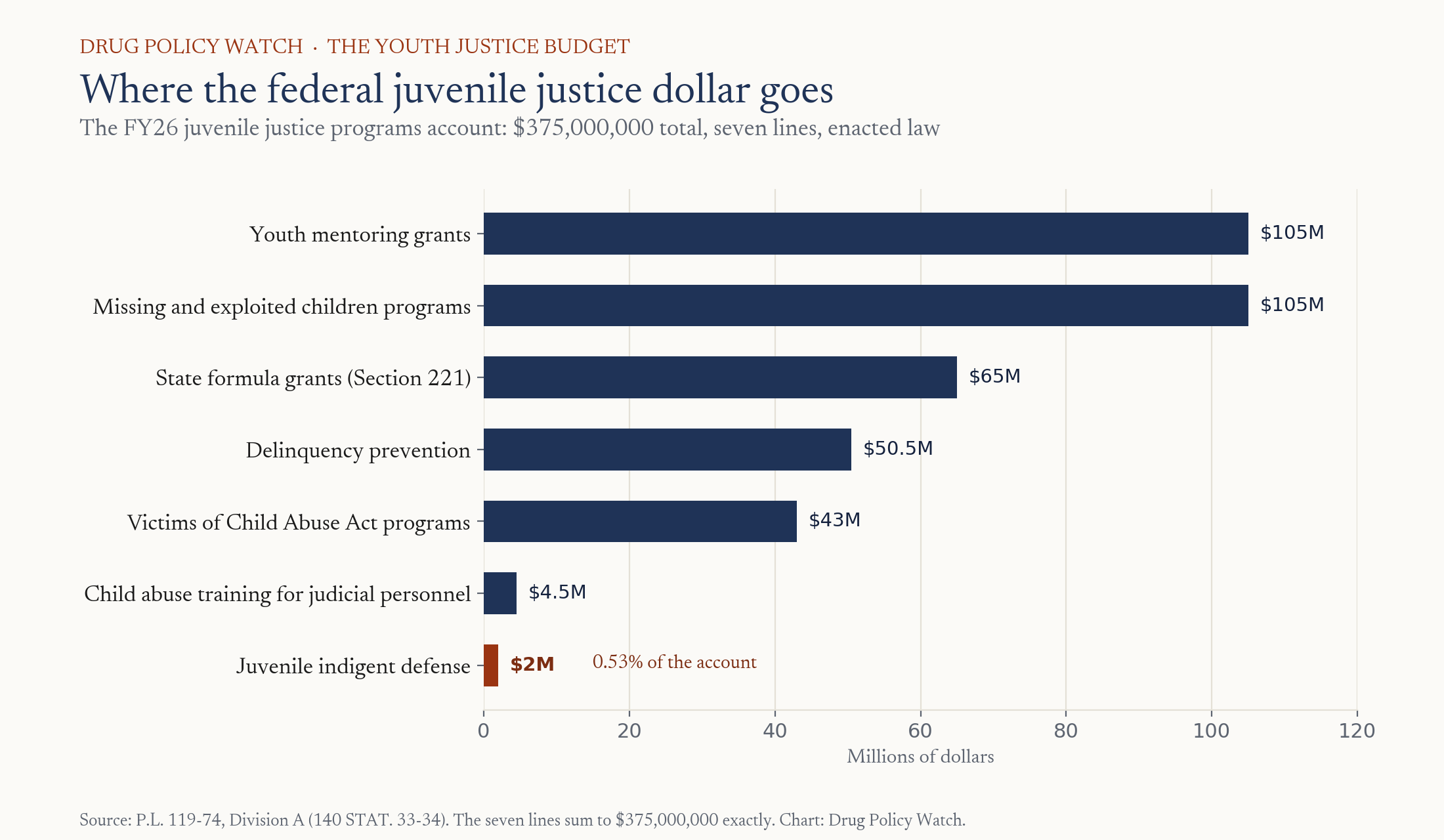
    New · Investigation

    Nebraska Voters Approved Medical Marijuana. Its Officials Are Fighting It at Home and in DC.

    Correction, July 12, 2026. An earlier version of this piece described the attorneys general at the DEA hearing as a four-state bloc including Louisiana. That is wrong. Louisiana moved to withdraw as a designated party on June 24, 2026, and Chief Administrative Law Judge Derek Julius granted the motion on June 25, writing that Louisiana thereby "waives its status as a person entitled to a hearing." The hearing bloc is three states: Nebraska, Idaho and Indiana. We published on July 9 and 10 and missed an order issued two weeks earlier. The error was ours. Louisiana had already withdrawn from the parallel D.C. Circuit petition, so it has now left both fights, and it is the only one of the four that runs its own medical cannabis program. (Order of Chief ALJ Julius, June 25, 2026; reported by The Marijuana Herald.)

    One Office, Three Fences. Part one of a two-part series; part two reports the DEA hearing testimony and what it means after the record closes, on or before July 15. A diagnosis aimed at offices and acts, never at any person. Every claim carries its source.

    In one line: Nebraska voters approved medical cannabis by supermajority, and the same offices that stood up its rules are also in state court trying to void the vote and in Washington arguing against the federal change that would ease it. Approve it at home, litigate to undo it, fight the federal fix, all in one fortnight.

    In November 2024, Nebraskans did a rare and deliberate thing. By roughly 71 percent and 67 percent, they passed two ballot measures, Initiative 437 and Initiative 438, that legalized medical cannabis and built a commission to regulate it (Nebraska Examiner; 2024 Nebraska Initiative 437). A supermajority in a conservative state wrote a new common right into law: sick people could use this plant, and a public body would govern how.

    What has happened in the twenty months since is a case study in how a public vote gets fenced in. Not overturned, not yet. Narrowed. The pattern is not unique to Nebraska or to cannabis, which is why it is worth learning to read. What follows is less a Nebraska story than a way to read one.

    The clearest way to learn the pattern is to watch a single fortnight in the summer of 2026, when the same offices that had spent a year and a half contesting this program stood up its rules, argued in court to void it, and prepared to argue in Washington that the federal ground beneath it should not move. One public. One plant. Three fences going up at once.

    The fortnight

    A handful of days in late June and early July tell the story.

    On June 22, 2026, the Nebraska Medical Cannabis Commission greenlit the first legal cannabis planting in state history, clearing a small number of licensed cultivators to put seeds in the ground (Nebraska Examiner).

    On June 30, 2026, Attorney General Mike Hilgers certified the constitutionality of the Commission's regulations, the last legal hurdle before the Governor. He wrote that "the medical cannabis regulations do not clearly violate the state or federal Constitutions on their face," and, in the same document, that "my review of the medical cannabis regulations does not imply my support for or opposition to the regulations as a policy matter" (Nebraska AG signing statement, June 30, 2026; Marijuana Moment).

    On July 1, 2026, Governor Jim Pillen approved the permanent rules, which take effect five days after they are filed with the Secretary of State (Office of Governor Jim Pillen; WOWT).

    And within the same stretch, the one move the public still had to widen the opening failed. A citizen initiative to write a constitutional right to use "all plants in the genus Cannabis" for adults twenty-one and older did not gather enough valid signatures by the state deadline and will not appear on the November 2026 ballot. It was the fifth recreational attempt since 2018, and like the four before it, it did not qualify (Ballotpedia); Ballotpedia News).

    Read together, the fortnight is not a contradiction. It is a structure. The same apparatus that let the first plants go in the ground is narrowing what can be grown, who can grow it, and who can reach it.

    The three fences of one office

    The Attorney General's office is a party to all three.

    The first fence is the certification itself, and the language around it. The office signed off that the rules do not facially violate the constitution, while stating plainly that the signature implies no support. It went further. It warned that Nebraska is exposed in a way most states are not, noting that "Congress did not include Nebraska on the list of States for which the United States Department of Justice cannot prosecute medical-marijuana-related crimes in its most recent appropriation rider," and that this exclusion "may give rise to an inference that Congress does not intend to exempt Nebraska's medical marijuana regime from federal law's reach" (Nebraska AG signing statement). The certification approves the program while marking, in the office's own words, the federal cliff it stands near.

    The second fence is in the courts. Former state senator John Kuehn is asking the Nebraska Supreme Court to throw out the 2024 measures on the ground that notarial and circulator fraud tainted the petition signatures that put them on the ballot; Secretary of State Bob Evnen and the Attorney General's office have taken the challenger's side rather than defend the vote (Nebraska Examiner). One Grand Island circulator pleaded guilty to forging signatures, and the challengers argue that fraud by a notary should invalidate every signature that notary processed, potentially tens of thousands of them. The court heard argument on December 3, 2025, and as of the June 30 certification it had not ruled, more than two hundred days later. If the challengers prevail, the sponsors must prove 86,499 valid signatures per petition; they filed with a margin of 6,822 above the requirement. A ruling for the challengers could void both measures despite the 71 and 67 percent votes (1011now; Nebraska Examiner).

    A separate appeal, argued April 27, 2026, presses the distinct claim that federal law preempts the state program entirely (Nebraska Examiner). Two tracks, one aim: undo the vote.

    The third fence is federal, and it is where the state fence-builder takes the argument national. The DEA is holding a hearing, from June 29 to no later than July 15, 2026, on whether to move marijuana to Schedule III, and it seated seven opponents to argue against the change. One of the seven is a bloc of attorneys general, Nebraska, Idaho, and Indiana, scheduled to present on July 14 (Louisiana was the fourth, and withdrew as a designated party on June 25, 2026) with witnesses including Yale's Deepak Cyril D'Souza and Humboldt County Sheriff William Honsal (Drug Policy Watch, Who Got a Seat; testimony schedule per the ALJ order). Their argument is not about health. It is federalism and slippery slope: that rescheduling oversteps federal administrative law and treaty obligations and will speed adult-use legalization. In the parallel litigation, the live petitioners in the D.C. Circuit are Nebraska and Indiana; Louisiana withdrew from the petition in late May 2026 and from the DEA hearing itself on June 25, 2026, and Idaho is in the hearing bloc but not on the petition (MJBizDaily). The office that certified Nebraska's medical rules at home is, in the same season, arguing in Washington that the federal reclassification which would ease those rules is unlawful.

    Approve the program at home, litigate to void it in the state's own court, and fight the federal change that would let it breathe. Three fences, one office, and a public vote in the middle.

    How high the fence is

    A program can be legal on paper and still be built so tight that little passes through. Nebraska's is. On our 50-state matrix, Nebraska scores a 5 out of 5 for enclosure pressure, the top of the scale, on the live July 9, 2026 reading. An earlier state brief scored it 4; a July 9 re-scoring, which treats a state with no operating legal market as fully enclosed, raised it to 5. Here is what the number is made of.

    The rules cap the plant. A cultivator may grow no more than 1,250 flowering plants, and vertical integration is prohibited, so no operator can hold more than one license type or combine cultivation, manufacturing, and retail (Marijuana Moment; cann.dev).

    The rules cap the store. There are no more than twelve dispensary licenses, allocated across the state's twelve judicial districts, which concentrates whatever market emerges into a handful of outlets clustered around Omaha and Lincoln (Marijuana Moment).

    The rules cap the owner. At least 51 percent of a licensee must be held by United States citizens who have been Nebraska residents for at least four years, a wall that fences out multistate operators and most outside capital (cann.dev).

    The rules cap the product. Reporting on the adopted rules describes a ban on smoking and vaping products and on edibles, a five ounce limit per thirty days, of which no more than five grams may be delta-9 THC from a single dispensary (Marijuana Moment). The 2024 measures authorize no home cultivation, so a patient cannot grow a plant to fill the gap (Marijuana Policy Project).

    And the rules leave the doctor exposed, breaking the pattern on purpose. The Attorney General has said he will review professional-licensing complaints against practitioners who recommend cannabis, which advocates say has chilled the in-state physician pool that patients need to qualify (Nebraska Examiner).

    This is not a competitive market with a few rough edges. It is, in our reading, a scarcity design: a small number of in-state, capitalized license holders growing a capped crop, selling a narrow set of products through a dozen doors, to patients who must first find one of a shrinking number of willing physicians.

    Who is fenced out

    Every fence names the people on the far side of it. The residency and single-license-type rules favor established in-state money over the undercapitalized, the out-of-state operator, and the new entrant. The one-dispensary-per-district cap leaves most of rural Nebraska out by geography. The product ban excludes patients whose needs do not fit a narrow list of forms. The no-home-grow rule shuts out anyone who would simply grow their own rather than wait for a distant, expensive store. The chilled physician pool leaves patients who cannot find a doctor willing to sign.

    A wider fence is coming for a different group entirely. In two stages, on November 12 and December 11, 2026, a federal redefinition of hemp caps finished consumable products at a trace level of total THC, which will foreclose most of the intoxicating hemp products now sold in Nebraska smoke shops and gas stations. Because Nebraska built no state framework to legalize or regulate those products, there is no domestic structure to soften the landing (Congressional Research Service; Vicente LLP).

    How to see it coming

    Enclosure of a commons rarely arrives as an outright ban. A ban is loud, and people fight it. Enclosure arrives as procedure: licensing rules, ownership thresholds, product lists, and buffer zones, each step defensible on its own, each announced as safety or standards or order, and the sum of them a wall around a thing a public was promised it could share. No single board looks like a fence; the wall is only visible as a whole.

    Six questions separate a real opening from a fenced one. Who is allowed to produce it, and does the rule favor incumbents and insiders over newcomers and outsiders? How many are allowed to sell it, and where, and does the cap concentrate the market in a few hands? Which forms are permitted, and does a narrow list shrink the real market to a sliver? Can an ordinary person supply themselves, or has self-provision, the home garden, the small maker, been quietly removed? Are the professionals who serve the public protected in doing so, or exposed to complaint and sanction until they stop? And the tell at the top: do the same officials who build the fence at home also defend it in the courts and in federal rulemaking, so that the state and national moves point the same way? When they do, the fence is a strategy, not an accident. That is enclosure by convergence.

    Nebraska answers all six the way an enclosed commons does. The next boards go up in public over the coming days: the July 14 testimony in Arlington, where the three-state bloc will argue federalism and the fear that legalization will spread rather than medicine or patients; the Nebraska Supreme Court, weighing whether a supermajority vote can be undone on the validity of signatures; November 12 and December 11, when the federal hemp cap lands on a state that built nothing to catch it; and the professional-licensing complaints, the quietest fence of all, because a program with no doctors willing to sign is a right on paper and nothing in a clinic.

    The threshold

    The fence in Nebraska is nearly finished, and the first plants are only now in the ground inside it. The 71 and 67 percent votes have not been repealed. They have been narrowed by rule and contested in court, but as of this writing the measures are law and certified patients may possess up to five ounces (Nebraska Examiner). A mandate that a supermajority wrote is a standing public claim, and it does not vanish because the offices charged with carrying it out have contested it at every turn.

    What the record shows, plainly and from public documents, is a public that opened a commons and a set of offices spending two years fencing it back in, at home and in Washington, on the same days. Every fence named here was built by a rule or a lawsuit, which means every one of them can be lowered by a rule or a ruling.

    We will be in the record when it happens. Part two, after the hearing closes, will report what was argued in that room, whether the pattern held, and what it means for everyone on the far side of the fence.

    About the author. Jessica Mantonya is the founder of Drug Policy Watch and Hold in Common, an independent, non-captured tracker of cannabis, hemp, and psychedelic policy across the federal government and all fifty states. A longtime patient-access advocate, she follows the money and the paperwork to show how the plant is being fenced off, and how to keep it in the commons. She also advises operators, advocates, and funders on regulatory strategy, sourced intelligence, and anti-enclosure positioning. Work with her →

    Corrections. July 12, 2026: corrected the DEA hearing bloc from four states to three. Louisiana withdrew as a designated party on June 25, 2026. See the correction note at the top of this piece. To flag an error, write contact@drugpolicywatch.info.

    License. This article is free to share and adapt for non-commercial purposes, with credit, under CC BY-NC-SA 4.0. "Drug Policy Watch"™ is a trademark. See Terms & License.

    Every factual claim is documented and linked inline in the text above. Independent journalism and analysis, not legal advice.
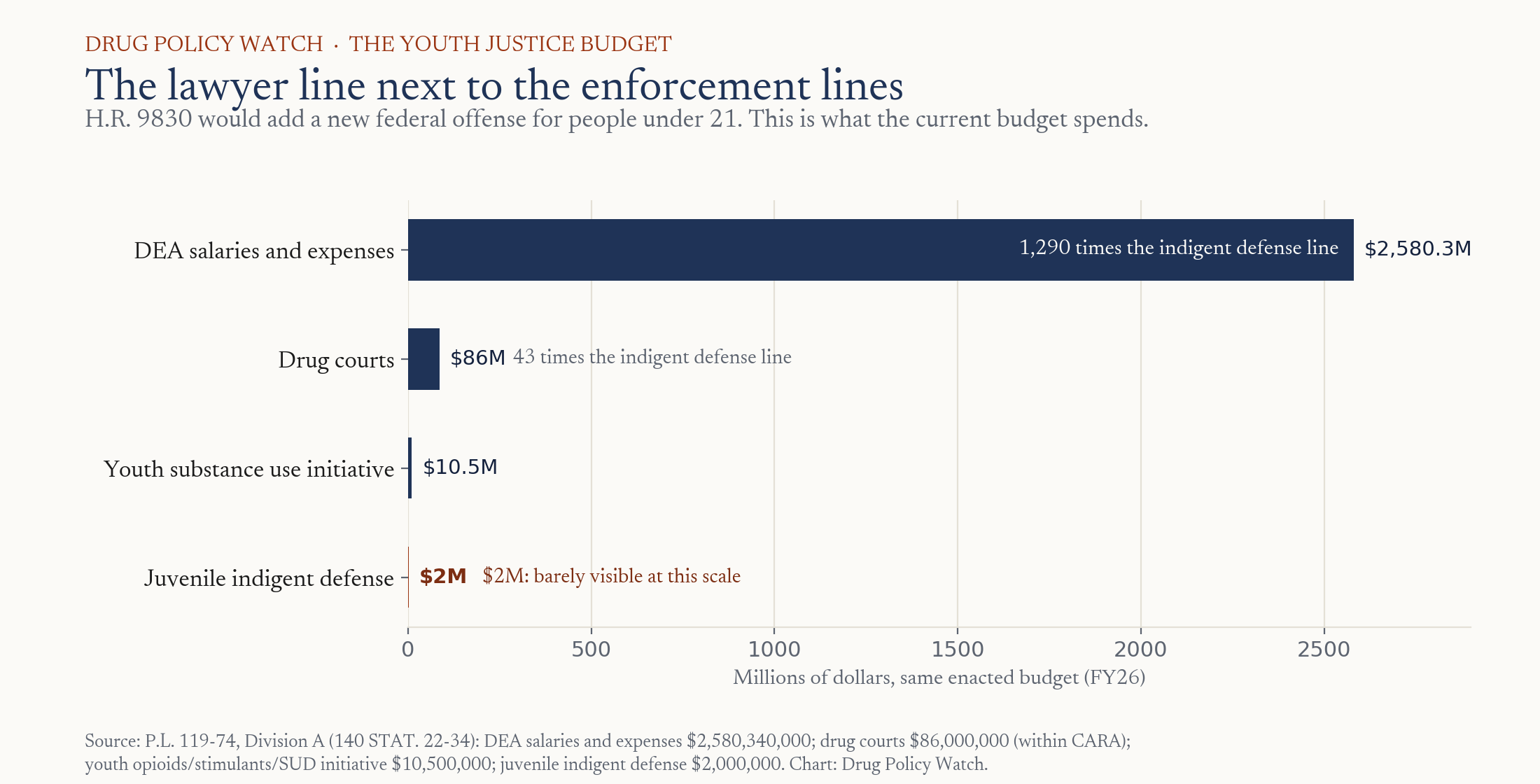
    Featured analysis · Follow the money

    The Strangest Bet in Weed

    Correction, July 13, 2026. An earlier version of this piece dated the DOJ and DEA final rule to April 23, 2026. The Acting Attorney General signed it on April 22, 2026. It was published in the Federal Register on April 28 and took effect that day. The error was ours and it appeared in three of our pieces. It changes no argument here. (91 FR 22714; see our corrections log.)

    Cannabis companies are spending millions to win the one thing that could sink them. Here is the trap, the players, the money, and what the government's own drug strategy reveals, in plain English.

    In one line: By fighting for Schedule III, the biggest cannabis companies may be funneling the whole plant, marijuana, hemp, and now the seed, into a patented lane only pharma can enter.

    The biggest cannabis companies in America are fighting hard for a change most people would call progress: moving marijuana into a friendlier legal category called Schedule III. It promises lower taxes, a path to the stock market, and a stamp of legitimacy.

    Here is the part nobody says out loud. The same door that lets them out of one trap may lock them inside a worse one. To see why, you have to start with a treaty almost no one talks about.

    The 65-year-old rule that runs everything

    In 1961, the United States signed the UN Single Convention on Narcotic Drugs Treaty (the Single Convention for short). It is still in force, and one sentence in it does most of the work: every country must limit cannabis "exclusively to medical and scientific purposes" (Article 4(c)).

    That is the whole game. Medical cannabis can fit inside a box the Single Convention allows. Recreational cannabis, by definition, cannot.

    The treaty is not just background. U.S. law ties federal drug scheduling directly to it: 21 U.S.C. 811(d) requires the government to control substances as needed to keep the country in line with its Single Convention obligations. So when people ask why federal cannabis policy bends the way it does, a large part of the answer is a 1961 treaty wired straight into the Controlled Substances Act.

    This is why, in April 2026, when the Justice Department moved cannabis from Schedule I (the most restricted tier, alongside heroin) down to Schedule III, it only moved two narrow things: FDA-approved cannabis drugs, and state-licensed medical marijuana. Adult-use weed, the stuff most of the legal market actually sells, was left behind in Schedule I. That was not politics. That was the treaty drawing the line.

    The Single Convention does two more things that matter later. It requires the medical supply to run through a tightly licensed, government-controlled channel, with the DEA as gatekeeper. And it caps how much can be produced: each country is supposed to estimate its medical and scientific need and make no more than that. Hold onto those two facts.

    A hearing that opened June 29, 2026 inside DEA headquarters will decide whether the rest of the plant follows medical marijuana down to Schedule III. Notably, every outside party the DEA invited to testify opposes the change. But whatever the hearing decides, the treaty already set the shape of the fence.

    The money problem driving the whole thing

    So why are the big operators pushing so hard? Follow the money. A quick note on who "the big operators" are: in this industry they are called MSOs, multi-state operators, the large companies that grow, process, and sell cannabis across many states. They are the ones with the most debt, the most lobbyists, and the most to gain or lose here.

    Start with a tax rule called Section 280E of the federal tax code. It says any business that traffics in a Schedule I or II drug cannot deduct normal expenses like rent, payroll, or marketing. Here is what that means in plain terms: a normal company is taxed on its profit, what is left after expenses. Under 280E a cannabis company is taxed on something much closer to its gross sales. For retail-heavy operators, effective tax rates can exceed 70 percent.

    Now add debt. Most of the big MSOs borrowed heavily, and the loans are coming due in a cluster the industry calls a maturity wall (a stretch where a lot of debt matures at once and has to be paid off or replaced). As of spring 2026, of the eight major MSOs examined, only two, Green Thumb and Trulieve, hold more cash than debt (a net-cash position). The other six owe more than they hold (they are net borrowers). Curaleaf owes roughly 459 million dollars net of cash, meaning its total debt minus the cash on hand, per its Q1 2026 SEC filing. Verano, Cresco, Ascend, Jushi, and TerrAscend are all net borrowers too. The interest rates are brutal. Several pay between 11.5 and 12.75 percent, and Curaleaf's borrowing cost jumped from 8 percent in 2021 to 11.5 percent in 2026 on the same kind of loan (senior secured notes). These figures come from the companies' own quarterly filings with the SEC, for the quarter ended March 31, 2026.

    And here is the cruelest part. When a normal company drowns in debt, it files Chapter 11 bankruptcy, the federal process that lets a company reorganize what it owes and keep operating. Cannabis companies effectively cannot, because the plant is still federally illegal, so the federal bankruptcy courts are off limits to them. When one fails, it gets sold off fast and cheap to whoever has deeper pockets. Two large operators, Ayr Wellness and Cannabist, have already announced court-supervised wind-downs of exactly that kind.

    Put it together: a tax rule (280E) drains your cash, your loans refinance (roll into new loans) at punishing rates, and a missed payment means a fire sale, not a reorganization. Schedule III drugs are not subject to 280E. Move cannabis there, and that tax disappears. For a debt-heavy company, that is close to a matter of survival. That is the engine under the rescheduling fight.

    Why the relief is also a moat

    But notice who actually benefits. To claim the 280E tax break, an operator has to register with the DEA and take on pharmaceutical-style obligations: clean-room-grade manufacturing standards, federal fees, inspections, and the treaty's government-as-buyer crop rules. The tax cut and a big new compliance bill arrive in the same envelope.

    For a large, well-funded company, that is the best kind of win: lower taxes for you, and a wall that smaller competitors cannot climb. The same rules that cut your tax rate price out the craft grower and the single-store shop. The relief and the consolidation are the same event. That is why the legal press keeps calling Schedule III "a win for big players." The structure rewards size and capital.

    The trap

    Here is where the bet gets strange.

    To win the tax fight, the MSOs have to get cannabis into the federal medical system. But "medical" in the federal world is not a vibe. It is a specific thing the FDA controls, and to the FDA, "medicine" means a product that is approved, standardized, and usually patented.

    Their flower is none of those things. You know whose products are? Pharmaceutical companies'. Epidiolex, owned by Jazz Pharmaceuticals, is an FDA-approved cannabis drug. And a German firm, Vertanical, earned an FDA "Breakthrough Therapy" designation in May 2026 (a status that speeds review of a promising drug) for a full-spectrum cannabis extract for chronic low back pain, built on a patented plant variety it owns (U.S. Plant Patent 35,380), with further patents covering the extract, the process, and the use.

    So the legitimacy the MSOs are chasing is defined by a bar only pharma clears. For years they have lived in one gray area: legal under state law, illegal under federal law, but survivable, because it lets them sell flower today. By driving cannabis into the federal medical lane, the MSOs trade that survivable gray area for a deeper one, where "real" medicine means FDA-approved and patented, and theirs is the "unapproved" version of a drug someone else owns. In rushing to escape one fence, they may be building another around themselves.

    The door is too small

    It gets sharper. Remember the production cap. Here is how it actually works, because the mechanics are the point.

    Under the Controlled Substances Act, the DEA sets an annual aggregate production quota, a national ceiling on how much of a controlled substance may be made each year (21 U.S.C. 826). DEA is supposed to base that ceiling on the estimated legitimate medical, scientific, research, and industrial need, plus lawful exports and a reserve, and it publishes the numbers in the Federal Register. This dovetails with the Single Convention, under which the United States files an annual estimate of its medical and scientific need with the International Narcotics Control Board and is bound to hold production to it (Articles 19 and 21). In short: a federal agency decides, in advance, how much may exist, and it is legally pointed at a small "medical and scientific" target.

    Now look at the scale. Historically, the federal government's legal medical and research cannabis supply has been measured in the thousands of kilograms. The state-legal market is a multibillion-dollar industry growing it by the ton. The federally "legitimate" medical channel is a tiny fraction of what the country actually produces.

    In other words, the official medical door was never built to fit a plant industry this size. It was built to a pharmacy's scale. The MSOs are pushing to walk through a doorway sized for pills.

    Why the state shops cannot just sign up

    There is a wall most people miss. Even with rescheduling, you cannot handle a controlled substance without a DEA registration, and registration is not a formality. The CSA says DEA must judge each applicant against the "public interest," including whether the business complies with applicable state and federal law (21 U.S.C. 823). A business that is illegal under federal law cannot satisfy that test. DEA made the same point in its own 2020 rule on growing marijuana for research: a state license is not federal authorization.

    The April 22, 2026 order cracked the door for one group only. It created a narrow DEA registration pathway for FDA-approved products and state-licensed medical marijuana, and it treats a state medical license as conclusive evidence of state-law authorization. Adult-use and recreational operators got nothing. They remain in Schedule I and cannot register at all. And even for medical operators, a DEA registration does not deliver full federal legality, because marketing a Schedule III drug product generally requires FDA approval under a separate law (the Food, Drug, and Cosmetic Act), and dispensary cannabis is not an FDA-approved drug. So the "win" is a narrow, conditional permission slip, not a clean welcome into the legal economy.

    And remember, the 280E tax break only covers the medical side. Recreational cannabis, which is the bigger share of most companies' sales, stays in Schedule I and keeps paying the punishing tax. It also has the least legal cover: the long-standing budget rule that stops the Justice Department from prosecuting state-legal operators protects medical marijuana only, not adult-use. So even the win is half a win, and it is the smaller half.

    There is one more twist. Every time the industry campaigns to be treated as legitimate medicine, and every time a company like Vertanical hits a new milestone, the bar for what counts as "real" cannabis medicine rises. The MSOs are helping build the very standard they cannot meet without becoming drug developers themselves.

    The longer game

    None of this is an accident. The MSOs' plan, read from their own public moves, runs in steps.

    First, escape the gray zone and look legitimate. Second, use that to reach the stock market and cheaper money. Trulieve uplisted (moved its stock from the small over-the-counter market up to a major exchange) to the New York Stock Exchange in June 2026, trading as TRLV from June 10, billing itself as the first US plant-touching cannabis operator to do so. Third, buy up the failing competitors on the cheap as the debt squeeze takes them down. Fourth, become the platform that big tobacco and alcohol money rolls up if cannabis is ever fully legalized, money that is already staged through companies like Canopy (in which Constellation Brands holds a large stake) and Cronos (in which Altria holds a large stake).

    Through all of it, the founders keep control. The biggest operators use special "super-voting" shares that let a handful of people steer the company while owning only a small economic slice of it, and in June 2026 Curaleaf voted to remove the automatic sunset that would have ended that arrangement once it listed on a US exchange.

    It is a coherent MSO plan. The flaw is that the financial logic pushes them straight through a door built to a scale they cannot fit.

    The tobacco flank: a quieter version of the same move

    There is a second lane where the same game is playing out, with a tobacco giant attached.

    British American Tobacco, the maker of Camel and Newport, now owns about 40 percent of Charlotte's Web, the CBD brand born from the famous hemp story. The deal closed in May 2026, converted the company's main convertible debenture (about 75 million Canadian dollars of debt) into equity, and put two BAT people on its board, including the general counsel of BAT's US tobacco arm, Reynolds American. BAT also holds a large stake in a Canadian cannabis company and a piece of a venture trying to push a hemp-derived drug through the FDA. It is not betting on legal weed the way others are. It is buying the already-legal, compliant, FDA-friendly lanes: wellness CBD, pharma development, regulated markets abroad. Same pharmaceutical-shaped channel, approached from the hemp side.

    And Charlotte's Web is doing the hemp version of the MSO move: working to turn a chaotic, low-barrier hemp market into a regulated, FDA-supervised, age-gated, milligram-capped system that still preserves access to non-intoxicating full-spectrum CBD. That sounds like consumer safety, and it is partly that. It is also exactly the kind of expensive, paperwork-heavy lane a tobacco-backed company is built to dominate and small hemp shops are not.

    The hemp cliff, and what it does to operators

    You can see the same fence going up in the hemp law. A federal hemp ban signed in late 2025 takes effect in two stages, on November 12 and December 11, 2026, and it is worth understanding exactly what it does, because the details decide who survives.

    Section 781 of Public Law 119-37 rewrites the definition of hemp. The old line was simple: hemp meant cannabis with no more than 0.3 percent delta-9 THC. The new line measures total THC (including THCA, which converts to THC when heated) and adds a hard cap of about 0.4 milligrams of total THC per container of finished product. That per-container math is the sleeper. It does not just ban the obviously intoxicating hemp products like delta-8, delta-10, THC-O, and THCP. It is so tight that much full-spectrum CBD, and even many non-intoxicating CBD products, would blow past the limit and become federally illegal.

    For operators, this is not a tweak. It is a cliff. With the grace period ending November 12 and December 11, 2026, a hemp business has four realistic options: reformulate products to fit under the cap, liquidate or destroy noncompliant inventory before the deadline, exit the business, or try to move into a state-regulated marijuana program where one exists. Industry groups put the stakes high. The U.S. Hemp Roundtable, an industry coalition (so read these as industry estimates, not government figures), estimates that more than 90 percent of CBD products exceed the new cap, that upward of 95 percent of hemp products could be eliminated, that the rules put roughly 300,000 jobs and a market around 28 billion dollars at risk, and that states could lose about 1.5 billion dollars a year in tax revenue.

    One honest caveat: the ban is statutory and self-executing, but the FDA and DEA may not have the resources to enforce it broadly overnight, and there is an active legislative push to soften or delay it. So the day-after picture is real but fluid. What is not fluid is the direction. The compliant, well-funded brands are built to absorb this. The small and looser operators are the ones the rules clear out. That is the Charlotte's Web pattern again, at the level of the whole hemp market.

    The seed in the story

    There is a quieter piece of the hemp law that may matter most of all, and it reaches the genetics themselves.

    To be precise, there is no separate "seed ban" statute. What there is is the way Section 781's total-THC test reaches past the harvested product all the way back to the seed. The new definition excludes from "hemp" the viable seeds of any plant that exceeds 0.3 percent total THC. In plain terms, high-THC seeds and the genetic material behind them carry federal marijuana exposure once the definition takes effect. That reverses the practical effect of a January 2022 DEA position (often called the seed letter) that had treated cannabis seeds and genetic material as hemp, and therefore not controlled, as long as they tested under 0.3 percent delta-9 THC. The test is changing from delta-9 to total THC, and it now reaches the seed.

    Why does that matter for the market? Because whoever controls the seed controls the plant. Breeders, small farmers, and home growers rely on open, legal access to genetics. Narrow that access and you push the future of the plant toward the players who can own genetics through patents and plant-variety protection, the same direction Vertanical's patented cultivar points. Set the seed reach of the hemp ban beside the patent land grab on cannabis genetics, and a pattern shows up: the harvested product, the medicine, and now the seed are all drifting into the same fenced, owned lane. There is a window, until November 12 and December 11, 2026, to move genetics into or out of the country legally, and the people without lawyers and import paperwork are the least equipped to use it. (The genetics-concentration point is analysis, not a single sourced fact; the seed reclassification itself is in the statute.)

    The official tell: the 2026 National Drug Strategy

    If you want to see the worldview driving all of this, read the White House's 2026 National Drug Control Strategy, released May 4, 2026. Read straight from the document, its treatment of marijuana is the tell.

    It lists "high-potency marijuana grown by criminal groups," along with "unregulated psychoactive derivatives of hemp [such as delta-8 tetrahydrocannabinol (THC)]," among its top domestic-production concerns. It pledges to go after "the interstate distribution of illicit marijuana from states with legal markets." And a featured text box titled "Illegal Marijuana Grows Destroying American Land and Supporting Drug Cartels" argues the marijuana trade has been "industrialized by sophisticated, transnational criminal organizations, particularly those with ties to China," groups that "systematically exploit states where marijuana has been legalized under state law." Its showcase example is Oklahoma, where it says Chinese criminal groups run more than 80 percent of the state's thousands of marijuana and hemp farms, and 2023 production exceeded the state's entire licensed medical demand by at least 32 times.

    Notice what that framing does. The federal government's flagship drug document treats the state-legal plant mainly as a criminal threat, a cartel and foreign-exploitation story, not as a maturing legal industry and not as medicine. Set that beside everything above, where the only federally blessed cannabis is the FDA-approved, patented, pharmaceutical kind, and the posture comes into focus. Officially, the dispensary plant is a danger. The sanctioned version is the one that comes through pharma's door. The plant stays fenced; the patent-holders hold the gate.

    What it means for the little guy and home growers

    Strip the strategy away and ask the only question that matters for most people: what happens to the small operator and the person who grows at home?

    Small and craft growers get the same 280E tax break on paper. In practice it is locked behind a federal wall: register with the DEA, run a pharmaceutical-grade facility, pay federal fees, pass inspections. Most small farms were never built for that and cannot afford the retrofit. To be fair, nothing forces a small operator into the federal system. They can keep running under state law exactly as before. But the pressure all runs one way. The realistic choices become: sell to a bigger company, take a bigger company's money, or fold. The relief that rescues the giants is the same force that squeezes the small.

    Home growers get nothing. Schedule III does not create any right to grow your own, and it does not create a personal-use exemption. It changes who can be a licensed handler, not whether an ordinary person can keep a few plants. Home cultivation stays a question of state law and remains illegal under federal law. The Single Convention behind all of this has no category for cannabis as a common plant that people grow for themselves. It only recognizes a controlled product moving through licensed hands. That is the deepest part of the fence: not a tax line, but the quiet erasure of the option to simply opt out of the market.

    On the hemp side it is the same story, now reaching the seed. The coming hemp rules favor the compliant, well-funded brands and clear out the small and looser operators, and the new seed math chips away at the genetics a home gardener or small breeder would need to opt out at all. The person growing a CBD plant or making a tincture is not who these frameworks are built for.

    Flowchart showing three pressures (280E tax, the debt wall, no Chapter 11) crushing small cannabis operators, big capital rolling them up, and a narrow federal medical gate that leaves patent holders inside the fence and small farmers, patients, and home growers fenced out.
    How the consolidation works: the squeeze, the roll-up, the gate, and who ends up fenced out.

    The bottom line

    The pattern is the same on the marijuana side and the hemp side. The plant is being funneled into a licensed, capped, pharmaceutical-shaped lane that rewards whoever can pay to stand inside the fence, and offers nothing to the small farmer, the patient priced out, or the person who would rather just grow their own. The marijuana product, the hemp product, and now the seed are all being pushed through the same gate.

    The big operators asked for legitimacy. They may have asked for the one thing they cannot survive. And the people most likely to be fenced out are the ones who were never in the room.

    Sources

    • 1961 UN Single Convention on Narcotic Drugs (medical-and-scientific limit, Article 4(c); estimates and limitation, Articles 19 and 21): link
    • CSA tie to the treaty, 21 U.S.C. 811(d): link
    • DEA production quotas, 21 U.S.C. 826 and 21 CFR 1303.11: link · link
    • 2026 aggregate production quotas (Federal Register): link
    • DEA registration standard, 21 U.S.C. 823 (public-interest factors): link
    • DEA 2020 rule, growing marijuana for research (state license is not federal authorization), 85 FR 82333: link
    • April 2026 rescheduling order (FDA-approved and state medical to Schedule III): link
    • What rescheduling does and does not change (CRS, Foley & Lardner): link
    • 280E and rescheduling (US Treasury): link
    • MSO debt and rate figures: company Q1 2026 SEC filings (Forms 10-Q, 6-K, 8-K, quarter ended March 31, 2026); Curaleaf net debt per its Q1 2026 6-K
    • Trulieve NYSE uplisting (announced June 5, trading June 10 as TRLV): link
    • BAT and Charlotte's Web debenture conversion (SEC 8-K, 2026): link
    • Vertanical FDA Breakthrough Therapy designation (VER-01, chronic low back pain): link
    • U.S. Plant Patent PP 35,380 (Vertanical, cannabis plant "DKJ127"): USPTO Patent Public Search (ppubs.uspto.gov) and Google Patents
    • Federal hemp ban, Section 781 of Public Law 119-37 (total-THC redefinition, per-container cap, effective Nov 12, 2026): link · link
    • Hemp industry impact estimates (U.S. Hemp Roundtable, industry figures): link
    • Hemp ban reaches seeds and genetics; reverses the 2022 DEA seed letter: link · link
    • 2026 National Drug Control Strategy (White House / ONDCP, May 4, 2026): link

    About the author. Jessica Mantonya is the founder of Drug Policy Watch and Hold in Common. She also advises operators, advocates, and funders on regulatory strategy and anti-enclosure positioning. Work with her →

    This is a plain-English summary of fully sourced Drug Policy Watch references on the rescheduling incentives, the 1961 treaty mechanics, the federal hemp ban, and the genetics question. Every claim here is documented below or in those references. Independent analysis, not legal or financial advice.

    Featured op-ed · Follow the money

    Follow the Money: The June 29 Hearing

    Correction, July 12, 2026. An earlier version of this piece described the attorneys general at the DEA hearing as a four-state bloc including Louisiana. That is wrong. Louisiana moved to withdraw as a designated party on June 24, 2026, and Chief Administrative Law Judge Derek Julius granted the motion on June 25, writing that Louisiana thereby "waives its status as a person entitled to a hearing." The hearing bloc is three states: Nebraska, Idaho and Indiana. We published on July 9 and 10 and missed an order issued two weeks earlier. The error was ours. Louisiana had already withdrawn from the parallel D.C. Circuit petition, so it has now left both fights, and it is the only one of the four that runs its own medical cannabis program. (Order of Chief ALJ Julius, June 25, 2026; reported by The Marijuana Herald.)

    The hearing that opens June 29 is no longer the Biden-era rule everyone expected. It is a Trump-directed rescheduling, the participant list is one-sided, and the dollars behind it are documented. Here is what the record shows, and what it does not.

    In one line: the DEA invited seven participants to its rescheduling hearing and all seven oppose reform, while the largest operators that stand to save billions in taxes have given heavily to the administration that ordered the hearing. The correlation is on the record; causation is not proven.

    This is not the 2024 rule

    It is easy to read the June 29 hearing as the last act of the Biden administration's 2024 rescheduling proposal. It is not. A Trump executive order signed December 18, 2025 directed the rescheduling effort. A DOJ and DEA order signed April 22, 2026 and effective April 28, 2026 placed FDA-approved and state-licensed medical marijuana into Schedule III. The hearing that runs from June 29 to about July 15, 2026 considers whether to move all marijuana to Schedule III. The frame, the timing, and the people in charge are new.

    Seven invited, seven opposed

    The DEA named seven designated participants for the hearing, and every one of them is on record against rescheduling. They are Kevin Sabet's Smart Approaches to Marijuana (SAM); the National Drug and Alcohol Screening Association; the Tennessee Bureau of Investigation; the states of Nebraska, Idaho, and Indiana (Louisiana was designated and withdrew on June 25, 2026); DUID Victim Voices; Kenneth Finn, MD; and Phillip Drum, PharmD.

    Pro-reform groups were left out. The Atlantic Council for Tobacco Harm Reduction's cannabis arm, ATACH, and the American Council for Cannabis Medicine were excluded, as were pro-rescheduling officials from Colorado and New York. This is striking because more than 70 percent of public comments in the docket supported reform. Litigation over the proceeding is pending in the D.C. Circuit.

    What rescheduling is worth

    The stakes are concrete. Schedule III ends the Section 280E tax penalty that bars cannabis businesses from deducting ordinary expenses. Whitney Economics estimates that 280E relief is worth more than 2 billion dollars a year to the industry, and more than 15 billion dollars since 2018. That is the prize, and it explains why the largest operators have spent to be near the decision.

    Who funded the administration

    The money trail is documented in campaign-finance filings and reporting. Trulieve and the major multistate operators, including Curaleaf, Verano, Green Thumb, and Cresco, fund the American Rights and Reform PAC, which gave about 2.05 million dollars to Trump's MAGA Inc. super PAC in 2025. Trulieve and the U.S. Cannabis Council together gave about 1 million dollars to the inaugural, and Curaleaf gave 250,000 dollars. The industry spent about 3.2 million dollars or more on Trump-allied lobbyists. Trulieve alone put about 144.6 million dollars into Florida's failed 2024 Amendment 3 campaign.

    To be clear about the limits of this: the timeline shows a correlation between large industry contributions and an administration that then directed rescheduling. It does not prove that the contributions caused the policy. Both things can be true, that reform is overdue on the merits, and that the process is being run in a way that rewards the biggest players and excludes the public that overwhelmingly asked for it.

    Why it matters

    If the hearing is decided by a panel of opponents while the financial beneficiaries sit outside the room, the result will be contested in court no matter which way it goes. The deeper risk is the one this site keeps returning to: a reform that lowers taxes for the largest operators while the rules around licensing, canopy, and hemp tighten around everyone else. Follow the money, and also follow who was left off the list.

    This analysis draws on campaign-finance filings, agency orders, and published reporting. It describes a documented correlation between industry spending and federal action, not proven causation. It is journalism and analysis, not legal or financial advice.

    Featured analysis · Pharmaceutical capture

    Spot the Fence: The Patent That Proves the Point

    How whole-plant cannabis is being absorbed into pharma, and why the FDA's May 2026 breakthrough designation changes the math.

    In one line: By scientifically proving the entourage effect, the cannabis movement validated exactly the premise pharma needed to patent whole-plant products, and federal policy is now sorting the industry by FDA approval.

    For twenty years, the cannabis movement's strongest scientific argument was the entourage effect, that whole-plant cannabis works because its cannabinoids and terpenes act together. It was the argument for the plant over the pill. That argument just won. And in winning, it may have handed the prize to the other side.

    The trial that changed the frame

    In September 2025, the German firm Vertanical published a Phase 3 placebo-controlled trial in Nature Medicine. VER-01, a standardized full-spectrum extract from a proprietary cultivar, beat placebo on chronic low back pain across 820 patients with no signs of dependence (Nature Medicine). A companion Pain & Therapy study showed it rivaled opioids with better GI tolerability. Then, in May 2026, the FDA granted VER-01 Breakthrough Therapy Designation (Cannabis Business Times). The government that still calls the plant "no accepted medical use" just put a full-spectrum extract on the on-ramp to approval.

    Why the timing is the whole story

    The 2026 National Drug Control Strategy elevates FDA-approved cannabis medicines as the federal reference point and invites pharma to develop cannabis products, while branding dispensary and hemp products "emerging drug threats" (White House; Filter). The rule that emerges: cannabis is tolerated when it is FDA-approved, pharmaceutical-grade, and patent-protected. Everything else faces enforcement. Note the order of operations, the FDA-approved lane moved into Schedule III first (Federal Register).

    The patent land grab

    Courts have repeatedly held cannabis patents enforceable despite federal illegality (UCANN v. Pure Hemp; the Gene Pool extraction fights). BioTech Institute's plant patents (Nos. 9,095,554 / 9,370,164) are broad enough to read on a large share of strains; the U.S. government itself held the famous cannabinoid patent (No. 6,630,507). Vertanical's moat is the same building blocks, proprietary cultivar, extraction, and delivery. The patents don't protect a molecule; they protect the plant-as-medicine.

    "How the movement lost the argument it won"

    Researcher Dr. Del Potter argues in How the Cannabis Movement Just Lost the Argument It Won that proving the entourage effect created a stratified access architecture: pharma-grade cannabis becomes reimbursed, patent-protected medicine while dispensary and hemp cannabis face criminalization. His counter is to seize the FDA pathway through a nonprofit Phase 3 program licensed non-exclusively, an estimated $70 to 130M over six years. One researcher's interpretation, but the events it predicts are on the calendar.

    The strategic question is no longer "is the plant medicine?" That's settled. It's "who owns the medicine now that everyone agrees it is?"

    Analysis · Hold in Common

    The fence, in real time

    For twenty years the movement argued that the whole plant heals better than an isolated pill, the entourage effect. On June 9, a German pharmaceutical company, Vertanical, won Europe's first marketing authorization for a cannabis-based prescription pain drug, Exilby, built on a patented whole-plant extract, after the FDA gave it Breakthrough status in May and it beat opioids head to head.

    Read that again. The exact argument the grassroots made for decades, that the plant works as a whole, has been turned into the basis for patenting the plant as a whole. The science the commons developed became the instrument of its enclosure.

    Here is the fence in real time. The same year a patented whole-plant drug is fast-tracked toward American pharmacies, the hemp market that ordinary farmers built is set to be re-criminalized on November 12 and December 11, and the state dispensary economy waits to see whether a Schedule III order written without a vote of Congress sorts it into winners and losers. The plant is not being banned. It is being divided into a patented lane that is allowed and an open lane that is fenced.

    The field was open before the fence. The answer is to keep the whole plant in the public domain, so the medicine our communities built cannot be owned and rented back to them.

    Read more at Hold in Common →

    Sources: Vertanical EU marketing-authorization announcement (PR Newswire, June 9, 2026); FDA Breakthrough Therapy Designation (May 2026); Phase 3 results in Nature Medicine (2025). Analysis by Drug Policy Watch and Hold in Common.

    Featured analysis · The deadline

    The Hemp Cliff

    In two stages, on November 12 and December 11, 2026, hemp products legal in all 50 states today become Schedule I. What changes, what Congress is doing, and what it means for you.

    In one line: Section 781 of the FY2026 appropriations law redefined hemp by total THC; in two stages, November 12, 2026 for cannabinoids the plant cannot naturally produce and December 11, 2026 for the rest (Section 2019 of H.R. 6500), delta-8/10, THC-O, THCP and over-threshold products become federally controlled, no rulemaking required.

    The most consequential cannabis deadline of 2026 isn't the June 29 hearing. It's November 12 and December 11, 2026, the two dates on which the new federal definition of hemp takes effect (Section 2019 of H.R. 6500) and much of the intoxicating-hemp industry blinks out of legality. This is statutory law with fixed dates.

    What changed

    The 2018 Farm Bill defined hemp by delta-9 THC (≤0.3%). That word was the loophole, it allowed converted cannabinoids and THCA flower. Section 781 closes it by measuring total THC (including THCA) and capping intoxicating cannabinoids (CRS IF13136). Under the two-stage schedule (November 12 and December 11, 2026; Section 2019 of H.R. 6500), delta-8, delta-10, THC-O, THCP, any synthetic/converted cannabinoid, and products over the new threshold (≈0.4 mg total THC/container) become Schedule I.

    A business-continuity event

    The 2018 Bill birthed a multibillion-dollar industry, delta-8 gummies, THC seltzers, THCA flower, sold even in states with no legal market. Courts mostly blessed it (AK Futures; Anderson v. Diamondback). The 2025 statute overrides all of it. Realistic options: liquidate inventory before the deadline, reformulate to a total-THC definition (impossible for most intoxicating SKUs), seek state grace periods (which can't override federal scheduling), or pivot to compliant hemp / state-licensed cannabis.

    Congress is fighting in real time

    Bills pull opposite directions (Congress.gov): the American Hemp Protection Act (H.R. 6209) to repeal Section 781; the Hemp Planting Predictability Act (H.R. 7024) to delay it to ~2028; and FDA-framework bills like the HEMP Act (S. 2112). None has passed, though Section 2019 of H.R. 6500, signed September 2, 2026, moved most of Section 781 to December 11, 2026 and left November 12, 2026 for products containing cannabinoids the cannabis plant cannot naturally produce. Plan around the two dates holding.

    The bigger picture

    The hemp ban is one half of a sorting mechanism. As intoxicating hemp is banned, FDA-approved and state-medical marijuana moved toward Schedule III and the FDA granted Breakthrough Therapy status to a patented full-spectrum extract (May 2026). The government is opening a patent-protected lane and closing the cheap, unregulated one that competed with it.

    Analysis · The federal frame

    Inside the 2026 National Drug Control Strategy

    The 195-page document that quietly decides which cannabis counts as medicine and which counts as a threat.

    In one line: The 2026 Strategy treats cannabis through two lenses at once: criminalization for dispensaries and hemp, pharmaceuticalization for FDA-approved products. That split explains nearly every other fight covered here.

    Every section of this site sits underneath one document: the National Drug Control Strategy, the statutorily required, government-wide drug-policy plan issued by the White House Office of National Drug Control Policy. The 2026 edition, published May 4, 2026, is the first of the second Trump administration. It coordinates roughly 19 federal agencies and a ~$44 billion budget around a single organizing idea, control (White House).

    Fentanyl first

    The Strategy's center of gravity is the overdose crisis. Its priorities run in order: understand current and emerging threats (fentanyl and synthetic opioids, methamphetamine, increasingly potent marijuana, novel substances); eliminate supply through interdiction, precursor control, and the suspension of "de minimis" duty-free import treatment used to smuggle synthetics; and a public-health approach to prevention, treatment and recovery. Harm-reduction language, syringe services, fentanyl test strips, is notably de-emphasized relative to the prior administration's plan (Filter).

    Two lenses on cannabis

    What makes the 2026 Strategy consequential is how it splits cannabis in two. On the criminalization side, it frames state-legal cultivation as cover for transnational organized crime, singling out Chinese criminal groups, a framing echoed by Oklahoma's January 2026 "Operation Blunt Force," an alleged $1.5 billion syndicated grow network built on straw-owner licenses (News on 6). Enforcement is increasingly run through Homeland Security Task Force structures.

    On the pharmaceuticalization side, the same document elevates FDA-approved cannabis medicines (Marinol, Epidiolex) as the federal government's authoritative reference on cannabis health effects, and explicitly invites the pharmaceutical industry to develop cannabis-use-disorder treatments, while branding high-potency dispensary and hemp products "emerging drug threats."

    Why the split matters

    Read together, the two lenses describe a sorting rule: cannabis is tolerated when it is FDA-approved, pharmaceutical-grade and patent-protected, and targeted when it is not. That rule is exactly what the rest of 2026 is operationalizing, the Schedule III move for FDA-approved and state-medical products (Federal Register), the November hemp ban, and the breakthrough designation for a patented full-spectrum extract. The Strategy is the blueprint; the rescheduling, the hemp cliff, and the patent land grab are the construction.

    It is, in other words, less a list of programs than a statement of which version of cannabis the federal government intends to recognize. The dispensary and the gas-station gummy fall on one side of that line; the pharmacy shelf falls on the other.

    Overview · The whole board

    The 2026 Map: Federal Law vs. the States

    An audience-friendly tour of the whole board in five minutes.

    In one line: the federal government polices drugs as a security threat while states, courts and the patent office treat cannabis and psychedelics as products and medicines. In 2026 the two collide.

    There are two Americas when it comes to drugs, and in 2026 they're arguing inside the same government. One has legalized cannabis in 24 states and is mainstreaming psychedelic therapy. The other just banned hemp gummies nationwide and reframed state-legal grows as organized crime.

    Control first

    The 2026 National Drug Control Strategy (May 4) coordinates ~19 agencies and $44B; fentanyl is the enemy and harm reduction is de-emphasized. It singles out Chinese organized crime in state markets, a framing echoed by Oklahoma's January 2026 "Operation Blunt Force," an alleged $1.5B syndicated grow network (News on 6).

    Cannabis: states lead

    24 states + D.C. allow adult use; about 40 run medical. Florida, Pennsylvania and Hawaii are 2026's states to watch. Federal reform bills stall, but the administration moved marijuana toward Schedule III with a June 29 hearing (Federal Register); NORML wants a consumer seat (NORML).

    Hemp: the mirror image

    Section 781 bans intoxicating hemp in two stages, November 12 and December 11, 2026 (CRS). See "The Hemp Cliff" for the full picture.

    Psychedelics: therapy, not decrim

    70+ psilocybin bills across 26+ states; Oregon and Colorado run licensed programs; an April 18 executive order fast-tracks FDA review (Psychedelic Alpha).

    Courts and patents

    Raich still stands; Canna Provisions cert was denied. And in May 2026 the FDA granted Breakthrough Therapy status to Vertanical's patented full-spectrum extract (Nature Medicine): whole-plant cannabis cleared medicine's highest bar, under patent.

    The takeaway

    The federal government polices drugs as a security threat; states, courts and the patent office treat them as products and medicines. Both at once, colliding in 2026. Watch June 29, then November 12 and December 11.

    Drug Policy · 2026

    National Drug Strategy

    The 2026 National Drug Control Strategy (ONDCP, released May 4, 2026) is the federal frame around everything here: a whole-of-government, supply-first, fentanyl-centered plan that de-emphasizes harm reduction and treats high-potency cannabis and hemp as emerging threats.
    ~19
    Federal agencies coordinated
    ~$44B
    National drug-control budget
    3
    Core priority areas

    The three priorities

    • Understand the threat, fentanyl & synthetic opioids, methamphetamine, high-potency marijuana, novel substances.
    • Eliminate supply, interdiction, precursor control, suspension of de minimis import treatment.
    • Public-health approach, prevention, treatment, recovery; harm reduction notably de-emphasized.

    The Strategy elevates FDA-approved cannabis medicines (Marinol, Epidiolex) as the authoritative federal reference and invites pharma to develop cannabis-use-disorder treatments, the policy logic behind the "stratification" featured essay.

    Drug Policy · 2026

    Federal Bills, 119th Congress

    Hemp dominates the federal docket numerically (a swarm of bills racing the November ban), while cannabis-reform and fentanyl bills cluster behind. Most reform bills stall; the real federal movement has been administrative (rescheduling) and statutory (the enacted hemp ban and HALT Fentanyl Act).
    Tracked active/recent federal bills by category (119th Congress).

    Selected bills

    BillCategoryWhat it does
    STATES 2.0 ActCannabisProtects state-legal cannabis from federal penalties.
    MORE Act (H.R. 5068)CannabisDeschedules, expunges, taxes & reinvests.
    Marijuana 1-to-3 ActCannabisDirects rescheduling to Schedule III.
    American Hemp Protection Act (H.R. 6209)HempRepeals the new hemp restrictions.
    Hemp Planting Predictability Act (H.R. 7024)HempDelays the hemp ban to ~2028.
    HEMP Act (S. 2112)HempRaises lawful THC threshold toward 1%.
    Freedom to Heal Act (S. 3346)PsychedelicsSchedule I "Right to Try" for MDMA & psilocybin.
    HALT Fentanyl Act (H.R. 27)Drug policyPermanently schedules fentanyl-related substances (enacted).
    Fairness in Fentanyl Sentencing Act (S. 477)Drug policyLowers mandatory-minimum thresholds.
    Search all bills on Congress.gov →
    Drug Policy · 2026

    Cannabis, Hemp, and the 50 States

    Every state and DC, plus the federal government, on cannabis, hemp, psychedelics, broader drug policy, and active 2026 legislation, read through one lens: who is fencing the commons, and how hard.

    Beyond legal status, each jurisdiction carries an enclosure pressure score from 2 (open and decentralized) to 5 (heavily fenced by license caps, consolidation, or prohibition). Search and sort the matrix below, tap any row for a summary, and open the full sourced brief for any state. A planning snapshot, not legal advice.

    The matrix: all 50 states + DC

    Enclosure pressure: 2 open345 fenced · tap a row for the summary and full brief
    Jurisdiction Adult-use cannabis Intoxicating hemp Bills Enclosure

    MPP state pages → Wikipedia legal status →

    What reading all 51 together shows

    One procedure runs in parallel across every region and both parties: a shared thing is reframed as a problem, turned into a licensed and countable unit, titled to a few approved holders, and the older customary use is made an offense. The single force touching all 51 at once is the two-stage federal hemp cliff (November 12 and December 11, 2026), which closes a sprawling small-business market. The most fenced jurisdictions are the ten states scored at 5, whether by market capture (Florida, Idaho) or by prohibition that leaves the public no legal market at all (Wyoming, Wisconsin, North Carolina, Indiana, Kansas, Nebraska, South Carolina, Tennessee); the most open are Alaska and Vermont. The fight has moved inside the legal states, through taxes, license caps, and the capture of equity programs.

    Cumulative number of states with legal adult-use cannabis, 2012 to 2026.
    Current legal status breakdown (50 states + DC).
    24
    Adult-use states + DC
    18
    Medical-only states
    51
    Jurisdictions briefed, plus federal
    3.8
    Avg enclosure score

    The three reports

    Fund the coverage

    These briefs are free and fully sourced. With the federal hemp cliff landing November 12 and December 11, 2026 and the DEA rescheduling hearing underway, independent tracking matters most right now. Recurring support helps the most; about $25 funds a full refresh of one state brief. Become a member or give once.

    Methodology: each jurisdiction was researched independently against 2025 and 2026 sources and written to a standardized brief, then read together. The enclosure score is an editorial read. Bill lists are thorough on significant measures and link live trackers for the long tail; sponsor names are given where confirmable and marked unconfirmed otherwise. A planning snapshot, not legal advice.

    Drug Policy · 2026

    Psychedelics (States + Federal)

    Psychedelic reform is accelerating as medicine, not decriminalization: 70+ psilocybin bills across 26+ states, three states with legal access programs, and an April 2026 federal executive order fast-tracking FDA/DEA review.
    70+
    Psilocybin bills filed
    26+
    States with bills
    3
    Legal-access states (OR, CO, NM)
    $50M
    TX ibogaine trials
    JurisdictionStatusDetail
    FederalEO + FDA fast-trackApr 18, 2026 EO; ~$50M to states; psilocybin/MDMA still Schedule I.
    OregonLegal programFirst regulated psilocybin services; revised March 2026.
    ColoradoLegal programNatural Medicine Health Act; healing centers operating.
    New MexicoMedical programState medical psilocybin access enacted 2025.
    New JerseyResearch funding$6M psychedelic research initiative (Jan 2026).
    Alaska2026 ballot effort"Grow, gather, gift" psilocybin/mescaline/DMT measure.
    SD / MS / WVTrigger lawsMedical-use trigger laws gaining ground in 2026.
    Psychedelic Alpha tracker → UC Berkeley BCSP map →
    Drug Policy · 2026

    Drug Policy (Federal + States)

    Beyond cannabis: fentanyl and overdose reduction are the federal center of gravity, harm reduction is retreating, and Schedule III would quietly fix two industry pain points: the 280E tax and research access.
    AreaLevelStatus / development
    Fentanyl / synthetic opioidsFederalCentral 2026 priority; class-wide scheduling & precursor controls.
    Overdose deathsFederalHeadline metric; declines from the 2023 peak.
    Harm reductionFederalDe-emphasized vs 2022 to 24; naloxone access retained.
    Cannabis reschedulingFederalSchedule III placement (Apr 2026); hearing June 29.
    Sentencing / expungementStateMost adult-use states pair legalization with expungement.
    DecriminalizationStateOregon recriminalized small amounts (2024); broad decrim retreated.
    Banking / 280EFederalSAFER Banking pending; Schedule III ends 280E's deduction ban.
    NCSL drug policy →

    The Controlled Substances Act, in plain words

    The Controlled Substances Act of 1970 (the CSA) is the federal law that sorts drugs into five schedules. Schedule I is the most restricted, defined as high potential for abuse and no accepted medical use; cannabis has sat there for over fifty years. Schedule III is for drugs with accepted medical use and lower abuse potential.

    Where a substance sits decides almost everything downstream: whether researchers can study it, whether it can move across state lines, how it is taxed (the 280E penalty falls on Schedule I and II sellers), and what criminal penalties apply.

    Changing a schedule normally runs through a defined process: a scientific and medical review by HHS and the FDA, then DEA rulemaking, with a public hearing on the record. In 2026 the government used an expedited administrative route, under a December 2025 executive order, to move FDA-approved and state-licensed medical cannabis to Schedule III, and set a June 29 hearing on the rest. Critics, including litigants now in court, argue the expedited order skipped the full hearing the CSA requires and was done without any act of Congress. That procedural fight is one of the live stories we track.

    Why it matters here: scheduling is the master lever. It is the paperwork that decides who may grow, study, sell, and profit, which is exactly where enclosure happens.

    Drug Policy · 2026

    Federal Lawsuits

    The prohibition framework is holding in court. Raich still anchors federal power and the marquee challenge (Canna Provisions) is over after cert denial. The live action is administrative (rescheduling) and in the IP and firearms margins.
    Tracked landmark/active federal cases by category.
    CaseCategoryStatus / why it matters
    Gonzales v. Raich (2005)Constitutional/CSAUpholds federal power over intrastate cannabis, the precedent to beat.
    Canna Provisions v. BondiConstitutional/CSACert denied Dec 2025; the leading challenge is over.
    DEA rescheduling proceedingReschedulingSchedule III placement; hearing June 29 to July 15, 2026.
    AK Futures (9th Cir. 2022)Hemp/Delta-8Delta-8 lawful hemp, now overridden by the 2025 ban.
    UCANN v. Pure HempPatents/IPFirst cannabis patent suit; patents enforceable despite illegality.
    United States v. DanielsFirearms/2AGun ban for cannabis users unsettled after Rahimi.
    Harborside; Standing AkimboTax/280EWhy Schedule III matters to industry margins.

    Lawsuit dockets (non-patent)

    Docket numbers and free links for the major non-patent matters: the constitutional challenge, the firearms case, and the live DEA rescheduling proceeding.
    CaseDocketStatusLink
    Canna Provisions v. BondiD. Mass. 3:23-cv-30113; 1st Cir. 24-1628; SCOTUS 25-518Cert denied Dec 2025CourtListener
    United States v. Daniels5th Cir. 22-60596; SCOTUS 23-376Vacated/remanded after RahimiCourtListener
    DEA Rescheduling ProceedingDEA-1362; RIN 1117-AB87New hearing June 29, 2026Federal Register
    Drug Policy · 2026

    Cannabis & Hemp Patents

    A small set of landmark patents anchors the IP landscape, from the U.S. government's 2003 cannabinoid patent to BioTech Institute's broad plant patents and the extraction patents behind the major suits. The grant dates cluster in the mid-2010s, just as legal markets scaled.
    Landmark/litigated cannabis patents by grant year.
    PatentAssigneeGrantedNote
    6,630,507U.S. Dept. of HHS2003Cannabinoids as neuroprotectants, the "government patent."
    9,095,554 / 9,370,164BioTech Institute2015/16Broad cannabis plant utility patents.
    9,144,751 / 9,145,532 / 9,587,203Gene Pool Technologies2015 to 17Extraction-method patents asserted in litigation.
    9,730,911United Cannabis2017Liquid cannabinoid formulation (UCANN v. Pure Hemp).
    10,870,632Canopy Growth2020CO2 extraction (Canopy v. GW).
    2026 update. The newest enclosure is not a patent in this table but a finished medicine. On June 9, 2026, Germany and Austria approved Vertanical's Exilby, a standardized full-spectrum Cannabis sativa extract (chemovar DKJ127 / VER-01) sold under a trademark, backed by two Phase 3 trials and US FDA Breakthrough Therapy status, with a US filing planned for 2028. Vertanical states its evidence cannot be extrapolated to other extracts or to flower, fencing the entourage-effect proof to one product. Analysis: Dr. Del Potter, The Plant Has a Brand New Name ↗
    Google Patents → USPTO Patent Public Search →

    Patent litigation dockets

    Where to pull the actual filings for the major cannabis patent suits. Cannabis patents are enforceable in federal court despite federal illegality; these dockets are how that played out.
    CaseCourt / docketStatusDocket
    UCANN v. Pure HempD. Colo. 1:18-cv-01922; Fed. Cir. 22-1363Dismissed; fees affirmedCourtListener
    Canopy Growth v. GWW.D. Tex. 6:20-cv-01180 (Albright)Non-infringement for GWJustia
    Gene Pool v. Coastal HarvestC.D. Cal. 5:21-cv-01328Partial settlement (2023)Justia

    Pending patents watch

    The next frontier is being filed now: published applications over cannabis genetics, cannabinoid biosynthesis, and whole-plant "entourage" therapies, split fairly evenly across the three themes. Statuses change; always confirm on the linked record.
    Representative pending applications by theme (watchlist sample).
    Pub./App. No.Applicant / ownerThemeFocus
    US 2023/0265444 A1Not publicly confirmed (see link)GeneticsGene-editing in cannabis.
    US 2020/0323162 A1GenCann, LLCGeneticsHigh-cannabinoid cultivar.
    WO 2016/189384 A1Tweed, Inc. (Canopy Growth)GeneticsTHCA-synthase / chemotype methods.
    US 2025/0270181 A1Not publicly confirmed (see link)BiosynthesisCannabinoid synthesis & precursors.
    US 2020/0181631 A1Not publicly confirmed (see link)BiosynthesisCannabinoid-pathway engineering.
    WO 2019/164689 A1Not publicly confirmed (see link)BiosynthesisCannabinoid-producing microbes.
    US 2021/0128658 A1Not publicly confirmed (see link)Whole-plantWhole-plant therapeutic compositions.
    WO 2021/046154 A1Not publicly confirmed (see link)Whole-plantEntourage formulations.
    US 2016/0177404 A1Courtagen Life Sciences (K. McKernan)Whole-plantCannabis plants & production methods.

    Owners reflect the named applicant/assignee on the published record; several applications are not clearly assigned, so those link to Google Patents to verify. Pending-application ownership can change.

    Assignees to watch: Phylos, Front Range Biosciences, Trait Biosciences, BioTech Institute, Medicinal Genomics, Canopy Growth, GW/Jazz, Charlotte's Web, 22nd Century.

    Google Patents saved search →
    Drug Policy · 2026

    Live Trackers & Sources

    The authoritative, continuously-updated sources behind this site. Because hundreds of bills and dozens of cases move at once, these are the places to confirm any single detail.

    Legislation

    Status & advocacy

    Federal strategy & rescheduling

    Dockets & patents

    Beyond the Headlines · Analysis

    Hemp Just Hitched a Ride on an $87.6 Billion War Bill

    The White House wants to soften the hemp ban. The way it is asking, as a $0 footnote on a war funding bill, tells you more than the ask itself.

    In one line: The plant is not being banned outright. It is being divided into a lane that is allowed and a lane that is fenced.

    On June 24, the White House budget office sent Speaker Mike Johnson a funding request. Most of it is war. Tucked inside, almost as a footnote, is a line that could decide whether the hemp products millions of Americans use stay legal past November. That placement is the whole story.

    What the White House actually asked for

    The request is an $87.6 billion emergency supplemental. The bulk pays for "Operation Epic Fury," the administration's strikes on Iran's nuclear program, plus an Ebola response in Central Africa and a round of farm aid. Near the end, under a short list of urgent authorities, comes hemp. The administration asks Congress to either rewrite the federal hemp definition along the lines of Amendment #54, a measure from Rep. Andy Barr (R-KY) that would keep many threatened hemp products legal, add labeling rules, and impose new taxes, or, at minimum, delay the Section 781 ban, which now takes effect in two stages, November 12 and December 11, 2026 (Section 2019 of H.R. 6500).

    The stated goal is to protect access to full-spectrum CBD while still restricting products that pose serious health risks. The detail worth holding onto: the hemp item carries no money. It is a rule change, an authority, zero dollars. Policy riding inside a spending bill.

    Hemp on the war budget

    The fix for a farm-and-wellness product is being requested as a rider on a bill that exists to fund a military operation against Iran. This is not the first time. The ban itself, Section 781, did not arrive through the Farm Bill or any hearing devoted to hemp. It rode a late-2025 spending package that bundled Agriculture with Military Construction to end a shutdown. Hemp keeps traveling as cargo on must-pass, defense-adjacent vehicles. That improves the odds something passes. It also means a real change to drug policy gets almost no daylight, no standalone debate, no hearing where the trade-offs are argued in public.

    The budget, by the numbers

    Where the $87.6 billion goes, from the request itself:

    • Department of War: about $67.1 billion, including $21 billion for munitions, $17.3 billion in operational costs, and $12.1 billion in classified programs.
    • American farmers: $11.1 billion, mostly $10 billion in crop assistance plus $1.1 billion for Florida storm losses.
    • State Department security: about $2 billion. Coast Guard: about $2 billion. Ebola response: about $1.4 billion.
    • Smaller items: $1 billion to rebuild Penn Station, $1 billion for Delphi pensioners, $600 million for federal buildings, $500 million for restoration in Washington.
    • Hemp: $0. It is a definitional change, not a dollar figure.

    The only real hemp money in the wider agenda sits elsewhere: a new Medicare program covering up to $500 a year of hemp-CBD products per eligible patient, and a hemp crop USDA valued at $739 million in 2025, up 64 percent in a year.

    What it would take to pass, and who is against it

    Barr's Amendment #54 was blocked from a floor vote by the House Rules Committee, so it is not advancing on its own. The live paths are narrow: fold the language into this supplemental, pass Barr's promised standalone bill, or push the two-stage federal hemp cliff (November 12 and December 11, 2026) back. Section 2019 of H.R. 6500, signed September 2, 2026, already moved most of Section 781 to December 11, 2026, leaving November 12, 2026 for products containing cannabinoids the cannabis plant cannot naturally produce. The opposition is the strange part. It is a coalition of the alcohol industry, which does not love a cheap competitor, some marijuana businesses, which would rather hemp THC not undercut their taxed product, and prohibitionist groups, which oppose loosening anything.

    The part I keep circling back to

    A fix sounds like good news, and in the near term it may be. Recriminalizing products legal in all fifty states overnight would wreck small businesses and cut off people who say CBD helps them. Replacing a ban with labels, age limits, and taxes is more grown-up than prohibition. But watch the shape of the fix, not the headline. The request leaves "appropriate" full-spectrum CBD undefined. It pairs naturally with the Medicare CBD lane and the FDA's enforcement posture, both of which favor standardized, well-capitalized, often pharma-adjacent producers. New taxes and labeling rules are easy for big companies to absorb and hard for small growers to survive.

    That is the fence, again. The questions to ask of any hemp fix are simple. Who can still grow it. Who can still sell it. Who can still afford to comply. If the answer narrows to the largest operators and the pharmaceutical channel, then a win on access can still be a loss on ownership. Watch the language, not the press release.

    This is moving fast, and this analysis works from late-June reporting, so the vehicle and wording could shift. Not legal advice.

    The news

    News & Headlines

    Every headline, traced back to the document it came from, then decoded: what it actually says, who gains, and who gets fenced out. Filter by beat, sort by date, or tap a tag to follow a throughline across stories. Every story links to its primary source. For the full firehose, see Live Trackers & Sources.

    --
    --
    H.R. 6500, signed into law · September 2, 2026

    The hemp delay is law, and the switch they left on is the one that cannot see the tank

    What it says. On September 2, 2026, the President signed H.R. 6500, the Continuing Appropriations and Extensions Act, 2027, which funds the federal government through December 11, 2026. The Senate passed it 90 to 6 at 3:37 in the morning on August 8 (roll call vote 228, one senator voting present and three not voting). The House agreed to the Senate amendments 370 to 48 on September 1 (roll call 286), on a motion to suspend the rules; the House Clerk still lists the vehicle by its original title, the AGOA Extension Act, an African trade measure. Section 2019 of Division B is one sentence long and reads in full: "Until December 11, 2026, the amendments made by section 781 of division B of Public Law 119-37 (7 U.S.C. 1639o note) shall only apply with respect to products described in paragraphs (1)(C)(ii)(I) and (1)(C)(iv)(I) of section 297A of the Agricultural Marketing Act of 1946 (7 U.S.C. 1639o) (as amended by such section 781)." The law does not say what those two subclauses contain. We looked them up on August 2 when the text was first released, and the enacted version is word for word the same: they are the "not capable of being naturally produced" test, and only that test. The tests that go to sleep until December 11 are the one asking whether a cannabinoid was synthesized or manufactured outside the plant, and the quantity caps.

    Why it matters. The coverage called this a reprieve for hemp. Read which switch stayed on. The surviving test asks whether nature is capable of making that kind of molecule anywhere, ever, and delta-8 occurs in the plant in traces, so a delta-8 gummy assembled entirely in a vessel out of CBD and acid passes it. What actually loses federal hemp status on November 12 is the narrower set: cannabinoids the plant cannot make at all. The test that could tell a field from a chemical plant, the one asking how a batch was made, is the test Congress switched off. It had three tools already passed into law and it kept the one that cannot see the tank. Be precise about the other half too, because the precision is what makes this hold up: with the quantity caps asleep, raw THCA flower also survives to December 11. Then read the calendar, because that is the part almost nobody is saying out loud. December 11 is not a hemp date. It is the day the money runs out. Congress has just moved the hemp question onto the same desk, in the same week, as every other thing that gets traded in a year end package, which is the single worst place for a small farmer to be standing and the single best place for anyone who can afford a lobbyist. Every month the date slides, the operators who can carry lawyers, lobbyists, and inventory they cannot legally sell keep standing, and the small ones close anyway. The safety case for age limits, testing, and keeping engineered intoxicants away from minors is real, and we say so every time. This law does none of that. It moves a date, and it moves it toward the people who are paid to be in the room in December.
    Federal law · two stages, November 12 and December 11, 2026

    The hemp cliff now lands in two stages

    What it says. Section 781 of Public Law 119-37 narrows the federal definition of hemp: a cap of 0.4 milligrams of total THC per package on consumable hemp products, and an exclusion for any synthesized or converted cannabinoid, which sweeps in delta-8, delta-10, HHC, and THCP. It was written to take effect November 12, 2026. Section 2019 of H.R. 6500, signed September 2, 2026, now holds it to one test until December 11: on November 12, only products containing cannabinoids the plant is not capable of naturally producing lose hemp status. The per-package cap and the test asking whether a cannabinoid was made outside the plant arrive December 11.

    Why it matters. The threshold is written so low that nearly every hemp gummy, drink, vape, and tincture on shelves today would become illegal when the second stage lands. It is aimed at a loophole, but it lands hardest on small hemp businesses and on the consumers, many of them patients in prohibition states, who depend on these products. What actually lands on November 12 is the narrow category the plant cannot make at all, while the test asking how a batch was made and the quantity cap are suspended, which is why raw THCA flower survives the interval. FDA has not published the list of naturally occurring cannabinoids that Section 781 required by February 10, 2026, so which date applies to a converted cannabinoid such as delta-8 is unsettled. December 11 is also the day federal funding lapses. Two dates now, and the second one is a bargaining table. These are the deadlines we are watching most closely.
    Primary source: Congressional Research Service ↗
    Share
    H.R. 10079, 119th Congress · August 10, 2026

    A bill that regulates the drink instead of banning the plant, and hands the shelf to the wholesalers

    What it says. On August 10, 2026, Rep. Beth Van Duyne of Texas introduced the Beverage Regulatory Parity Act, H.R. 10079, "To provide for the regulation of hemp-derived beverages, and for other purposes," with Rep. Greg Landsman of Ohio as the sole cosponsor. It was referred to the Committee on Energy and Commerce and, in addition, to the Committee on Ways and Means. The bill would bring hemp derived THC beverages under the Food and Drug Administration and the Alcohol and Tobacco Tax and Trade Bureau and run them through the same three tier structure that governs alcohol, with producers, wholesalers, and retailers held in separate licensed layers. It sets a purchase age of 21, caps a serving at 5 milligrams of THC, imposes an excise tax of 8 cents per milligram of THC, and defines a hemp derived beverage as one containing no synthetically derived cannabinoids, which keeps them out of the regulated lane without a separate prohibition.

    Why it matters. This is the first serious answer to the November and December cliffs that is not simply a ban, and that alone makes it worth reading closely. The age gate at 21, a serving cap, and a real testing and labeling authority are the things we have said belong in any honest hemp bill, and they belong there whether or not the rest of the bill is good. So say the good part plainly: keeping engineered intoxicants away from minors is right. Now look at the structure underneath. The three tier system is not a neutral safety design. It is the most successful and most durable enclosure in American consumer law, built after Prohibition to guarantee that nobody reaches a customer without paying a middle layer that exists because a statute says it exists. Written into hemp, it means the farmer who grows the plant is barred by law from selling the drink to the person who wants it, and a licensed wholesaler collects on every unit forever. Price it out: 8 cents a milligram on a 5 milligram serving is 40 cents of federal excise before anyone has been paid, on a product a farmer could make for pennies. Watch who has been applauding. Alcohol wholesalers and convenience store trade groups came out for regulation over a ban within weeks, and they are not wrong that regulation beats prohibition. They are also bidding for a permanent statutory seat at a table the plant's growers will not be allowed to sit at. That is the trade on offer: your product stays legal, and someone else owns the road to the customer.
    Primary source: H.R. 10079, introduced text ↗ · Bill PDF ↗
    Share
    U.S. Court of Appeals for the D.C. Circuit · September 9, 2026

    Schedule III stands for now, and the rule it protects has exactly two doors

    What it says. The petitioners challenging the Justice Department's marijuana rescheduling order asked the D.C. Circuit to stay it while their consolidated petitions are heard. On September 9, 2026 the court declined, so the order stays in force while the case proceeds. The lead case is SAM, Inc. v. Department of Justice, No. 26-1106, consolidated with Nos. 26-1130 and 26-1136, on petition for judicial review of Attorney General Order No. 6754-2026. That order is the final rule published at 91 FR 22714 on April 28, 2026, effective the same day. It is narrower than the phrase "marijuana is Schedule III" suggests, and the rule says so in its own regulatory text: new 21 CFR 1308.13(g) places in schedule III marijuana, marijuana extract, and naturally derived delta-9-tetrahydrocannabinols only when they are "in a U.S. Food and Drug Administration approved product or subject to a state medical marijuana license." The preamble states the carve-out directly: "any form of marijuana other than in an FDA-approved drug product or marijuana subject to a state medical marijuana license remains a schedule I controlled substance." The rule also opens an expedited federal registration track for state medical license holders, with a filing window tied to 60 days from publication. A note on sourcing: the September 9 order is short and we have not been able to obtain it from a free public docket. The caption and all three docket numbers above are taken from the filed stay motion, and the rule under review is quoted from the Federal Register. We will link the order itself when it posts.

    Why it matters. A denied stay is not a ruling on the merits. It is a ruling on who lives under which rules for the next year or two, which is most of what a rule does. So it is worth being exact about what survived, because the headline number and the actual text are not the same thing. Schedule III here is not a status the plant received. It is a status two categories of paperwork received: an FDA approval, or a state medical license. Everything else, including adult use product in states that legalized it by popular vote, including a patient in a prohibition state, including the person growing six plants in a closet, stays in Schedule I. Read that as a map of who gets the tax relief, the research access, and the banking argument that flow from Schedule III, and you have the clearest picture yet of the shape of the fence: the molecule is not being freed, the license is. And notice the registration track. A federal on-ramp reserved for existing state license holders is worth real money to the companies that already hold those licenses, and worth nothing at all to anyone who does not. The fight over whether this rule is lawful will run for years. The thing to watch while it runs is how many more doors get built, and who is handed the key.
    Primary source: Final rule, 91 FR 22714 ↗ · Official PDF ↗
    Share
    Federal Register, 91 FR 54948 · August 26, 2026

    Three lab-made analogues went to Schedule I, and the plant compound did not

    What it says. On August 26, 2026 the DEA published a temporary scheduling order, docket DEA-1644, placing mitragynine pseudoindoxyl, MGM-15, and MGM-16 into Schedule I on a finding that the action is necessary to avoid an imminent hazard to public safety. The order is effective August 26, 2026 until August 26, 2028. On the same day, the Office of the Assistant Secretary for Health at HHS extended to September 10 the comment period on its request for information about the threshold for the separate action that would place 7-OH (7-hydroxymitragynine) above a specified threshold into Schedule I. That separate action has not issued. The notices of intent filed July 1 and published July 6 said an order could issue on or after August 5, 2026, and as of today none has published. So the three named analogues are federally controlled and 7-OH itself is not.

    Why it matters. A number of outlets wrote that the DEA banned 7-OH. It did not, and the distinction is not a technicality, it is the whole story. If you sell, buy, possess, or advise on these products, the legal line today runs between three specific laboratory molecules and the compound that occurs in a leaf, and getting that wrong is how a person ends up charged for something that was never scheduled. Correct the record before you act on it. Then hold the pattern up to the light. The move that is easy to defend is the one that happened: three engineered molecules, no traditional use, sold at a checkout counter with no dosing standard, temporarily controlled. The move still sitting in a docket is the harder one, because 7-OH is made by the kratom plant, which people in Southeast Asia have used for generations and which people here use to stay off stronger things. Watch what a Schedule I placement does to a plant compound. It does not end the molecule. It routes it, out of the leaf and the shop and into a pharmaceutical pipeline where the price of entry is an approval only a company with capital can buy. We keep asking the same question and it keeps being the right one: does this protect families, capture a market, or both? The comment period on the 7-OH threshold closed September 10 and the order on 7-OH itself has still not issued, which means the answer is not settled and the record the public built is now in the agency's hands.
    DEA · June to July 2026

    A hearing with only one side in the room

    What it says. The DEA's formal evidentiary hearing on moving marijuana to Schedule III, before Chief Administrative Law Judge Derek Julius, ran from June 29 and was scheduled to conclude no later than July 15, 2026. It recessed July 3, reconvened July 6, and heard its final participants in mid-July, with the states of Nebraska, Idaho and Indiana closing out the record alongside their own scientific witness. The hearing concluded on July 15, 2026, and Chief Administrative Law Judge Julius set August 17, 2026 as the deadline for optional post-hearing briefs, after which the full record passes to the DEA Administrator for a final decision. The agency selected seven participants, and every one of them opposed rescheduling: the National Drug and Alcohol Screening Association, the Tennessee Bureau of Investigation, Smart Approaches to Marijuana, the states of Nebraska, Idaho and Indiana (Louisiana withdrew on June 25, 2026), DUID Victim Voices, and two clinicians. The government's own FDA witness testified that marijuana has an accepted medical use and that its abuse potential and overdose risk are lower than the scheduled drugs it was compared with.

    Why it matters. A hearing where only opponents get a seat is not a debate, it is a stage. Patients, doctors who support access, and reform groups asked to participate and were shut out. Some attorneys argue a one-sided record could ironically help rescheduling survive a court challenge. Our view: a process built this lopsided invites exactly the legitimacy questions that will trail whatever it produces.
    Primary source: DEA, Marijuana Rescheduling Regulatory Actions ↗
    Share
    National Academies · meetings running through 2026 and 2027

    The rules for who keeps their job are being written behind a closed door

    What it says. The National Academies of Sciences, Engineering, and Medicine has opened a project titled "Meeting of Experts: Discussion of Cannabis Use and Operational Fitness Policy for Pilots and Air Traffic Controllers" (project CHPP-HCPH-25-02), sponsored by the Department of Transportation and listed as in progress. The statement of task says the Academies will host and plan a four-part expert meeting series "to enhance the FAA's understanding of the impact of both recent and cumulative cannabis use on key functions for pilots and air traffic controllers," and that the discussions "will help inform the FAA on approaches they might take to evaluate, update, or refine their current policies for cannabis use, particularly for determining when individuals are fit for duty." Named topics include initial and ongoing screening, monitoring for cognitive functioning, and the duration and variability of impairment after cannabis use. The Academies describe a meeting of experts as a convening of a small number of selected experts acting in their individual capacities rather than as a committee. Two lines on the project page do the most work: "These meetings are not open to the public, and no product will be generated."

    Why it matters. Nobody sensible wants an impaired pilot. Fitness-for-duty standards for people who hold hundreds of lives in their hands are exactly the kind of rule a government should write carefully, and the science on how long cannabis impairs someone is genuinely unsettled, which is the honest reason to convene experts at all. Hold that. Then look at the architecture. Four meetings, closed to the public, experts appearing as individuals so no committee has to reach a record, and no published product at the end. Whatever emerges will shape whether a controller in a legal state can be fired for a weekend, and none of it will have a transcript the public can read. We have now watched this shape twice in six weeks: a rescheduling hearing where only opponents got a seat, and a sewer-monitoring program with no privacy section. The pattern is not that the government is doing something indefensible. It is that the defensible thing keeps getting decided where the affected people cannot see it. Note the phrase "cumulative cannabis use" too. That is not asking whether someone is impaired at the controls, it is asking what they did on their own time.
    Primary source: National Academies, project CHPP-HCPH-25-02 ↗
    Share
    SAMHSA · July 27, 2026

    Despite the scary headlines, teen use fell again

    What it says. On July 27, 2026, the Substance Abuse and Mental Health Services Administration released Key Substance Use and Mental Health Indicators in the United States: Results from the 2025 National Survey on Drug Use and Health (HHS Publication No. PEP26-07-010, NSDUH Series H-61). Past-year marijuana use among people aged 12 to 17 fell to 8.7 percent, about 2.2 million young people, down from 10.9 percent and 2.8 million in 2021; past-month use fell to 5.0 percent from 6.1 percent. SAMHSA labels both trends decreased. Adult use moved the other way: past-year use among people 26 and older rose from 17.3 percent to 20.6 percent over the same period. Separately, Detailed Table 9.38A reports that 21.4 million people aged 12 or older used marijuana on 20 or more days in the past month, against 17.2 million for alcohol on that same 20-day definition and 19.9 million who smoked cigarettes on every one of the past 30 days. The survey's overall response rate was 8.5 percent, and SAMHSA warns that 2025 estimates are not comparable with 2020 or earlier because the survey changed how it collects data. State-level estimates for 2024 and 2025 are not due until early 2027.

    Why it matters. Two things worth holding onto. First, teen use went down while more states opened adult markets. That is the opposite of what the case against legalization has predicted for two decades, and it is now in the government's own numbers, landing while the DEA's one-sided rescheduling record sits with the Administrator. SAMHSA does not say legalization caused the decline, and neither do we: the report never uses the word, and the national file cannot support a state-by-state claim. But a prediction was made, loudly and for years, and the data did not cooperate. Second, be careful with the number the trade press ran with. Comparing marijuana to cigarettes here compares a 20-days-out-of-30 threshold against an all-30-days threshold, and daily marijuana use has been flat since 2022 while daily drinking fell by roughly 5 million and daily smoking by roughly 7.6 million. Marijuana did not climb past them; they came down. We flag it because a number repeated often enough becomes a fact, and this one will be quoted at legislatures for a year.
    Office of the Governor of California · September 2, 2026

    California counted the shelves, and the compliance rate is the number to read

    What it says. On September 2, 2026 the California governor's office reported the results of two statewide enforcement sweeps of retail shelves. On hemp: 23,667 site visits, 158 violations, a 99.3 percent compliance rate, and 7,403 products removed. On kratom and 7-OH: 8,038 site visits, 181 violations, a 97.75 percent compliance rate, and 7,888 products removed. The two sweeps together account for 15,291 products pulled from California stores.

    Why it matters. Two readings, and the state published both of them in the same release. The first is that enforcement of an age gate and a product standard is real and it works, and we support it: intoxicating products should not be sold to minors, and a store that ignores the rule should lose the product. The second reading is the one that will be left out of every speech made about this between now and December. A sweep that finds 158 violations in 23,667 visits is not describing an epidemic. It is describing a market that follows the rule it is given, 99.3 percent of the time, when someone bothers to write a rule and send an inspector. Hold onto that number, because the federal argument arriving this autumn is that hemp cannot be regulated and therefore must be banned, and the largest state in the country just published its own evidence that it can be regulated and mostly already is. The other detail worth holding: 158 violations produced 7,403 removed products, which means the problem is concentrated in a small number of stores, not spread across the market. That is what a targeted enforcement problem looks like, and a targeted problem does not need a national ban to solve it. It needs inspectors, which cost money, which is a choice, not a law of nature.
    Primary source: Office of the Governor of California ↗
    Share
    Michigan Supreme Court · July 22, 2026

    The smell of a legal plant is not a warrant

    What it says. On July 22, 2026, the Michigan Supreme Court decided People v Wilkins (Docket No. 167737), holding 5 to 2 that the smell of marijuana alone does not give police probable cause to search a car without a warrant. Justice Kimberly Thomas wrote for the majority, joined by Chief Justice Cavanagh and Justices Welch, Bolden, and Hood; Justice Zahra dissented, joined by Justice Bernstein. The court reasoned that because Michigan voters legalized marijuana through the 2018 Michigan Regulation and Taxation of Marihuana Act, and made small-amount possession by a person under 21 a civil infraction rather than a crime, substances prohibited only by civil law are not contraband for purposes of a warrantless automobile search. The opinion is careful: odor can still be one factor toward probable cause when paired with other evidence such as visible smoke, signs of intoxication, marijuana in plain view, or an amount over the criminal threshold. The court decided the case under the Fourth Amendment and declined to reach the Michigan Constitution; Justice Welch joined in full but wrote separately that she would have decided it on state constitutional grounds. The Court of Appeals judgment was reversed and the case remanded.

    Why it matters. Legalization on paper does not automatically reach the roadside. For years after voters changed the law, the smell of a legal plant kept working as a skeleton key, a reason to search a car, and the people that key was used on were not evenly distributed. This ruling closes that gap and does it on the cleanest possible ground: the public voted to take marijuana out of the criminal law, so the criminal-law tools that came with it have to go too. That is the commons argument in a courtroom. The public decided; the institutions have to follow. Note the limit, though. This is one state's Fourth Amendment reading, it leaves odor available as a factor alongside real evidence, and the same fight is live in other states that legalized. The right thing to watch now is enforcement data: whether search rates and who gets stopped actually change, or whether the practice simply reappears with a different justification written on the report.
    Primary source: Michigan Supreme Court, People v Wilkins ↗
    Share
    Federal Register, 91 FR 43095 · hearing September 14, 2026

    The public hearing on psychedelics rules the public's questions out of order

    What it says. The FDA published a notice on July 14, 2026 (91 FR 43095, docket FDA-2026-N-7542) setting a public hearing titled "Considerations for Potential Future Therapeutic Use of Psychedelic Drugs." The hearing is on Monday, September 14, 2026, from 12:30 to 4:30 p.m. Eastern, in hybrid form, in person at the agency's White Oak campus in Silver Spring, Maryland. Requests to present were due August 21, 2026. Written comments are open to the docket until 11:59 p.m. Eastern on October 5, 2026, and anyone may file one. The agency says it is seeking feedback on the potential future therapeutic use of drug products containing a psychedelic substance in supervised and supportive settings, and that it is not seeking comment on legalization, decriminalization, the merits of state and local programs, scheduling, or religious and ceremonial use, while welcoming data from state programs. The notice supports Executive Order 14401 of April 18, 2026, "Accelerating Medical Treatments for Serious Mental Illness."

    Why it matters. Start with the part that is good, because it is real: a federal comment window on psychedelics is open until October 5 and it costs nothing to use. If you have something to say, say it on the docket, where it becomes part of a record an agency has to answer. Then read the fence. The notice welcomes data from state programs and rules the merits of state programs out of scope. It rules scheduling out of scope, and scheduling is the single thing standing between a person and a legal supervised session. It rules out religious and ceremonial use, which is where most of the human experience with these substances actually lives. What is left inside the lines is the set of questions a company with an investigational new drug application is already staffed to answer: protocols, settings, monitoring, endpoints. Oregon and Colorado built the only real-world evidence base in this country, with their own money, their own rulemaking, and volunteers who took the risk, and they are invited to hand the data over and stay out of the conclusion. That is the mechanism by which a commons becomes an input. The veterans this is being accelerated for are the test of whether it worked: if the end of this road is a supervised session that a veteran can actually reach and afford, it worked, and we will say so. If the end of it is an approved product priced like a specialty drug while the state programs that proved it are folded up, then the hearing did exactly what its scope section said it would.
    U.S. HHS · July 13, 2026

    Washington moves to build the psychedelics pipeline, and to own it

    What it says. On July 13, 2026, HHS and the Department of Veterans Affairs signed a five-year memorandum of understanding to develop psychedelic treatments for veterans with serious mental illness, advancing President Trump's executive order 14401. The same day, the FDA finalized its guidance, Psychedelic Drugs: Considerations for Clinical Investigations, and set a public hearing on therapeutic use for September 14, 2026. Alongside the agreement, the National Institute on Drug Abuse awarded funding to support an investigational new drug application for ibogaine, a plant-derived psychedelic, and the HHS research agency ARPA-H opened funding to study ibogaine for opioid use disorder, saying it would also explore ways to keep future treatments affordable and accessible.

    Why it matters. This is the fastest the federal government has ever moved on psychedelics, and the direction matters as much as the speed. Ibogaine comes from a plant, Tabernanthe iboga, used by traditional healers for generations; psilocybin grows in the ground. The machinery now being built, FDA guidance, agency partnerships, and IND applications, is the same machinery that produces patents, exclusive approvals, and pharmaceutical pricing. ARPA-H's promise to keep treatments affordable is the right instinct, and worth holding them to. The question we keep our lens on: will veterans and the communities that have stewarded these plants get real access to the medicine, or will a plant that has healed people for centuries be fenced off, approved, and sold back to them at a price they cannot pay?
    Primary source: U.S. Department of Health and Human Services ↗
    Share
    Company release and SEC filing · August 18, 2026

    A hostile bid for a company that said no, and the map gets smaller again

    What it says. On August 18, 2026 Curaleaf Holdings formally commenced a take-over bid for Aurora Cannabis and took it directly to Aurora shareholders, after announcing its intention on August 11 and after Aurora's board declined to engage and formed a special committee. The offer, in the company's own words, carries a "total implied consideration of US$4.00 per Aurora common share, comprised of 0.3463 of a Curaleaf subordinate voting share plus US$0.75 in cash," based on Curaleaf's closing price of US$9.39 on August 10, 2026. Curaleaf describes that as a 45 percent premium to Aurora's 30 day volume weighted average price of US$2.75. The bid carries a Cap Price of US$5.00 and a Cap VWAP Price of C$17.05, and no financing or due diligence condition. It states that "the Offer will remain open for acceptance until 5:00 p.m. (Mountain Time) on December 1, 2026." Curaleaf filed the offer materials with the SEC, and filed a further 8-K on August 25, 2026, dated August 24, attaching a release responding to Aurora.

    Why it matters. A hostile bid is the clearest picture the industry ever gives you of what it thinks it is worth, because it is the one moment a buyer has to put a number on paper and hand it to strangers. The number here, after years of talk about an industry on the verge, is four dollars a share with no financing condition, for one of the largest licensed producers on the continent. Read past the premium. The interesting figure is not 45 percent, it is the cash: 75 cents of the four dollars. The rest is paper, which is how a company keeps buying through a downturn when cash is the thing nobody has, and it means Aurora shareholders are being asked to take on Curaleaf's risk rather than exit it. The structural read is the one we keep coming back to. Every license is a door, and in a capped market the doors do not multiply, they change hands, and they change hands toward whoever still has access to capital when everyone else is out. Aurora's board said no and the buyer went around it to the shareholders. That is legal and ordinary and it is also exactly how a market with a hundred operators becomes a market with a dozen. December 1 is the deadline, twelve weeks out, and it lands ten days before the federal funding date that now carries the hemp question too. Watch the regulators in every state and province where a license would transfer, because approval of a transfer is the last place the public still has a seat.
    U.S. Government Accountability Office, GAO-26-107498 · released September 8, 2026

    Seven years of reform talk, and the banking number has not moved

    What it says. The Government Accountability Office published a report on access to banking for cannabis businesses, GAO-26-107498, dated August 7, 2026 and publicly released September 8, 2026. It finds that roughly 1,000 banks and credit unions filed cannabis related suspicious activity reports in 2024, a figure essentially flat since 2019. It identifies the cost of Bank Secrecy Act compliance as the binding constraint on institutions that might otherwise serve the industry, and notes that card networks still decline to process cannabis purchases.

    Why it matters. This is the quietest important number in drug policy. Through seven years of reform bills, a rescheduling proceeding, three presidential administrations and a great deal of confident talk about the industry going mainstream, the count of institutions willing to bank it has not meaningfully changed. Cash-only is first a safety problem: a dispensary holding the day's receipts is a target, and the people who get hurt are the staff, not the shareholders. But look at what a flat number does over time. When compliance costs are high and fixed, they are trivial for a large operator and disqualifying for a small one, so the shortage of banks does not distribute its pain evenly. It quietly sorts the market, favoring whoever can carry a compliance department, which is the same sorting that license caps do, and the same sorting that a three tier distribution system does, and the same sorting that an FDA approval does. Different mechanisms, one direction. This is why we say the fence is not one wall. The remedy here is not exotic and does not require anyone to like cannabis: a clear supervisory safe harbor would let a small credit union in a legal state serve a licensed local business without betting its charter. That it has not happened in seven years, while every other piece of the regulatory structure moved, is itself the finding.
    Primary source: GAO-26-107498 ↗ · Full report PDF ↗
    Share

    About the author. Jessica Mantonya is the founder of Drug Policy Watch and Hold in Common, an independent, non-captured tracker of cannabis, hemp, and psychedelic policy across the federal government and all fifty states. A longtime patient-access advocate, she follows the money and the paperwork to show how the plant is being fenced off, and how to keep it in the commons. She also advises operators, advocates, and funders on regulatory strategy, sourced intelligence, and anti-enclosure positioning. Work with her →

    A curated snapshot as of September 2026. Every story links to its primary source (official government, court, sponsor, company, or issuer document) so you can check our work. For daily updates, see the ticker above and the Live Trackers. For the longer arguments behind these stories, see Two Molecules, One Plant, The Hemp Cliff, Follow the Money, and Build the Commons.

    Corrections. We correct errors in the open. Our policy and permanent correction log are at the corrections page.

    License. These decoded stories are published under CC BY-NC-SA 4.0. You may share and adapt them for non-commercial use with attribution to Jessica Mantonya, Drug Policy Watch, and a link back to this page, and you must license anything you build from them the same way. The share cards on this page are by Drug Policy Watch and carry the same license. Quoted statutory, regulatory, and bill text is a United States Government work and is in the public domain; quoted court opinions and company filings remain the work of their issuers. "Drug Policy Watch"™ is a trademark of Jessica Mantonya. See Terms & License. For commercial or syndication licensing, get in touch.

    For the little guy

    Home Grow & the Little Guy

    Most coverage follows the big multistate operators. This page is about everyone else: patients and adults who want to grow a few plants, and the small and craft businesses trying to survive consolidation.

    Why home grow matters

    Home cultivation is the clearest test of whether legalization actually returns control to people. It lowers cost for patients, guarantees access when dispensaries are far away or expensive, and treats cannabis like tomatoes or home-brewed beer rather than a product you can only buy from a licensed corporation. It is also the right most often left out of "legalization."

    The patchwork

    Even among adult-use states, home-grow rules vary widely. Many allow a limited number of plants per adult (often up to six, with a household cap), but there are important exceptions:

    • Washington still prohibits recreational home grow, one of the only adult-use states to do so.
    • New Jersey bans home cultivation for adult-use (and penalties remain steep), a major point of contention for reformers.
    • Illinois permits home grow only for registered medical patients, not all adults.

    Because the details change often, confirm your state's current limits before planting.

    The little guy vs consolidation

    2026 is pulling in two directions at once. Rescheduling to Schedule III would remove the punishing Section 280E tax, which helps small operators breathe. At the same time, NYSE access for the largest companies and big retail joint ventures accelerate consolidation, and the November hemp ban wipes out many of the small, independent shops built on hemp-derived products. Microbusiness and social-equity licenses, craft-cultivator canopy caps, and home-grow rights are the policy levers that decide whether the market stays open to newcomers.

    What you can do

    Know your state's home-grow rules, then make the case for protecting and expanding them. Our Calls to Action page has ready-to-send letters, and you can add a line asking your state legislators to protect home cultivation and small-business licenses.

    Who owns the plant

    Genetics & Intellectual Property

    As prohibition recedes, a quieter contest decides who profits: the race to own cannabis genetics. The rules here are unlike those for any other crop, and they fall hardest on small breeders.

    Representative pending applications by theme (watchlist sample).

    Three ways to "own" a plant

    • Utility patents are the broadest and most powerful. They can cover plants, chemotypes, methods, and formulations. BioTech Institute's patents (Nos. 9,095,554 and 9,370,164) are broad enough that observers worry they could read on a large share of existing strains.
    • Plant patents and Plant Variety Protection (PVPA) cover specific, distinct, stable varieties, the more conventional route for breeders.
    • Trade secrets protect proprietary cultivars and processes that are never disclosed, the model behind patented pharmaceutical extracts.

    The land grab

    A wave of pending applications targets the next prize: gene-editing in cannabis, engineered cannabinoid biosynthesis, novel chemotypes, and whole-plant "entourage" therapies. Pharmaceutical players are building patent moats around standardized extracts, as the FDA's Breakthrough Therapy designation for a patented full-spectrum extract shows.

    The risk to breeders, and the pushback

    Broad patents plus the high cost of litigation put independent breeders at a structural disadvantage: even a strong defense can bankrupt a small grower. The counter-movement focuses on keeping genetics in the public domain through defensive publication and open databases, so prior art blocks overbroad claims. Efforts like the Open Cannabis Project and large public genotype datasets aim to document existing strains and protect landrace and heirloom genetics before they are enclosed.

    Why it matters

    Whoever owns the most useful genetics and methods may capture much of the legal market's value. For the craft sector, defensive publication, careful record-keeping, and support for open-genetics initiatives are the practical tools for staying in the game.

    The pick-and-shovel economy

    Ancillary Businesses

    A huge share of the industry never touches the plant: the companies that supply, equip, package, and service it. They face less direct federal risk, but 2026 policy still hits them hard in specific ways.

    The sectors

    Packaging and child-resistant containers; cultivation equipment and LED lighting; vape hardware and cartridges; extraction equipment and solvents; lab testing and compliance; seed-to-sale software and point-of-sale; security and transport; insurance and payments; and marketing and media.

    How 2026 policy hits them

    • The hemp ban (Nov 12 and Dec 11): directly threatens vape-hardware makers, extract suppliers, and beverage and packaging firms tied to intoxicating hemp products, a market that vanishes overnight.
    • Rescheduling and 280E relief: frees up cash at plant-touching clients, which usually means more spending on equipment, build-outs, and services. Ancillary firms themselves were never subject to 280E.
    • Tariffs and the de minimis suspension: the federal Strategy's suspension of duty-free "de minimis" imports, plus tariffs, raise costs for hardware, packaging, and lighting, much of which is imported from China. Supply chains and margins are exposed.
    • SAFER Banking: would ease payments and lending for vendors that serve cannabis clients, not just the dispensaries themselves.

    What to watch

    Ancillary "pick and shovel" businesses are often the lower-risk way to participate in the industry, but they are not immune to policy. The hemp deadline and import costs are the near-term pressures; rescheduling and banking are the potential tailwinds.

    The pattern in numbers

    Consolidation & Market Control

    Cannabis markets do not concentrate because consumers chose a winner. They concentrate because the rules are written that way. Two states make the pattern legible: Illinois, where the structure was set at the start, and Michigan, where lawmakers are moving to cap the field as the industry strains.

    Illinois: 264 brands, a shrinking owner pool

    Illinois looks competitive on the shelf and is not underneath it. The state counts hundreds of brands, about 264, but they trace back to a much smaller set of owners. In the fourth quarter of 2025, multistate operators sold 42 percent of the units yet captured 69 percent of the revenue, a gap that tells you who controls the high-margin product and the prime shelf space.

    The state's own 2024 disparity study found that minority-owned and women-owned dispensaries hold 59 percent of the licenses but earn just 12.5 percent of the revenue. The license count was designed for equity; the revenue split shows where the value actually went. The cultivation rules push the same direction: craft growers are capped at 14,000 square feet of canopy while incumbent cultivation centers run up to 210,000, and there is no standalone extraction license, so processing stays bundled with the largest holders.

    Michigan SB 597: capping the field

    Michigan is taking the opposite-looking route to a similar end. Senate Bill 597 would cap marijuana business licenses at one per 10,000 residents, impose a moratorium on new grower licenses, and bar applicants who carry tax debt. It arrives as the state layers on a new 24 percent wholesale tax and the market reels from oversupply and falling prices. A cap framed as stabilization also freezes the existing winners in place and closes the door behind them.

    The enclosure pattern

    Read together, Illinois and Michigan show the same move from two angles. Set the rules so that scale, canopy, and capital decide who survives, and the market will concentrate on its own, with an equity story bolted on top. The fence is not the absence of competition; it is a rulebook that quietly decides who is allowed to compete.

    Figures are drawn from the linked reporting and state studies and are current as of mid-2026. Confirm any single number on its source before relying on it.

    The deadline

    Hemp & the Cliff

    A federal law signed in November 2025 quietly redefined hemp, and the new definition takes hold one year later. For most of the hemp economy built since 2018, the cliff now falls in two stages, November 12 and December 11, 2026 (Section 2019 of H.R. 6500).

    What Section 781 changed

    Section 781, signed November 12, 2025, redefines hemp by total THC rather than delta-9 alone. The 0.3 percent threshold now counts THCA and delta-8 as well, and finished products are capped at 0.4 milligrams of total THC per container. The new rules take effect in two stages, November 12, 2026 for cannabinoids the plant cannot naturally produce and December 11, 2026 for the rest (Section 2019 of H.R. 6500). Products that are legal in all 50 states today, from delta-8 gummies to many full-spectrum tinctures, fall outside the line on those dates.

    What the industry says is at stake

    The U.S. Hemp Roundtable estimates that the change would eliminate roughly 95 percent of the hemp market, more than 300,000 jobs, and about 1.5 billion dollars in state tax revenue. Whether or not every figure holds, the direction is not in dispute: a large, legal, mostly small-business market is set to contract sharply unless Congress acts.

    Where Congress stands

    On March 5, 2026 the House Agriculture Committee advanced the Farm Bill by a vote of 34 to 17 with the hemp ban left untouched, signaling that the cliff is the default path. Two responses are live. Senator Rand Paul's Hemp Planting Predictability Act (S.3686) and Representative Thomas Massie's American Hemp Protection Act (H.R. 6209) would protect or restore the broader market. Both are the legislative counterweight to Section 781.

    Estimates of market and job impact are from the U.S. Hemp Roundtable and reflect industry projections. Confirm bill status on congress.gov, which moves quickly.

    Take action

    Find Your Officials

    Policy changes when constituents speak up. Use these tools to find the people who represent you, federal and state, then head to Calls to Action for a ready-to-send message.

    Your U.S. Representative

    Enter your ZIP, then look up your member of the House.

    Your state legislators

    Pick your state to jump to its legislature and bill tracker, and use Open States to find your specific state representatives.

    Prefer to call?

    Calls are often more effective than emails. Our seven Calls to Action double as phone scripts, and 5 Calls (an outside nonprofit) gives you your reps' direct numbers and short scripts by issue.

    These are independent and official third-party lookup tools. We don't collect anything you type here; your ZIP is only used to open the official House finder in a new tab.

    Take action

    Calls to Action

    Copy a template, add your name and town, and send it to your officials. Personal touches help, so edit freely. Not sure who to write? Start at Find Your Officials.

    Public domain · genetics

    Keep the plant in the public domain

    As cannabis becomes federal medicine, broad plant and gene-editing patents and patented "whole-plant" pharma products risk enclosing a plant people have grown for generations. Ask for open, publicly funded research and non-exclusive licensing. (Background: our Genetics & IP page, and Dr. Del Potter's public-domain whole-plant program.)

    Oregon · one plant, one framework

    Oregon: regulate cannabis by effect, not origin

    Oregon's medical program has collapsed from about 78,000 patients and 4,200 grow sites to under 12,000 patients and 87 grow sites, and licensed hemp growers from over 2,000 to roughly 120, even as a patented pharmaceutical lane is fast-tracked. There is a fix simple enough for any state to copy, and Dr. Rachel Knox has already briefed two Oregon senators on it: regulate by effect not origin, rebuild the medical program as public-health infrastructure, protect the small grower and patient, and keep whole-plant medicine in the public domain.

    This plan is Dr. Rachel Knox's framework, Beyond False Choices: regulate cannabis by effect, not origin. More on Dr. Knox's work at doctorsknox.com.

    Federal rescheduling

    Support fair cannabis rescheduling

    The DEA hearing on moving cannabis to Schedule III runs June 29 to July 15, 2026. Ask for a transparent, evidence-based process and broader reform.

    Hemp deadline

    Protect hemp businesses before November 12 and December 11

    A new federal definition reclassifies many hemp products as Schedule I in two stages, November 12 and December 11, 2026. Ask your members to repeal or delay it.

    Banking

    Pass the SAFER Banking Act

    State-legal cannabis businesses are forced into all-cash operations. Ask your members to support safe banking access.

    Psychedelic research

    Support the Freedom to Heal Act

    Veterans and patients with treatment-resistant conditions deserve supervised access as research advances.

    Home grow · state

    Protect and expand home-grow rights

    Home cultivation is usually set by state law. Ask your state legislators to protect it. (Find them via Find Your Officials.)

    Small operators · state

    Protect small operators in state adult-use markets

    As large multistate operators consolidate, ask your state lawmakers to keep the market open to craft and social-equity businesses.

    Know the players

    Advocacy Groups

    The organizations shaping drug policy span grassroots reformers, industry trade groups, patient and prisoner advocates, psychedelic nonprofits, and prohibitionists. Knowing who funds them, and whose interests they may serve, helps you read their messaging with clear eyes.

    How to read this: Funding details come from public 501(c)(3) filings, OpenSecrets, and credible reporting. Many of these groups are 501(c)(4)s that are not required to disclose donors, marked below as "not fully disclosed." Listing a funder is neutral context, not an accusation of wrongdoing. Leadership reflects 2025 to 2026; confirm current names on each group's site.
    OrganizationType & focusLeadershipFunding & notable ties
    Marijuana Policy Project 501(c)(4) reform; state legalization & ballot measures Exec. Dir. Adam J. Smith (2025) 40,000+ member donations; historically bankrolled by the late Peter B. Lewis (Progressive Insurance founder) and his family; some foundation grants. OpenSecrets
    NORML 501(c)(4) + (c)(3) foundation; consumer rights, decriminalization Deputy Dir. Paul Armentano Member and small-donor funded; accepts some cannabis-industry sponsorship. Donor list not fully disclosed.
    Drug Policy Alliance 501(c)(3) (+ Drug Policy Action c4); harm reduction, decriminalization Founded by Ethan Nadelmann; recent interim leadership Long funded by George Soros's Open Society Foundations, which has put hundreds of millions into drug-policy reform since 1990. Open Society
    Americans for Safe Access Nonprofit; medical cannabis patients & research Founder/President Steph Sherer Member and donor funded; patient-focused. Donors not fully disclosed.
    Students for Sensible Drug Policy 501(c)(3); youth and student grassroots Student-led; executive director + student board Foundation and individual donations; donors not fully disclosed.
    Last Prisoner Project 501(c)(3); release & expungement for cannabis prisoners Co-founded by Steve DeAngelo Funded by cannabis-industry partners and individual donors; industry-linked by design.
    National Cannabis Industry Assn. Trade association; represents cannabis businesses Board elected from member companies (2026 to 2028 term) Funded by its cannabis-business members and vendors, so it represents industry interests by definition. NCIA board
    MAPS Nonprofit; psychedelic research & therapy Founder/President Rick Doblin Philanthropy and donor funded; spun off its drug-development arm (Lykos Therapeutics) as a public-benefit corporation.
    Realm of Caring Nonprofit; patient education & research (CBD/cannabis) Co-founded by Heather Jackson & Paige Figi Born from the Charlotte's Web / Stanley Brothers story (the Stanleys have since stepped back). Says it sells no products and takes no product-sale revenue; donor-funded.
    Patients Out of Time Nonprofit (since 1995); medical & clinician education Co-founder/President Mary Lynn Mathre, RN Donation- and conference-funded; focused on clinician and patient education, with no industry ownership.
    Humboldt Grace Grassroots nonprofit; legacy/craft growers & equity Women-led; fiscally sponsored by The Ink People Donor- and grant-funded. Represents legacy and small craft cultivators and communities harmed by the drug war.
    Patient First Coalition Patient advocacy coalition; federal rescheduling Run by a four-person management firm (Burns, Mackowiak, Frogue, Kanter); Kari Boiter chairs the cannabis sub-committee. Full details in the board chart below. Launched 2025 to back RFK Jr.'s HHS nomination and the MAHA agenda. Funding not disclosed; one operative's lobbying firm has represented Eli Lilly. Site
    U.S. Hemp Roundtable Hemp/CBD industry trade coalition General Counsel Jonathan Miller Funded by 100+ hemp/CBD member companies (CV Sciences, CBDistillery, Charlotte's Web and others); represents hemp-industry interests.
    National Hemp Association Hemp trade nonprofit Exec. Dir. Sully Sullivan; chair Geoff Whaling Member-funded hemp trade group; says it represents about 90% of state hemp permit holders.
    American Healthy Alternatives Assn. Hemp/cannabinoid advocacy; state & federal policy Founder/President JD McCormick Coalition of hemp businesses, retailers and manufacturers across nine state chapters; industry-aligned and positions itself against "Big Pharma" restrictions. Donors not fully disclosed.
    Freedom Grow 501(c)(3); cannabis-prisoner support & release Founder Stephanie Landa (former cannabis prisoner); CEO Bill Levers & COO Jeff Levers (Beard Bros) Grassroots prisoner outreach (commissary, cards, advocacy); donor- and cannabis-industry-partner funded.
    Smart Approaches to Marijuana Anti-legalization (opposition) Co-founded by Patrick Kennedy & Kevin Sabet Says it relies on small donors, but reporting found a $500,000 donation from Insys Therapeutics (a fentanyl-spray maker later prosecuted) and about $1.3M from the Schauer family trust; SAM disputes industry influence. VICE

    Reading the field

    Three patterns are worth keeping in mind. Grassroots reform groups such as MPP, NORML, SSDP, and ASA rely heavily on members and a few large benefactors. Industry trade groups like NCIA openly represent businesses, which tends to align them with larger operators more than with home growers or small shops. And on the opposition side, prohibition campaigns have at times drawn funding from pharmaceutical and other interests that compete with cannabis, the clearest documented example being the fentanyl-maker donation to SAM. None of this makes a group right or wrong; it simply tells you whose perspective is built into the message.

    Ally spotlight

    Humboldt Grace

    Humboldt Grace is a women-led, volunteer, donor-supported community initiative, fiscally sponsored by The Ink People (a 501c3), founded and directed by Lelehnia DuBois, a second-generation Emerald Triangle advocate. It preserves cannabis history, genetics, traditional knowledge, and cultural heritage, and supports the legacy cultivators, patients, and rural communities most harmed by prohibition. Its programs include the Humboldt Legacy Project and the Cannabis Ethics Survey.

    Featured: the Cannabis Ethics Survey. A community-led research effort asking what an ethical cannabis industry actually looks like, how the industry should address the harms of prohibition, and where trust is built or lost. Add your voice at HumboldtGrace.org.

    Who sits on the boards

    Board rosters and the professional affiliations of their members, for the groups in this directory. Affiliations are factual context (where someone works or which other boards they sit on), not accusations. Boards change; confirm on each group's site.

    Marijuana Policy Project (as of 2025)

    MemberNotable affiliation / interest
    Sal Pace (Chair)Former Colorado state legislator; cannabis policy consultant
    Toi Hutchinson (President & CEO)Former Illinois state senator and state cannabis adviser
    Bridget HennesseyVP of public affairs at Weedmaps; sits on the board of the U.S. Cannabis Council (MSO-backed group lobbying for Schedule III)
    David AbernathyBoard, Minority Cannabis Business Association
    Jeff BrownExecutive Director, New Jersey Cannabis Regulatory Commission (state regulator)
    Jotaka EaddyPolitical strategist (formerly NAACP)
    Les Szabo · AC Bushnell · Jon BlairBoard members
    Source mpp.org

    NORML

    MemberNotable affiliation / interest
    Joseph Bondy (Chair)Cannabis defense attorney
    Keith StroupNORML founder (1970), attorney
    Nikki FriedFormer Florida Agriculture Commissioner; cannabis attorney/lobbyist
    Evan NisonFounder of NisonCo, a cannabis PR/marketing firm
    Rick StevesTravel writer; longtime major NORML benefactor
    Dale Gieringer · Dan Viets · Randy QuastCal NORML director; attorneys/officers
    Christopher Cano · Imani Dawson · Stephen Dillon · Beverly Moran · Jarrett Moreno · Kevin OliverBoard members (advocates, attorneys, organizers)
    Source norml.org

    Americans for Safe Access (as of 2026)

    MemberNotable affiliation / interest
    Steph Sherer (Founder/ED)Also President of the International Cannabis and Cannabinoids Institute (ICCI), a research/standards body
    Allayne Sherer (Chair) · Antonio Frazier (President) · Don Duncan (Secretary, ASA co-founder)Officers
    Amanda Reiman, PhD, MSWCannabis researcher; former Drug Policy Alliance manager; founder of Personal Plants (and ex-New Frontier Data, an industry-data firm)
    Nic EasleyCannabis cultivation consultant
    Deondra Asike, MDJohns Hopkins clinical associate; founder/CEO, National Pain Releaf
    Codi Peterson, PharmDPediatric pharmacist; cannabis-science educator
    Shanetha Marable-Lewis · Carla Vazquez · Mary ShapiroVeterans Initiative 22; board members
    Source safeaccessnow.org

    Realm of Caring

    MemberNotable affiliation / interest
    Heather Jackson (Board President, co-founder)Also founder of Unlimited Sciences, a psychedelics-research nonprofit
    Paige Figi (co-founder)"Charlotte's Web" namesake's mother; early CBD-access advocate
    Sasha Kalcheff-Korn (Executive Director)Leads day-to-day operations, education and advocacy
    Full board roster is not publicly listed. The organization grew out of the Charlotte's Web / Stanley Brothers (CBD company) ecosystem, though it says it sells no products and takes no product-sale revenue.
    Source realmofcaring.org

    Drug Policy Alliance

    MemberNotable affiliation / interest
    Kassandra Frederique (Executive Director)Longtime drug-policy organizer
    Ethan Nadelmann (Founder)Founding executive director; left 2017
    Jason Flom (Board)Founder of Lava Records; criminal-justice reform advocate
    Long funded by George Soros's Open Society Foundations. Full board listed on the group's site.
    Source drugpolicy.org

    Last Prisoner Project

    MemberNotable affiliation / interest
    Tahira Rehmatullah (Co-Chair)Cannabis investor/financier; has served on multiple cannabis company boards
    Dean Raise (Co-Chair)Board co-chair
    Sarah Gersten (Executive Director & General Counsel)Runs the organization
    Steve DeAngelo (Co-founder)Founder of Harborside, a pioneering California dispensary
    Norm Reimer (Board)Criminal-defense reform leader (formerly NACDL)
    Stephanie Shepard (Board)Formerly incarcerated cannabis advocate
    Source lastprisonerproject.org

    Students for Sensible Drug Policy

    MemberNotable affiliation / interest
    Executive Director + student-elected boardYouth/student grassroots network
    SSDP's board is elected by its student membership; the current roster is posted on the group's site. Foundation- and donor-funded.
    Source ssdp.org

    Patients Out of Time

    MemberNotable affiliation / interest
    Mary Lynn Mathre, RN (Co-founder/President)Cannabis nurse educator; founding member, American Cannabis Nurses Association
    Al Byrne (Co-founder)Co-founded the organization in 1995
    Clinician and patient education nonprofit; no industry ownership.
    Source patientsoutoftime.com

    Humboldt Grace

    MemberNotable affiliation / interest
    Women-led leadershipLegacy and craft cultivators, equity focus
    A project fiscally sponsored by the nonprofit The Ink People; full board roster is not publicly listed.
    Source humboldtgrace.org

    Freedom Grow

    MemberNotable affiliation / interest
    Stephanie Landa (Founder)Former cannabis prisoner; started the Landa Prison Outreach Program
    Bill Levers (CEO)Co-founder of Beard Bros Pharms / Beard Bros Media
    Jeff Levers (COO)Co-founder of Beard Bros Pharms / Beard Bros Media
    Volunteer-driven cannabis-prisoner support; donor- and industry-partner funded.
    Source freedomgrow.org

    National Cannabis Industry Association (2026 to 2028 board)

    MemberNotable affiliation / interest
    Aaron Smith (Co-founder/CEO)Co-founded NCIA in 2010
    Allison DisneyCo-founder & Managing Partner, MixMix
    Jamie PearsonFounder & President, New Holland Group
    Dr. Roz McCarthyFounder/CEO, Minorities for Medical Marijuana
    John Murray · Samuel Rockwell-ShearSustainable Innovations; Mission Mountain Holdings
    Trade association funded by its cannabis-business members, so it represents industry interests by definition.
    Source thecannabisindustry.org

    U.S. Hemp Roundtable

    MemberNotable affiliation / interest
    Jonathan Miller (General Counsel)Former Kentucky State Treasurer; leads hemp/CBD lobbying
    Board of member-company executivesDrawn from hemp/CBD companies
    Member companies include CV Sciences, CBDistillery, Charlotte's Web and Bluebird Botanicals; represents hemp-industry interests.
    Source hempsupporter.com

    National Hemp Association

    MemberNotable affiliation / interest
    Sully Sullivan (Executive Director)Hemp farming/processing and advocacy background
    Geoff Whaling (Chair)Longtime federal hemp-policy advocate
    Member-funded hemp trade nonprofit; says it represents about 90% of state hemp permit holders.
    Source nationalhempassociation.org

    American Healthy Alternatives Association

    MemberNotable affiliation / interest
    JD McCormick (Founder/President)Leads hemp/cannabinoid advocacy across nine state chapters
    State-chapter leaders & lobbyistsFlorida, Georgia, Tennessee, Virginia, Maryland, Utah, Nebraska and more
    Coalition of hemp businesses, retailers and manufacturers; positions itself against 'Big Pharma' restrictions. Donors not fully disclosed.
    Source myhealthyusa.org

    MAPS

    MemberNotable affiliation / interest
    Rick Doblin (Founder/President)Founded MAPS in 1986
    Vicky Dulai (Board Chair)Chairs the board
    David Bronner (Board)CEO of Dr. Bronner's; among the largest psychedelic-research funders
    John Gilmore (Board)Co-founder of the Electronic Frontier Foundation
    Robert J. Barnhart (Board)Board member
    Betty Aldworth & Ismail Lourido Ali (interim co-EDs)Day-to-day leadership; Kris Lotlikar is board secretary
    Spun off its drug-development arm, Lykos Therapeutics, as a public-benefit corporation.
    Source maps.org

    Smart Approaches to Marijuana

    MemberNotable affiliation / interest
    Kevin Sabet (President/CEO, co-founder)Former White House drug-policy adviser
    Patrick Kennedy (Co-founder)Former U.S. Representative (D-RI)
    David Frum (Board)Journalist, The Atlantic
    Anti-legalization. See the directory above for the documented Insys Therapeutics (fentanyl-maker) donation.
    Source learnaboutsam.org

    Patient First Coalition

    MemberNotable affiliation / interest
    Shannon Burns (Executive Director)Political consultant; Victory Solutions (GOP voter-contact firm)
    Matt MackowiakRepublican strategist; Potomac Strategy Group; Mighty American Strike Force PAC
    Jim FrogueHealth-care lobbyist, FrogueClark; firm has represented Eli Lilly
    Jeff KanterAssociation Health Partners
    Kari BoiterChairs the cannabis legislative sub-committee
    Launched to back RFK Jr.'s HHS nomination and the MAHA / Healthy America agenda. See the directory above.
    Source 1stcoalition.org

    Connections we found

    The clearest MSO / Schedule III link runs through MPP: board member Bridget Hennessey is a Weedmaps executive who also sits on the U.S. Cannabis Council, the multistate-operator-backed group lobbying hardest for Schedule III rescheduling. More broadly, every board here mixes patient advocates and attorneys with cannabis-industry professionals (PR, cultivation consulting, ancillary tech) and, at MPP, a former state regulator (a common revolving door). Realm of Caring's industry tie is historical, to the Charlotte's Web hemp/CBD business. We found no public record of any of these board members personally holding cannabis patents; if you have documentation of a specific patent, MSO ownership stake, or funding tie, send it and we will add it with the citation. For context, the Last Prisoner Project's leadership includes cannabis financier Tahira Rehmatullah and Harborside founder Steve DeAngelo, and MAPS's board includes Dr. Bronner's CEO David Bronner, its largest funder.

    If we have a leadership name, funding fact, or source wrong or out of date, please tell us and point us to documentation, and we will correct it.

    Op-ed · The commons

    Build the Commons Before the Patents Close It

    There is a realistic, public-domain path for whole-plant cannabis medicine. The window to build it is short.

    In one line: a nonprofit can take a full-spectrum cannabis extract through FDA approval for roughly $36 to $70 million and license it to everyone, keeping the plant in the public domain instead of behind patents.

    The enclosure problem

    As cannabis edges toward federal medicine, the value is migrating to whoever owns the intellectual property. Pharmaceutical firms can now patent standardized whole-plant extracts (Vertanical's VER-01 won FDA Breakthrough Therapy status in May 2026), broad plant and gene-editing patents are stacking up, and courts have repeatedly held cannabis patents enforceable despite federal illegality. Left alone, the plant people have grown for generations gets enclosed by the few who can afford the patent game.

    The commons answer

    Public-health researcher Dr. Del Potter's "Public Domain Whole-Plant Cannabis Medicines Program" sketches the alternative. A nonprofit develops an open reference extract (he calls it WPCE-01), publishes its specifications and analytical methods as prior art, holds a narrow patent estate in a public-benefit trust, and licenses the result non-exclusively. A Drug Master File held by the nonprofit lets many qualified manufacturers make the medicine, so no single firm controls the gate. The deliverable is regulatory legitimacy, not a brand.

    Why it is affordable now

    The number that makes this real is the cost. Potter estimates roughly $85 to $155 million all-cash, falling to about $36 to $70 million over six years once you add federal research grants, VA and DoD partnerships, academic trial sites, manufacturer co-investment, and the FDA's 505(b)(2) pathway, which lets a new application lean on already-published evidence. Vertanical's Phase 3 results are now public, so a public-domain program can reference them rather than repeat a nine-figure trial. The Usona Institute already proved the model by taking psilocybin toward approval as an open-science program.

    What "the commons" means for the movement

    This is not a plea for a single billionaire. It is a coalition: two or three lead funders for a $3 to $5 million Phase 1 that produces durable public artifacts (the extract standard, the investigator's brochure, the IP trust, the governance charter), then grants and partners carry the rest. Each phase is milestone-gated, and each milestone unlocks the next tranche. Public-health philanthropy writes checks this size routinely.

    The window

    The same publications that gave pharma its head start are what make the commons possible right now. Once exclusive products and broad patents settle into the federal definition of "medicine," the opening narrows. Potter puts the window at roughly eighteen months. If the cannabis community wants the plant to stay a commons, this is the moment to build the institution that keeps it one. Our Calls to Action include a letter to that effect.

    Op-ed · Markets

    Trulieve Rings the Bell

    The first U.S. cannabis company on a major exchange is a milestone, and a warning for everyone who is not Trulieve.

    In one line: Trulieve's NYSE listing opens institutional capital to the largest operators and widens the gap with everyone else, all before federal rescheduling is finished.

    What happened

    In June 2026 Trulieve uplisted to the New York Stock Exchange under the ticker TRLV, becoming the first U.S. plant-touching cannabis company to trade on a major American exchange rather than the over-the-counter market or a Canadian listing.

    Why it matters

    A big-board listing is not just prestige. It unlocks deeper, cheaper capital: institutional investors and funds that are barred from over-the-counter stocks can now buy in, liquidity rises, and the cost of capital falls. It is also a confidence signal that the company expects federal change, specifically the Schedule III rescheduling that would end the punishing 280E tax, to actually land.

    What it means for everyone else

    Capital concentrates at the top. Operators who can tap public markets get a cheaper balance sheet to buy stores, undercut on price, and outlast competitors, while small and legacy operators, still locked out of banking and equity markets, watch the gap widen. The reform everyone fought for arrives first, and biggest, for those already largest.

    The catch

    Cannabis remains federally illegal, so the listing is a bet that rescheduling and 280E relief are coming. If the timeline slips, the exposure is real. Watch which operators follow Trulieve onto the exchanges; that list is a map of who the next phase of consolidation will favor.

    Op-ed · Markets

    Glass House and Vireo Build a Retail Giant

    A California retail joint venture is a preview of the next phase: scale, supply control, and consolidation.

    In one line: Glass House and Vireo are merging their California dispensaries into one 50/50 platform fed by Glass House's low-cost cultivation, a template for how scale players lock up retail and supply while small operators get squeezed.

    The deal

    In April 2026 Glass House Brands and Vireo Growth announced a California retail joint venture: each contributes its dispensaries (11 from Glass House and 12 from Vireo) into a 50/50 entity, with Vireo's Cory Azzalino as CEO and a preferential supply agreement from Glass House, one of the state's lowest-cost large-scale growers. After five years Vireo can buy out Glass House's stake, with a reciprocal option in the other direction.

    Why it matters

    This is vertical leverage. Cheap cultivation plus a captive retail shelf is the winning hand in California's brutal, oversupplied market, where the lowest-cost producer survives and everyone else bleeds. Folding two dispensary networks into one platform with guaranteed supply is how you build durable margin when wholesale prices are on the floor.

    Market impact

    Expect more of it. Supply agreements become moats, shelf space for independent brands shrinks, and the joint venture becomes a template other multistate operators copy in other states. Consolidation that was already underway accelerates, and the squeeze on small cultivators and craft brands tightens.

    The bigger pattern

    Pair this with Trulieve's NYSE listing and the looming Schedule III relief, and the shape is clear: capital, scale, and supply control are concentrating at the top of the legal market just as the federal door cracks open. That is good for shareholders. Whether it is good for patients, small operators, and consumers is the open question.

    Opinion · Strategy

    The MSOs May Be Cheering Their Own Cage

    The operators lobbying hardest for rescheduling could be building a framework that throttles their own production and hands the high ground to patent-holding pharma.

    In one line: by pushing the FDA-medical, Schedule III framing, multistate operators help legitimize a pharmaceutical lane (GMP, patents, 505(b)(2), pharmacy channels) where patent holders set the terms and bulk cannabis becomes a low-margin, bottlenecked commodity. This piece is opinion.

    What they are pushing

    The industry's biggest players, organized through groups like the U.S. Cannabis Council, have lobbied hard to move cannabis to Schedule III. The immediate prize is real: Schedule III ends the 280E tax that has been bleeding operators and eases research. On its own, that is a win worth wanting.

    The trap

    But the framing that rides along with it may not serve them. The 2026 National Drug Control Strategy elevates FDA-approved cannabis medicines as the federal reference point, and in May 2026 the FDA granted Breakthrough Therapy status to a patented full-spectrum extract. If "real" medical cannabis increasingly means an FDA-approved, standardized, patent-protected product dispensed through pharmacies, then the high-value lane is defined by intellectual property the multistate operators do not own.

    The bottleneck logic

    In a pharmaceuticalized system, value accrues to whoever controls the approved formulation and the patents around it. Manufacturers reference a Drug Master File and license the IP; production is gated by GMP standards and by the patent holder's terms. Cannabis biomass and conventional dispensary products risk becoming the commodity input, interchangeable and squeezed, while the margin sits in the patent layer above. In that scenario, the companies that cheered rescheduling will have helped build the channel that subordinates them.

    The alternative

    There are other roads. Full descheduling, or a STATES-style approach that simply lets state markets operate, would not hand the definition of medicine to the patent system. Neither would investing in a public-domain whole-plant program (see our Commons piece) that keeps the standardized medicine in the public domain and licenses it to everyone, including the operators themselves.

    The takeaway

    Be careful what you lobby for. The schedule number matters less than the framing that comes with it. If the industry wins Schedule III but loses the definition of medicine to patent holders, it will have advocated for its own bottleneck. In fairness, many in the industry argue that 280E relief and research access are worth it regardless, and that a regulated medical channel can coexist with adult-use retail. That may prove right. But it is worth asking the question now, while the framing is still being written.

    Opinion · Regulatory capture

    SAM, Sabet, and the Capture of "Medicine"

    How an anti-legalization group and a pharma-shaped federal strategy quietly agree on who gets to sell cannabis.

    In one line: SAM opposes commercial legalization while the 2026 federal strategy elevates FDA-approved, patent-protected cannabis medicine. Different messengers, but the outcome they point toward is the same: incumbents and patent holders define legal cannabis, and the open plant is recast as a threat. This piece is opinion.

    Who SAM is

    Smart Approaches to Marijuana was founded in 2013 by former congressman Patrick Kennedy and former White House drug-policy adviser Kevin Sabet, who remains its president. It bills itself as a "third way" that opposes both incarceration and commercial legalization, favoring restriction and treatment instead. SAM says it runs on small donors. Reporting complicated that picture: VICE documented a $500,000 donation from Insys Therapeutics, the maker of a fentanyl spray whose executives were later criminally convicted, to anti-legalization campaigning. Sabet has disputed that industry money drives the organization.

    The strategy it echoes

    Read the 2026 National Drug Control Strategy next to SAM's messaging and the overlap is striking. The Strategy elevates FDA-approved cannabis medicines as the federal government's authoritative reference, brands high-potency and hemp-derived products as "emerging drug threats," ties state-legal cultivation to transnational organized crime, and de-emphasizes harm reduction. That is, almost line for line, the worldview SAM has promoted for a decade, now written into the governing federal document.

    What regulatory capture means here

    Regulatory capture is what happens when policy ends up serving incumbents and industry rather than the public it claims to protect. The cannabis version does not require a smoke-filled room. It only requires that "legitimate" cannabis be defined as the FDA-approved, standardized, patent-protected product, while everything else, the dispensary, the hemp shop, the home grow, is treated as a danger to be policed. A prohibitionist frame and a pharmaceutical frame can arrive at the same destination: a narrow, gatekept market. The Insys episode is the on-the-nose version, a company that profited from opioids helping fund the fight against a competing plant.

    The throughline

    This is the same dynamic we trace elsewhere on this site, in The Stratification and in the MSO piece. Whether the messenger is an anti-drug nonprofit or a multistate operator lobbying for Schedule III, the effect can be the same: value and legitimacy concentrate where the patents and approvals are, and the commons shrinks. It is why a public-domain path matters.

    The fair counterpoint

    SAM and its allies make arguments worth taking seriously: youth-use and high-potency products carry real risks, the commercial industry has its own profit motive, and "medicalization with guardrails" is a defensible public-health position. None of that is dismissed by naming the capture risk. The point is narrower: when prohibition rhetoric and pharmaceutical economics push in the same direction, the public should ask who benefits, and make sure patients and small growers are not the ones left outside.

    Live

    Latest Updates

    A running log of the most significant developments in U.S. drug policy. Refreshed regularly; the newest items also appear in the ticker at the top of every page. For full coverage see News.

    Updates are a curated log maintained by Drug Policy Watch and refreshed on a regular schedule. Always confirm a specific detail on its linked source.

    Work with me · Advisory

    Work With Me

    I help cannabis and hemp operators, advocates, and the organizations that serve them see the policy shift coming and act before the fence closes. The same sourced, all fifty state intelligence behind this site, turned into a clear read of your exposure and a plan you can act on.

    Why it matters now

    Federal and state policy are moving fast and in opposite directions. Section 781 reclassifies most hemp-derived products as Schedule I on November 12 and December 11. Rescheduling is reshaping the medical lane. A patented pharmaceutical track is being fast-tracked while the open market is fenced. Most operators react to headlines instead of reading the board, and one wrong read costs real money.

    What I do

    Regulatory strategy

    Read your exposure

    Your exposure across the federal picture and your specific states, scenario-planned around Section 781, rescheduling, and scheduling, with a plain-language roadmap of what to do now.

    Research & intelligence

    Sourced, board-ready briefs

    Custom briefs, the fifty-state matrix tailored to your footprint, monitoring and alerts, and reports your counsel and board can trust. One-off or by subscription.

    Advocacy & government affairs

    Move the record

    Legislator packets, testimony and public-comment prep, coalition strategy, message framing, and op-eds.

    Commons & public-domain strategy

    Keep medicine open

    Anti-enclosure positioning and the public-domain whole-plant model for mission-aligned operators, organizations, and funders.

    Who I work with

    Operators

    Cannabis and hemp businesses that need a clear, product-by-product read of where they stand and what to do in the next ninety days, sourced so their lawyers and board trust it.

    Advocates & nonprofits

    Organizations that need credible, screenshot-ready analysis and a frame that lands with members, funders, and lawmakers, plus packets and testimony that move the record.

    How to start

    Start with a strategy session: a focused working call on your specific situation, plus a short written summary and next steps. From there we can scope a custom brief or project, a monthly advisory retainer, or an ongoing intelligence subscription tailored to your footprint.

    Book a strategy session Other ways to reach me

    A note on independence

    Drug Policy Watch stays an independent, non-captured tracker. Advisory work is offered in my own capacity and does not change what this site reports, or who it reports on. The value of the analysis is that it is not for sale; the advisory work simply puts the same sourced read to work for the people the new rules leave out.

    Independent analysis and strategy, not legal advice. Bill numbers, deadlines, and rules should be confirmed with counsel before action.

    Get in touch

    Contact Us

    Questions, corrections, tips, or story ideas are all welcome. We take accuracy seriously, so if you spot something that needs updating, please tell us and point us to a source.

    We read everything but cannot offer legal advice or respond to every message. For urgent legal questions, consult a qualified attorney in your jurisdiction.

    Beyond the Headlines · Watching and reading

    Worth your time

    Part of Beyond the Headlines: what to watch and read next.

    Featured · Against Enclosure

    The Plant Has a Brand New Name

    By Dr. Del Potter, in Against Enclosure. On June 9, 2026 the German firm Vertanical won European approval for Exilby, a standardized full-spectrum cannabis extract sold under a trademark, with US FDA Breakthrough Therapy status and a US filing planned for 2028. The entourage effect the movement spent twenty years proving is now a private, product-specific finding that the unbranded plant cannot cite. The clearest real-time case of standardizing a medicine in order to fence it, and the argument for keeping a whole-plant standard in the public domain.

    Recommended reading

    More worth reading right now

    Recommended watching

    A clear-eyed series from the Association of Food and Drug Officials (AFDO) Cannabis, Hemp, and Natural Psychedelics Committee. The sessions are free to watch and are some of the most useful regulator-facing education on where cannabis and psychedelic policy is actually heading. Two are essential viewing: Dr. Del Potter on keeping whole-plant cannabis medicine in the public domain, the same fight behind the Open Formulation, and Cat Packer's 420 Policy Update on where marijuana, hemp, and CBD policy is heading.

    Featured: Conditional Access

    Psychedelics, Power, and the Fight to Keep Whole-Plant Cannabis Medicine in the Public Domain, with Dr. Del Potter, Chief Science Officer, Prism Sciences. The clearest short statement of why standardizing a medicine first can fence it, and how to keep it open instead.

    Featured: 420 Policy Update

    The Future of Marijuana, Hemp, and CBD, with Cat Packer, JD, one of the country's leading cannabis policy voices (Drug Policy Alliance; Ohio State University Drug Enforcement and Policy Center; Cannabis Regulators of Color Coalition). A clear, current read on where federal and state policy is actually heading.

    The full series

    Free book

    Where to watch

    Recommended as useful third-party education. Drug Policy Watch is not affiliated with AFDO. Speaker titles and affiliations as provided.

    Site index

    Sitemap

    Every page on the site, in one place.

    50-State Enclosure Briefs (2026)

    Terms · License

    Terms of Use and Content License

    How you may use the work on this site. Written to keep the educational work in the commons, freely usable, while protecting it from being fenced off or repackaged for profit without permission.

    In short: our reporting, essays, explainers, and the public state summary pages are free to read, share, translate, and build on for non-commercial purposes, as long as you credit Drug Policy Watch, link back, and keep any version you make just as open (CC BY-NC-SA 4.0). Our premium work is not under that license: the full 50-state briefs, the live policy trackers, our dossiers and datasets, our name and logo, and material we quote from others. Personal contact data is never licensed.

    The license on our content

    Except where noted, the original written content on this site is published under a Creative Commons Attribution-NonCommercial-ShareAlike 4.0 International license, referred to here as CC BY-NC-SA 4.0. Copyright in that original content is held by Jessica Mantonya, doing business as Drug Policy Watch. In plain terms, the license lets anyone copy and redistribute the material in any medium, and remix, adapt, and build on it, under three conditions.

    Attribution. You must credit Drug Policy Watch, note if you made changes, and link back to the original page on drugpolicywatch.info.

    NonCommercial. You may not use the material primarily for commercial advantage without our written permission. Linking to us and brief quotation for commentary or news reporting is always fine. Republishing substantial content inside a commercial product is not, without a separate license.

    ShareAlike. If you remix or build on the material, you must distribute your version under this same license, so it stays open. This is the clause that stops anyone from taking free work, enclosing it, and closing it off.

    We chose this license on purpose. It keeps the work in the commons and prevents enclosure, which is the whole point of the project. If you want to use our work in a way this license does not allow, ask us. We grant permissions.

    The NonCommercial term applies to the public, not to the copyright holder. As the owner of the work, Drug Policy Watch may grant commercial licenses separately. So if you want to use this work commercially, that door is open: contact us and we will talk terms.

    What this license does not cover

    The free license above applies only to our original educational content. It does not cover the following, which remain all rights reserved or belong to others.

    Our premium research products. The full 50-state briefs, the live policy trackers, the named-player dossiers, the full intelligence-suite datasets, and any subscriber or partner data feed are proprietary and are licensed separately by written agreement. They are not published under the open license. Only the public state summary pages are free.

    Our name and logo. "Drug Policy Watch," "Hold in Common," and our logos and wordmarks are trademarks. The content license does not give you any right to use them except as needed to credit us. See Trademarks below.

    Third-party material. Quotes, data, images, and documents we credit to other sources belong to those sources and are used here under fair use or their own licenses. Our license does not extend to them. Clear reuse with the original rights holder.

    Personal data. Contact lists and any personal information are never covered by any license and are never shared.

    How to credit us

    A compliant credit looks like this: "Source: Drug Policy Watch (drugpolicywatch.info), used under CC BY-NC-SA 4.0," with the text linking to the specific page you drew from. If you adapted the work, add "adapted from" and note what you changed.

    Trademarks

    Our names and logos identify our work and our independence. You may use the name "Drug Policy Watch" to refer to us and to credit us. You may not use our name or logo in a way that suggests we endorse, sponsor, or produced your work when we did not, and you may not use them as part of your own brand. We assert common-law trademark rights in these marks and may register them.

    Accuracy, corrections, and no legal advice

    We work hard to source every claim and to flag uncertainty, and we correct errors when we find them. Even so, the content on this site is for information and education only. It is not legal, medical, or financial advice, and it is not a substitute for a professional. Rely on it at your own discretion, and verify anything you plan to act on.

    Contact for permissions and corrections

    For commercial-use permission, licensing of our premium research, media requests, or corrections, contact us at contact@drugpolicywatch.info. We read and respond.

    This page is a plain-language statement of our terms, not legal advice. We may refine the wording as our review with counsel continues.

    Take action · Guide

    How to Be Heard

    A plain, nonpartisan how-to for first-time advocates. You do not need a title, a lobbyist, or money to be heard.

    In short: policy changes when ordinary constituents speak up, in numbers, about something they understand. The whole game is four moves: pick one thing you want, tell the specific people who decide it, do it more than once, and bring a few friends. Everything below is detail on those four.

    Step 1. Pick your one ask

    Advocacy works when it is specific. "Fix drug policy" is a feeling; "renew the syringe-services authorization" or "vote yes on House Bill 942" is an ask an official can act on. Choose a single, concrete thing for now. You can always add more later. A good ask names the change, and if you can, the bill or rule and the decision that is coming up. Drug Policy Watch tracks what is moving in your state, so you can point to a real bill instead of a vague worry.

    Open the 50-State Matrix

    Step 2. Find who represents you

    Your voice counts most with the handful of people who represent your address: your state legislators, your governor's office, and your members of Congress. A message to someone who does not represent you is easy to ignore; a message from a constituent is not. Write down their names and the best way to reach each one. You will use this list again and again.

    Find your officialsFind your member of Congress

    Step 3. Contact them, and say something real

    A short, personal message beats a long, angry one. Staff sort contacts by issue and count them, so being clear about your ask and your zip code matters more than being eloquent. Calling and emailing both work; a call is often logged the same day. Include who you are and that you are a constituent, your one ask named plainly with the bill if you have it, one or two sentences on why it matters to you, and a clear request: please vote yes, please co-sponsor, or where does the member stand.

    A script you can adapt: "Hi, my name is ___ and I live in ___. I am calling to ask [Representative ___] to support [the specific bill or change]. This matters to me because [one honest sentence]. Can you tell me where the [Representative] stands on it? Thank you."

    You do not have to be an expert. "I am a constituent, this affects my family, and I am asking you to act" is a complete and powerful message.

    Step 4. Show up where decisions are made

    Bills move through committees and public meetings, and many rules go through a public comment period before they take effect. These are open to you on purpose. When an agency proposes a rule, it usually must read the comments it receives, and a short, on-topic comment from a real person carries weight. Track the bill you chose and watch for its hearing, where testimony can be a minute long. Town halls and local meetings let you ask your question in public, on the record.

    Step 5. Bring people with you

    One voice is a data point; twenty is a trend a staffer reports upward. The fastest thing you can do after acting yourself is ask a few others to do the same. Share what you learned, make it easy, and give them the same one ask.

    Join the discussion

    The foundation. Register, and stay registered

    Every step above lands harder when you vote, because officials pay closest attention to people who do. Check your registration or sign up in a couple of minutes at the official, nonpartisan site.

    Register or check at vote.gov

    The honest part. Advocacy is a long game, and no single call flips an outcome. What moves things is many constituents, being specific, showing up more than once. You will not win every time. Keep going anyway; that is how the underdog wins. The cow is worth cutting from the fence.

    Tools and sources

    License. This guide is free to share and adapt for non-commercial purposes, with credit, under CC BY-NC-SA 4.0. "Drug Policy Watch"™ is a trademark. See Terms & License.

    Contact. Questions or corrections: contact@drugpolicywatch.info.

    A nonpartisan how-to for civic participation, not legal advice. It does not tell you what to think, only how to make your own voice count.

    Get the free weekly brief. The hemp cliff, the hearings, the money, one email a week.